
Introduction: What is Resistance?
Let’s get this elephant in the room out there and clear up what we mean when we use the word resistance. It is the action of trying to prevent or block something happening. This can be construed from a geographical resistance movement, trying to block an alternative to their systems being installed, right through to the person who folds their arms and turns their back on a new idea. The latter may be more of a passive form of the experience, but its still there.
Responses to Change (aka Why Resistance Happens?)
Every organization, no matter how prepared, has experienced it, the moment a new initiative is announced and people’s arms cross, scepticism rises, and the whispers begin. Resistance is a natural human response to change. Fear of the unknown, a loss of control, or even a preference for what feels comfortable in the current situation can generate a desire to block, gatekeep or attempt to derail a change effort.
Resistance shouldn’t be confused with unclear situations that prompt questions. Folks who begin a dialogue around a change, with many questions and a reluctance to move forward, are likely not resisting but are likely just trying to work out what it all means. They can’t put the change into the context of their world and are needing validation and verification of what it means!
It’s important not to see resistance as a sign of failure. It’s a signal about the culture of the organization. It tells leaders where there is a need to engage and help people see possibility of the change instead of loss.
The Psychology of Resistance
To understand resistance, we must first accept that change disrupts identity and security. People resist when:
- They don’t understand the “why are we doing this?” Lack of clarity breeds fear.
- They don’t trust the process or people involved in the process. If change feels imposed rather than inclusive, scepticism grows.
- They don’t feel capable of adapting to the new. The necessary skills, roles, or technologies can trigger self-doubt or fear of removal.
- They don’t feel heard or appreciated. Resistance often comes from unacknowledged voices.
These emotional drivers matter as much, if not more, than the logic of the change itself.
Readiness is a Mindset that depends on Resilience
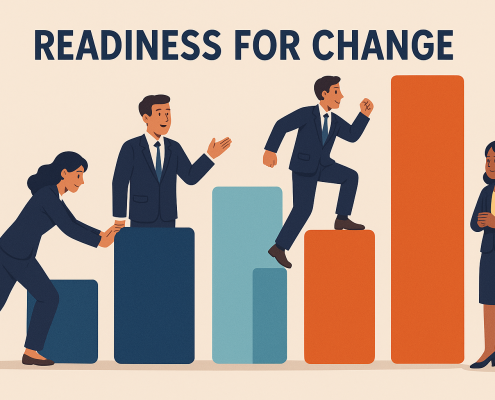
Many leaders may believe readiness happens once a checklist is completed, when training is delivered, communications are sent, or systems go live. But readiness is not a one-time event. It is a mindset built over time, through trust, empowerment, and alignment.
True readiness looks like:
- People understanding the purpose of the change.
- Employees feeling equipped with the tools and knowledge they need.
- Leaders demonstrating empathy and conviction in guiding others.
- Teams recognizing how the change connects to their values and success.
When people move from passive acceptance to active ownership, readiness has taken root. However, to get the capacity for that readiness, they need to instil and ability to be calm and nonconfrontational.
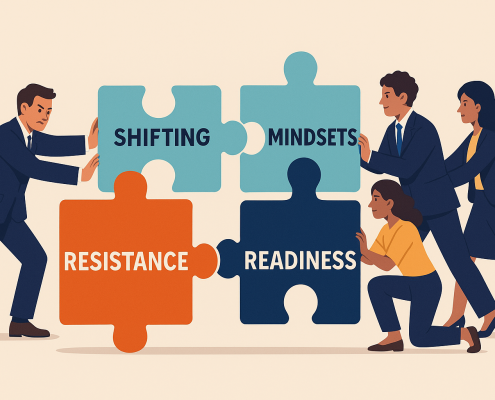
Shifting to Readiness through Resilience
So how do organizations create this shift? Here are five strategies that turn build resilience in any engagement:
1. Lead with Why
Simon Sinek’s famous phrase still holds true: start with why. Change is far easier to accept when people understand the bigger purpose, why it matters to the organization and why it matters to them. Leaders must tell a story that connects hearts and minds, not just spreadsheets and timelines. The why answer removes doubt and prepares the mind for options rather than challenges.
2. Create Safe Conversations
Resistance thrives in silence and resilience depends on shared ownership of a situation. Creating forums, listening sessions, and feedback channels gives people a safe space to speak. More importantly, leaders must demonstrate that these voices have an influence on decisions. Being heard is so valuable.
3. Build Capability, Not Just Compliance
One of the biggest opportunities is overcoming a fear of inadequacy. Learning opportunities should not just teach “how to use the new system” but also build confidence and collaboration. Equip people with both the hard skills and the emotional resilience needed to thrive in the new environment.
4. Celebrate Early Wins
Readiness grows when people see proof that change works. Each win is a point for added resilience. Recognize early adopters, highlight success stories, and measure progress visibly. Momentum builds belief.
5. Empower Change Agents
Every organization has informal leaders, the people colleagues trust and turn to. By identifying and equipping these folks, organizations can shift culture from within. Change Agents model readiness and address concerns peer-to-peer, and spread optimism. bit.ly/becomeacca
The Role of Leaders in Mindset Shifts
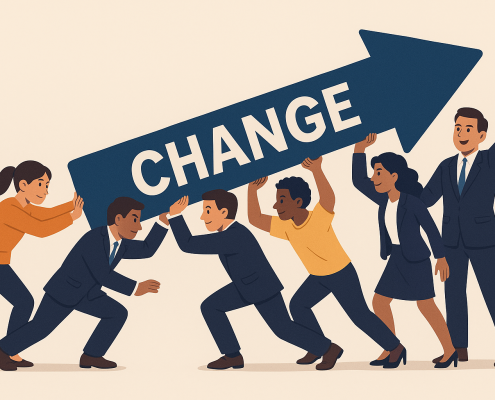
Change is not managed, it is led. Leaders at every level play a critical role in shifting resistance to readiness. This means showing vulnerability, acknowledging fears, and modelling adaptability.
Key leadership behaviours include:
- Authenticity. Admit that change is hard, but share why it’s necessary.
- Consistency. Deliver clear, transparent, and repeated messaging.
- Visibility. Be present with teams, not just behind emails.
- Empathy. Recognize that people experience change differently and at different paces.
A leader’s greatest tool in building readiness is trust. When employees trust their leaders, they are more willing to take the leap.
The Readiness Ripple Effect
When readiness and resilience grows, something powerful happens. Teams become more collaborative, productivity rises, and morale strengthens. More importantly, the organization develops resilience, the capacity to handle not just one change, but the many that inevitably follow.
Readiness becomes cultural. Instead of bracing against change, people begin to lean into it. Instead of resisting, they ask: What’s next?
Practical Tools for Practitioners
For change practitioners and consultants, navigating actual and perceived resistance and building resilience and readiness means blending strategy with humanity. Some practical tools include:
- Mapping out relationships and impacts to anticipate sources of resistance and reactions.
- Readiness assessments to measure perception, skills, and trust levels.
- Change impact analyses to identify areas requiring extra support.
- Pulse surveys to monitor shifts in attitude over time.
- Storytelling frameworks to communicate vision in relatable ways.
Conclusion: Readiness is the Added Advantage
In a world where organizations face constant disruption, readiness is a true competitive advantage. Resistance will always show up; it is part of human nature. But with thoughtful leadership, genuine engagement, and structured change practices, organizations can transform resistance into readiness by adding the special resilience ingredient to the culture.
When people are ready, they don’t just survive change; they own it. And when that happens, organizations don’t just implement change, they thrive through it.
To browse more information or to book a meeting, please visit: https://capillaryconsulting.com/contact/

