Tag Archive for: transforming

Change Management

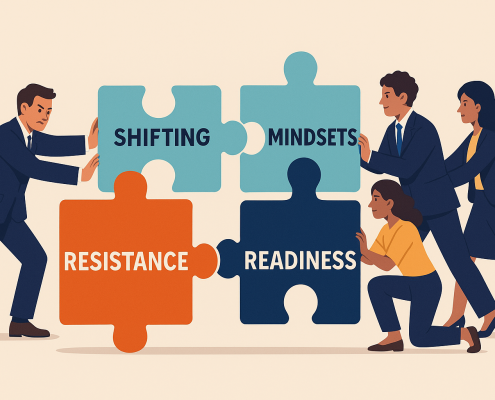
Introduction: What is Resistance?

Let’s get this elephant in the room out there and clear up what we mean when we use the word resistance. It is the action of trying to prevent or block something happening. This can be construed from a geographical resistance movement, trying to block an alternative to their systems being installed, right through to the person who folds their arms and turns their back on a new idea. The latter may be more of a passive form of the experience, but its still there

Responses to Change (aka Why Resistance Happens?)

Every organization, no matter how prepared, has experienced it, the moment a new initiative is announced and people’s arms cross, scepticism rises, and the whispers begin. Resistance is a natural human response to change. Fear of the unknown, a loss of control, or even a preference for what feels comfortable in the current situation can generate a desire to block, gatekeep or attempt to derail a change effort.

Resistance shouldn’t be confused with unclear situations that prompt questions. Folks who begin a dialogue around a change, with many questions and a reluctance to move forward, are likely not resisting but are likely just trying to work out what it all means. They can’t put the change into the context of their world and are needing validation and verification of what it means! 

It’s important not to see resistance as a sign of failure. It’s a signal about the culture of the organization. It tells leaders where there is a need to engage and help people see possibility of the change instead of loss. 

The Psychology of Resistance

To understand resistance, we must first accept that change disrupts identity and security. People resist when:

  • They don’t understand the “why are we doing this?” Lack of clarity breeds fear.
  • They don’t trust the process or people involved in the process. If change feels imposed rather than inclusive, scepticism grows.
  • They don’t feel capable of adapting to the new. The necessary skills, roles, or technologies can trigger self-doubt or fear of removal.
  • They don’t feel heard or appreciated. Resistance often comes from unacknowledged voices.

These emotional drivers matter as much, if not more, than the logic of the change itself.

Readiness is a Mindset that depends on Resilience

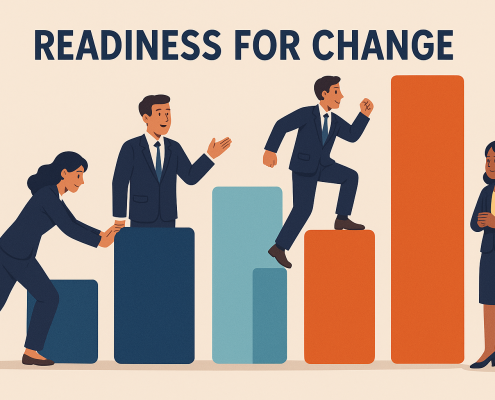
Many leaders may believe readiness happens once a checklist is completed, when training is delivered, communications are sent, or systems go live. But readiness is not a one-time event. It is a mindset built over time, through trust, empowerment, and alignment.

True readiness looks like:

  • People understanding the purpose of the change.

  • Employees feeling equipped with the tools and knowledge they need.

  • Leaders demonstrating empathy and conviction in guiding others.

  • Teams recognizing how the change connects to their values and success.

When people move from passive acceptance to active ownership, readiness has taken root. However, to get the capacity for that readiness, they need to instil and ability to be calm and nonconfrontational. 

Shifting to Readiness through Resilience

So how do organizations create this shift? Here are five strategies that turn build resilience in any engagement:

1. Lead with Why

Simon Sinek’s famous phrase still holds true: start with why. Change is far easier to accept when people understand the bigger purpose, why it matters to the organization and why it matters to them. Leaders must tell a story that connects hearts and minds, not just spreadsheets and timelines. The why answer removes doubt and prepares the mind for options rather than challenges.

2. Create Safe Conversations

Resistance thrives in silence and resilience depends on shared ownership of a situation. Creating forums, listening sessions, and feedback channels gives people a safe space to speak. More importantly, leaders must demonstrate that these voices have an influence on decisions. Being heard is so valuable.

3. Build Capability, Not Just Compliance

One of the biggest opportunities is overcoming a fear of inadequacy. Learning opportunities should not just teach “how to use the new system” but also build confidence and collaboration. Equip people with both the hard skills and the emotional resilience needed to thrive in the new environment.

4. Celebrate Early Wins

Readiness grows when people see proof that change works. Each win is a point for added resilience. Recognize early adopters, highlight success stories, and measure progress visibly. Momentum builds belief.

5. Empower Change Agents

Every organization has informal leaders, the people colleagues trust and turn to. By identifying and equipping these folks, organizations can shift culture from within. Change Agents model readiness and address concerns peer-to-peer, and spread optimism. bit.ly/becomeacca

The Role of Leaders in Mindset Shifts

Change is not managed, it is led. Leaders at every level play a critical role in shifting resistance to readiness. This means showing vulnerability, acknowledging fears, and modelling adaptability.

Key leadership behaviours include:

  • Authenticity. Admit that change is hard, but share why it’s necessary.

  • Consistency. Deliver clear, transparent, and repeated messaging.

  • Visibility. Be present with teams, not just behind emails.

  • Empathy. Recognize that people experience change differently and at different paces.

A leader’s greatest tool in building readiness is trust. When employees trust their leaders, they are more willing to take the leap.

The Readiness Ripple Effect

When readiness and resilience grows, something powerful happens. Teams become more collaborative, productivity rises, and morale strengthens. More importantly, the organization develops resilience, the capacity to handle not just one change, but the many that inevitably follow.

Readiness becomes cultural. Instead of bracing against change, people begin to lean into it. Instead of resisting, they ask: What’s next?

Practical Tools for Practitioners

For change practitioners and consultants, navigating actual and perceived resistance and building resilience and readiness means blending strategy with humanity. Some practical tools include:

  • Mapping out relationships and impacts to anticipate sources of resistance and reactions.

  • Readiness assessments to measure perception, skills, and trust levels.

  • Change impact analyses to identify areas requiring extra support.

  • Pulse surveys to monitor shifts in attitude over time.

  • Storytelling frameworks to communicate vision in relatable ways.

Conclusion: Readiness is the Added Advantage

In a world where organizations face constant disruption, readiness is a true competitive advantage. Resistance will always show up; it is part of human nature. But with thoughtful leadership, genuine engagement, and structured change practices, organizations can transform resistance into readiness by adding the special resilience ingredient to the culture.

When people are ready, they don’t just survive change; they own it. And when that happens, organizations don’t just implement change, they thrive through it.


To browse more information or to book a meeting, please visit: https://capillaryconsulting.com/contact/


navigating a vuca world

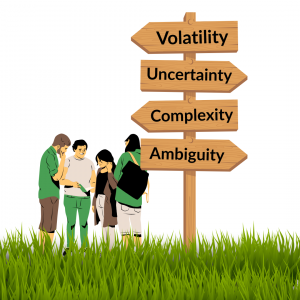
We are living through one of the most unpredictable eras in living memory. Geopolitical shocks, economic upheaval, and rapid technological disruption are increasingly the norm. This turbulent reality is aptly captured by the term VUCA—Volatility, Uncertainty, Complexity, and Ambiguity.

Volatility describes change that bursts upon us with little warning—whether it’s a global crisis, market plunge, or regulatory upheaval. Uncertainty clouds our decision-making: we struggle to forecast trends or anticipate outcomes. Complexity reflects the tangled web of interdependencies—social, technological, economic—that leave cause-and-effect murky. And Ambiguity compounds the problem, as unclear signals and mixed messages breed confusion and second-guessing.

In these demanding times, many organizations find themselves overwhelmed—facing decision paralysis, loss of confidence, and emotional fatigue. Leadership under VUCA feels like navigating a fog without a compass. Without intentional strategy, teams are at risk of stagnation, stress, or worse—being outpaced by more agile competitors.

That’s where Capillary Consulting & Learning can guide you through the challenges.

navigating a vuca world

We understand that VUCA isn’t just a concept—it’s lived experience. That’s why we’ve spent years developing practical, human-centred approaches to equip teams and leaders for disruption.

  • The VUCACanvas® delivers a gamified, hands-on diagnostic that helps organizations pinpoint where vulnerabilities lie and where strengths can be leveraged for agility. 
  • The CARL Framework®—proven during pandemic-era testing—is a simple yet powerful structure for building future-ready capacities for unpredictable change. 
  • With our Emotional Culture Deck (ECD), teams can uncover and navigate the emotional dynamics that surface in crisis—helping to build emotional resilience and collaborative readiness. 
  • Lego® Serious Play® techniques and our Change Enablement framework empower exploration, reflection, and strategic anchor-points for ongoing transformation. 
  • And, of course, Coaching ensures sustained learning and behavioural change—guiding individuals and teams toward more confident, proactive responses.
    navigating a vuca world

Whether you’re recalibrating leadership mindsets, strengthening emotional dexterity, or embedding adaptive cultures, Capillary offers tailored consulting and learning that meets organizations where they are—and propels them toward where they need to go.

In a world defined by VUCA, readiness is not optional—it’s essential. If your organization is feeling the strain of volatility, uncertainty, complexity, or ambiguity, we can help you build the capacity not just to survive—but to thrive. Discover how our tools and models can make a difference.


To browse more information or to book a meeting, please visit: https://capillaryconsulting.com/contact/


Person at a table handling Emotional Culture Deck

At Capillary, we’ve always believed that change is not just a process—it’s a human experience. Behind every organizational transformation are individuals navigating uncertainty, growth, and opportunity. And now, more than ever, we know that understanding how people feel during change is as important as what they do.

That’s why we’re proud to announce our latest evolution in how we teach and facilitate change: integrating the Emotional Culture Deck into our learning and consulting experiences.

Developed by Riders & Elephants, the Emotional Culture Deck is a deceptively simple yet profoundly powerful tool that helps individuals, teams, and organizations explore and express their feelings, and as we know, those emotions drive their culture. And at Capillary Consulting & Learning, we’re bringing this game-changing method into the heart of our Change practice.

What Is the Emotional Culture Deck?

If you haven’t encountered it yet, the Emotional Culture Deck (ECD) is a beautifully designed card-based tool that prompts honest and often transformative conversations about how people feel—and how they want to feel—in their workplaces. It’s not about surface-level engagement; it’s about building deep human connection around the emotional currents that shape culture, decision-making, and behaviour.

Each card represents a specific emotion, with words such as joy, pride, and belonging and fear, frustration, and disconnection. Participants sort and reflect on these emotions through thoughtful exercises, illuminating what truly drives those feelings.

And here’s the magic: when people can name and share their emotions safely, they begin to own their experience. They can be an organizational leader, a leader of change or leading through the stakeholder engagement maze. They build trust. They foster empathy. They stretch themselves into more courageous, adaptive behaviours.

Emotional Culture Deck

Emotional Culture Deck

Why Emotions Matter in Change

As change professionals, we’ve long known that logic alone won’t get you through transformation. You can have the best strategy, the most finely tuned communications plan, the most robust course schedules—but if you’re not addressing people’s emotional landscape, you’re only skimming the surface.

Emotions are the fuel of change. They influence how people engage with new initiatives, how they collaborate, how they resist, and how they grow. In fact, unacknowledged emotions are often the root cause of change fatigue, disengagement, and even failure.

So why has emotion been such a missing piece in traditional Change Management?

Simple: it’s hard to talk about. It’s vulnerable. It’s messy. And for a long time, it was considered soft.

But at Capillary, we know that what was once seen as “soft” is now the new strength.

Integrating the Emotional Culture Deck into Change Education

Our work at Capillary is centred on cultivating Change Enablers—individuals and teams who not only manage change but humanize it. With the introduction of the Emotional Culture Deck into our programs, we’re taking that commitment to a new level.

Whether you’re attending our flagship Certified Change Enabler (CCE) program or one of our modular workshops, you’ll now find experiences that include Emotional Culture Deck facilitation. Participants use the cards to explore:

  • How they currently feel about changes in their work
  • How they want to feel in an ideal future state
  • Which emotions might derail them or their teams
  • What emotional norms are shaping their workplace culture

These aren’t just “feel-good” conversations—they’re catalysts for insight and strategy. We use these emotional reflections to anchor change plans, guide communications, and design environments where people choose to show up and engage.

Emotional Culture Deck cards on a table

Emotional Culture Deck

The Power of Story and Connection

One of the most beautiful outcomes of using the Emotional Culture Deck is the way it creates space for storytelling. In a world that moves ever faster and communicates in bullet points, this tool causes us to pause and reflect. It invites us to be present.

Imagine a group of emerging change leaders sorting through emotion cards, finding words like “overwhelmed,” “hopeful,” “respected,” and “isolated”—and then sharing the personal stories behind their choices.

Suddenly, the group sees each other not just as colleagues, but as human beings navigating complexity. Empathy grows. Connection deepens. Real leadership begins.

This is what we mean when we say we’re teaching people to be Change Enablers, not just Change Managers.

Leading from the Heart

One of our favourite lessons from working with the Emotional Culture Deck is the shift it encourages in leadership style. So often, leaders feel they need to be stoic, composed, and directive during change. But the ECD flips that narrative. It teaches leaders to lead from the heart.

We guide leaders to explore:

  • What emotions they want their teams to feel during change (e.g., inspired, supported, safe)
  • What emotional signals they may be sending unconsciously
  • How to intentionally role-model emotional openness without losing authority

In doing so, leaders become more than messengers of change—they become the emotional anchors of it. They foster psychological safety and authentic engagement.

Capillary’s Change Magic + Emotional Culture

At Capillary, we like to say we add a little change magic to everything we do. The Emotional Culture Deck isn’t a replacement for our proven frameworks, models, and strategies—it’s the magic wand that makes them sing.

We use a range of ECD canvases, guides, handbooks and blend these with our own foundations of change, culture, organizational design and disruptive change.

With Rich Batchelor, our Chief Change Agent, being the first ECD Consultant in the Americas, we have been keen to lead the way it develops growth opportunities. This also means that Rich can train you in the tools and start you off on your pathway to ECD success. We not only include the ECD Change Practitioner as part of the Certified Change Enabler, but we are now offering ECD Leadership Practitioner and ECD Stakeholder Practitioner courses from September 2025, with the ECD Culture Practitioner to follow in 2026

Emotional Culture Deck Certified logo

Emotional Culture Deck

Final Thoughts: Feel the Shift

As inspirational guides through change, I’ve learned this truth again and again: People will forget what you said, they’ll forget what you did, but they’ll never forget how you made them feel.

With the Emotional Culture Deck now woven into our practice, we’re not just transferring knowledge—we’re nurturing emotional intelligence, empathy, and courage.

So whether you’re stepping into your first change role or leading a transformation from the top, I invite you to join us. Come feel the shift. Learn to name your emotions. Learn to listen to others. Learn to lead with both your mind and your heart.

Because that’s how change sticks. That’s how culture thrives. And that’s how we build workplaces worth showing up for—every day.


Want to experience the Emotional Culture Deck in action?
Explore our upcoming courses and programs at www.capillarylearning.com or reach out to us through www.capillaryconsulting.com to design a custom Emotional Culture workshop for your team. Let’s co-create with humanity at the heart.


To browse more information or to book a meeting, please visit: https://capillaryconsulting.com/contact/