navigating a vuca world

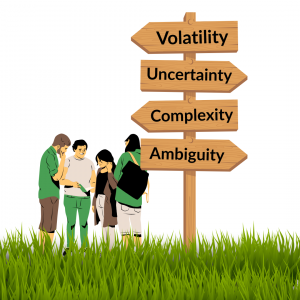
We are living through one of the most unpredictable eras in living memory. Geopolitical shocks, economic upheaval, and rapid technological disruption are increasingly the norm. This turbulent reality is aptly captured by the term VUCA—Volatility, Uncertainty, Complexity, and Ambiguity.

Volatility describes change that bursts upon us with little warning—whether it’s a global crisis, market plunge, or regulatory upheaval. Uncertainty clouds our decision-making: we struggle to forecast trends or anticipate outcomes. Complexity reflects the tangled web of interdependencies—social, technological, economic—that leave cause-and-effect murky. And Ambiguity compounds the problem, as unclear signals and mixed messages breed confusion and second-guessing.

In these demanding times, many organizations find themselves overwhelmed—facing decision paralysis, loss of confidence, and emotional fatigue. Leadership under VUCA feels like navigating a fog without a compass. Without intentional strategy, teams are at risk of stagnation, stress, or worse—being outpaced by more agile competitors.

That’s where Capillary Consulting & Learning can guide you through the challenges.

navigating a vuca world

We understand that VUCA isn’t just a concept—it’s lived experience. That’s why we’ve spent years developing practical, human-centred approaches to equip teams and leaders for disruption.

  • The VUCACanvas® delivers a gamified, hands-on diagnostic that helps organizations pinpoint where vulnerabilities lie and where strengths can be leveraged for agility. 
  • The CARL Framework®—proven during pandemic-era testing—is a simple yet powerful structure for building future-ready capacities for unpredictable change. 
  • With our Emotional Culture Deck (ECD), teams can uncover and navigate the emotional dynamics that surface in crisis—helping to build emotional resilience and collaborative readiness. 
  • Lego® Serious Play® techniques and our Change Enablement framework empower exploration, reflection, and strategic anchor-points for ongoing transformation. 
  • And, of course, Coaching ensures sustained learning and behavioural change—guiding individuals and teams toward more confident, proactive responses.
    navigating a vuca world

Whether you’re recalibrating leadership mindsets, strengthening emotional dexterity, or embedding adaptive cultures, Capillary offers tailored consulting and learning that meets organizations where they are—and propels them toward where they need to go.

In a world defined by VUCA, readiness is not optional—it’s essential. If your organization is feeling the strain of volatility, uncertainty, complexity, or ambiguity, we can help you build the capacity not just to survive—but to thrive. Discover how our tools and models can make a difference.


To browse more information or to book a meeting, please visit: https://capillaryconsulting.com/contact/


Person at a table handling Emotional Culture Deck

At Capillary, we’ve always believed that change is not just a process—it’s a human experience. Behind every organizational transformation are individuals navigating uncertainty, growth, and opportunity. And now, more than ever, we know that understanding how people feel during change is as important as what they do.

That’s why we’re proud to announce our latest evolution in how we teach and facilitate change: integrating the Emotional Culture Deck into our learning and consulting experiences.

Developed by Riders & Elephants, the Emotional Culture Deck is a deceptively simple yet profoundly powerful tool that helps individuals, teams, and organizations explore and express their feelings, and as we know, those emotions drive their culture. And at Capillary Consulting & Learning, we’re bringing this game-changing method into the heart of our Change practice.

What Is the Emotional Culture Deck?

If you haven’t encountered it yet, the Emotional Culture Deck (ECD) is a beautifully designed card-based tool that prompts honest and often transformative conversations about how people feel—and how they want to feel—in their workplaces. It’s not about surface-level engagement; it’s about building deep human connection around the emotional currents that shape culture, decision-making, and behaviour.

Each card represents a specific emotion, with words such as joy, pride, and belonging and fear, frustration, and disconnection. Participants sort and reflect on these emotions through thoughtful exercises, illuminating what truly drives those feelings.

And here’s the magic: when people can name and share their emotions safely, they begin to own their experience. They can be an organizational leader, a leader of change or leading through the stakeholder engagement maze. They build trust. They foster empathy. They stretch themselves into more courageous, adaptive behaviours.

Emotional Culture Deck

Emotional Culture Deck

Why Emotions Matter in Change

As change professionals, we’ve long known that logic alone won’t get you through transformation. You can have the best strategy, the most finely tuned communications plan, the most robust course schedules—but if you’re not addressing people’s emotional landscape, you’re only skimming the surface.

Emotions are the fuel of change. They influence how people engage with new initiatives, how they collaborate, how they resist, and how they grow. In fact, unacknowledged emotions are often the root cause of change fatigue, disengagement, and even failure.

So why has emotion been such a missing piece in traditional Change Management?

Simple: it’s hard to talk about. It’s vulnerable. It’s messy. And for a long time, it was considered soft.

But at Capillary, we know that what was once seen as “soft” is now the new strength.

Integrating the Emotional Culture Deck into Change Education

Our work at Capillary is centred on cultivating Change Enablers—individuals and teams who not only manage change but humanize it. With the introduction of the Emotional Culture Deck into our programs, we’re taking that commitment to a new level.

Whether you’re attending our flagship Certified Change Enabler (CCE) program or one of our modular workshops, you’ll now find experiences that include Emotional Culture Deck facilitation. Participants use the cards to explore:

  • How they currently feel about changes in their work
  • How they want to feel in an ideal future state
  • Which emotions might derail them or their teams
  • What emotional norms are shaping their workplace culture

These aren’t just “feel-good” conversations—they’re catalysts for insight and strategy. We use these emotional reflections to anchor change plans, guide communications, and design environments where people choose to show up and engage.

Emotional Culture Deck cards on a table

Emotional Culture Deck

The Power of Story and Connection

One of the most beautiful outcomes of using the Emotional Culture Deck is the way it creates space for storytelling. In a world that moves ever faster and communicates in bullet points, this tool causes us to pause and reflect. It invites us to be present.

Imagine a group of emerging change leaders sorting through emotion cards, finding words like “overwhelmed,” “hopeful,” “respected,” and “isolated”—and then sharing the personal stories behind their choices.

Suddenly, the group sees each other not just as colleagues, but as human beings navigating complexity. Empathy grows. Connection deepens. Real leadership begins.

This is what we mean when we say we’re teaching people to be Change Enablers, not just Change Managers.

Leading from the Heart

One of our favourite lessons from working with the Emotional Culture Deck is the shift it encourages in leadership style. So often, leaders feel they need to be stoic, composed, and directive during change. But the ECD flips that narrative. It teaches leaders to lead from the heart.

We guide leaders to explore:

  • What emotions they want their teams to feel during change (e.g., inspired, supported, safe)
  • What emotional signals they may be sending unconsciously
  • How to intentionally role-model emotional openness without losing authority

In doing so, leaders become more than messengers of change—they become the emotional anchors of it. They foster psychological safety and authentic engagement.

Capillary’s Change Magic + Emotional Culture

At Capillary, we like to say we add a little change magic to everything we do. The Emotional Culture Deck isn’t a replacement for our proven frameworks, models, and strategies—it’s the magic wand that makes them sing.

We use a range of ECD canvases, guides, handbooks and blend these with our own foundations of change, culture, organizational design and disruptive change.

With Rich Batchelor, our Chief Change Agent, being the first ECD Consultant in the Americas, we have been keen to lead the way it develops growth opportunities. This also means that Rich can train you in the tools and start you off on your pathway to ECD success. We not only include the ECD Change Practitioner as part of the Certified Change Enabler, but we are now offering ECD Leadership Practitioner and ECD Stakeholder Practitioner courses from September 2025, with the ECD Culture Practitioner to follow in 2026

Emotional Culture Deck Certified logo

Emotional Culture Deck

Final Thoughts: Feel the Shift

As inspirational guides through change, I’ve learned this truth again and again: People will forget what you said, they’ll forget what you did, but they’ll never forget how you made them feel.

With the Emotional Culture Deck now woven into our practice, we’re not just transferring knowledge—we’re nurturing emotional intelligence, empathy, and courage.

So whether you’re stepping into your first change role or leading a transformation from the top, I invite you to join us. Come feel the shift. Learn to name your emotions. Learn to listen to others. Learn to lead with both your mind and your heart.

Because that’s how change sticks. That’s how culture thrives. And that’s how we build workplaces worth showing up for—every day.


Want to experience the Emotional Culture Deck in action?
Explore our upcoming courses and programs at www.capillarylearning.com or reach out to us through www.capillaryconsulting.com to design a custom Emotional Culture workshop for your team. Let’s co-create with humanity at the heart.

 

To browse more information or to book a meeting, please visit: https://capillaryconsulting.com/contact/


3 Business individuals discussing a plan

In today’s dynamic business landscape, the concept of workplace culture has become a cornerstone for organizations aiming to thrive and succeed. But what exactly is workplace culture? At its core, workplace culture encompasses the shared values, beliefs, behaviours, and practices that characterize an organization. It’s the intangible force that shapes how employees interact, make decisions, and perceive their roles within the company.

Imagine walking into an office where collaboration and innovation are not just encouraged but celebrated. A place where employees feel valued, supported, and motivated to achieve their best. This is the epitome of a positive workplace culture, and it’s something every organization should strive for. Let’s delve deeper into the elements that define workplace culture and explore how Change Management and Change Agents play pivotal roles in cultivating a thriving work environment.

The Building Blocks of Workplace Culture

Workplace culture is built on several key components:

  1. Values and Beliefs: These are the guiding principles that define what is important in the organization. They shape the way employees interact with each other and approach their work.

  2. Norms and Behaviors: These are the unwritten rules about how things are done. They influence daily activities and interactions within the workplace.

  3. Rituals and Traditions: Regular activities or ceremonies that reinforce the values and norms of the organization. These can range from weekly team meetings to annual awards ceremonies.

  4. Symbols and Artifacts: These include logos, office design, dress codes, and other tangible elements that represent the organization’s culture.

The Role of Change Management

Change is inevitable in any organization, and managing it effectively is crucial for maintaining a positive workplace culture. Change Management is the structured approach that ensures changes are smoothly and successfully implemented, achieving lasting benefits. It involves preparing, equipping, and supporting individuals to adopt change, driving organizational success.

Change Management encompasses several strategies:

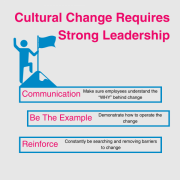
  1. Communication: Honest and transparent communication is vital. Keeping employees informed about changes, being clear about the reasons behind them, and the expected outcomes helps reduce uncertainty and build trust.

  2. Engagement: Involving employees in the change fosters a sense of ownership and commitment. When people feel connected to the change, they are more likely to support it.

  3. Education: Providing the necessary learning opportunities ensures individuals have the skills and knowledge to both adopt and adapt to new ways of working. 

  4. Leadership and Sponsorship: Committed leadership is essential for driving change. Leaders must be visible advocates for the change, demonstrating their focus to make a successful transition and guide folks through the transition.

The Power of Change Agents

Change Agents are individuals, often distributed across many parts of an organization, who are empowered to prepare, engage and support the change, helping to navigate any challenges and smooth the path of the upcoming change initiatives. They play a critical role in fostering a culture that embraces change and enables innovation. Change Agents can be anyone from senior leaders to frontline employees who exhibit certain qualities:

  1. Influence and Credibility: Change Agents are respected and trusted by their peers. They have the ability to influence others and garner support for change initiatives.

  2. Adaptability: They are flexible and open to new ideas. Change Agents readily embrace change themselves and lead by example, showing others that change can be successfully adopted and beneficial to their organizations’ future success.

  3. Communication Skills: Effective Change Agents are skilled communicators. They can articulate the vision for change clearly and inspire others to get on board. They encourage dialogue about the change and provide opportunities for regular engagement with those affected.

  4. Critical Thinking: They are proactive in identifying and addressing obstacles to change, thinking through the often multiple strategies that can be taken and encouraging adoption of the new or different future state. 

Strategies for Cultivating a Thriving Workplace Culture

Creating a thriving workplace culture requires deliberate effort and strategic planning. Here are some strategies to consider:

  1. Define and Communicate Core Values: Clearly articulate the organization’s core values and ensure they are integrated into every aspect of the business. Regularly reference these values to reinforce their importance.

  2. Foster Open Communication: Encourage open dialogue and transparency at all levels of the organization. Create channels for feedback and create strategies that employees feel heard and valued.

  3. Promote Collaboration and Teamwork: Design workspaces that facilitate collaboration with processes that lean into this connected approach. Recognize and reward teamwork to reinforce its importance.

  4. Invest in Professional Development: Provide opportunities for continuous learning and competency growth. Support the ambition to achieve career goals and provide multiple opportunities to engage in skill and ability advancement.

  5. Recognize and Reward Success: Celebrate achievements and recognize contributions. Regularly acknowledge the hard work and dedication of people to boost morale and motivation.

  6. Enable a Balance of Work and Life: Invest in practices that support a healthy work-life balance. Implement policies that support flexible working arrangements, wellness programs, and time-off policies to encourage disconnection from the job and maintain a positive work environment.

  7. Lead by Example: Leadership sets the tone for the entire organization. Leaders should model the behaviors and attitudes they want to see in their teams and also recognize the differing experiences of all.

Achieving Successful Business Outcomes

A strong workplace culture, bolstered by effective Change Management and proactive Change Agents, leads to outcomes that will enable business outcomes. Here’s how:

  1. Enhanced Collaboration: A positive culture fosters collaboration, leading to more cohesive and effective teams. When employees feel valued and supported, they are more likely to contribute their best ideas and efforts.

  2. Increased Adaptability: Organizations with a culture that embraces change can adapt more quickly to market shifts and emerging opportunities. This agility is crucial for successful business delivery.

  3. Higher Employee Engagement: Engaged employees are more committed and motivated, which translates to higher productivity and better business results. They are also more likely to go above and beyond to ensure the success of any projects, initiatives or areas of strategy execution.

  4. Better Problem Solving: A culture that encourages open communication and innovation, empowers its people to address challenges creatively and collaboratively, leading to application of critical thinking, effective problem-solving and delivery of business success.

Conclusion

Workplace culture is the heartbeat of any organization. It’s the invisible thread that ties everything together, from daily interactions to long-term goals. By understanding and nurturing a positive workplace culture through effective Change Management and the empowerment of Change Agents, organizations can create an environment where organizations succeed and their people thrive. Remember, cultural success is not a plug and play approach but a continuous journey. With dedication to reinforce these key elements, it can truly inspire and motivate everyone involved.

To browse more information or to book a meeting, please visit: https://capillaryconsulting.com/contact/


To show a person in an office setting.

As a change management professional, my daily journey involves charting the uncharted waters of organizational transformation. In recent years, the winds of change have been notably stirred by the rapid advancement of artificial intelligence (AI) and other revolutionary technologies. In this blog post, we’ll explore the influence of AI in the working space, examining the cultural shift from feeling threatened to embracing these transformative technologies. We’ll also delve into the potential unleashed by groundbreaking technologies such as 3D printing and blockchain, exploring how they reshape the way we work, particularly in the context of hybrid work environments.

Embracing the Cultural Shift

For many organizations, the integration of AI into the workplace has been met with skepticism and fear. Employees often view AI as a threat, concerned that their jobs may be at risk of automation. As a change management professional, my role is to guide organizations through this cultural shift, fostering an environment where employees don’t merely accept AI but embrace it as a tool to enhance their work.

The key to successful integration lies in demystifying AI, educating employees about its capabilities, and emphasizing its role as a collaborator rather than a replacement. Demonstrating how AI can streamline repetitive tasks, allowing humans to focus on more creative and strategic endeavours, helps shift the narrative from one of fear to one of opportunity.

Understanding the potential of your organization comes from truly understanding its Culture. Our unique organizational cultural analysis and mapping tool allows you to understand the current shape of your organization and see where it needs to flex and grow to reach its potential.

Organizations are made up of people and appreciating the dynamics of their roles, responsibilities and purpose helps to unleash its potential.

This tool can be used to not just assess the whole organization, but through breaking it down into a team, group, division and/or other levels, find opportunities to lean on your internal dynamics while building strategies that are focused on key areas for improvement and create learning journeys to achieve them.

Reviewing the culture and its impact lend itself to our cultural shape analysis: https://capillaryconsulting.net/cultural-shape/

Digital evolution of humans

The Potential of Revolutionary Technology

Beyond AI, revolutionary technologies like 3D printing and blockchain are reshaping industries and challenging traditional ways of working. 3D printing, for example, enables rapid prototyping and customized manufacturing, transforming the production landscape. Blockchain, with its decentralized and secure nature, has the potential to revolutionize supply chain management, ensuring transparency and traceability.

Change management in the context of these technologies involves not just integrating them into existing workflows but reimagining entire processes. It’s about helping employees understand the transformative power of these tools and guiding them through the necessary adjustments. Embracing these technologies opens up new possibilities, fostering innovation and adaptability within the organization.

The Evolution of the Work Environment

The rise of AI and revolutionary technologies has also catalyzed a shift in the way we conceptualize and organize our workspaces. The era of the traditional office is giving way to a more flexible and adaptive model—the hybrid work environment. This paradigm accommodates remote work, flexible schedules, and collaborative digital tools, blending the best of both physical and virtual workspaces.

As a change management professional, I recognize the importance of guiding organizations through this evolution. The hybrid work environment demands not only a technological infrastructure that supports remote collaboration but also a cultural shift that values outcomes over hours spent at a desk. Embracing this change requires effective communication, transparent policies, and a commitment to fostering a sense of connection and belonging among employees, regardless of their physical location.

Before you can build out your strategy for dealing with uncertain times, you have to understand where your organization holds strength and may experience vulnerabilities.

The VucaCanvas® is a tool that provides a visualization of these strengths through game-based facilitation, making meaningful connections. The core of the review is to assess capacities across the organization to navigate VUCA situations when they arise.

Preview more here: https://capillaryconsulting.net/vucacanvas/

AI Robot using a work computer

Fad or Fundamental Shift?

Some skeptics have dismissed the wave of change driven by AI and new technologies as a mere fad, comparing it to the brief enthusiasm for a return to the office, as seen in Zoom’s initial push for in-person collaboration. However, the transformative impact of AI and revolutionary technologies goes beyond temporary trends.

These technologies have proven their ability to enhance productivity, streamline processes, and open up new avenues for innovation. The key lies in recognizing that the changes brought about by AI and new tech are not fleeting fads but fundamental shifts that demand a strategic and sustained approach to change management.


Article: Even Zoom is calling its workers back to the office — at least 2 days a week – https://www.cbc.ca/news/business/zoom-back-to-office-1.6930585 Source: CBC News


Nurturing a Proactive Approach

To navigate these uncharted waters successfully, organizations must adopt a proactive approach to change management. This involves continuous learning and adaptation, anticipating the evolving needs of the workforce and industry. Embracing AI and revolutionary technologies is not a one-time event but an ongoing process of evolution.

As a change management professional, I encourage organizations to establish a culture of continuous learning, empowering employees to upskill and reskill as technologies evolve. This proactive approach ensures that the workforce remains agile and adaptable, ready to harness the full potential of AI and other transformative technologies.

Robot and Human Fits Bumping

Conclusion

In conclusion, the influence of AI in the working space extends far beyond mere automation—it’s a catalyst for cultural change, a driver of innovation, and a force reshaping the very nature of work. Embracing this shift requires change management professionals to guide organizations through a journey of education, adaptation, and continuous learning.

Revolutionary technologies like 3D printing and blockchain add further layers to this transformation, challenging traditional norms and opening up new possibilities. The hybrid work environment, far from a passing fad, represents a fundamental shift in the way we approach work, demanding a holistic and strategic approach to change management.

As we navigate the seas of change, we must recognize that the influence of AI and new tech is not a fleeting trend but a transformative force shaping the future of work. By embracing this evolution with an open mind, proactive strategies, and a commitment to continuous learning, organizations can not only weather the storm but chart a course to thrive in the digital age.


To browse more information or to book a meeting, please visit: https://capillaryconsulting.com/contact/


Want to know a secret?

Change doesn’t need to be as challenging as it seems. We make it a lot harder by letting the “Double Whammy” get in the way.

Let’s begin with a story

Last week I was deeply involved in one of my guilty pleasures: a British serial that follows the everyday lives of the hardworking men and women living in Manchester. I greatly respect the writers who, over the years, have created storylines about things we “just don’t talk about” in polite society. They’ve always treated challenging topics realistically, sensibly, and sensitively. However, that day I found myself yelling “AW, COME ON!! SERIOUSLY?!” at the screen in disbelief.


Picture this: a stoic, middle-aged man, Dev, enters the local pub. His neighbours ask him about a recent positive change in his life. He is noticeably distressed by their questions and joins his friend Tim in a booth. Tim asks Dev about the happy change too.  Mystifyingly, Dev is overcome and begins weeping. Startled, Tim leans back in disgust. He gets up, moves to the bar, and shares with another man that Dev is “very emotional”. They both turn to look at Dev, who is quite distraught, turn back to each other in horror, pause, and then promptly change the subject to something else,  football I think. Dev is left alone, in distress, to process the change, while the other pub patrons avoid him like the plague.


C’mon! In 2024, are we really still perpetuating the myth that boys don’t cry?

Enter the Double Whammy

Many changes cause stress. The Double Whammy is the extra layer of stress we add to the experience because of the stigma related to strong emotions and other normal responses to change.


I haven’t watched since that night so I still have no idea why Dev was so upset about a change that I thought was pretty positive too. The fact is, it doesn’t matter why he was upset. The pertinent information is that he was upset.  His strong emotional reaction made his friends uncomfortable so they negatively judged his response, and isolated him. Poor Dev!


Dealing with new processes, relationships, environments, and situations is hard enough.  Wouldn’t it be easier if we were free to navigate challenging changes without having to stress about whether our response to it is socially acceptable? Our “stiff upper lip” society and toxically positive culture have made change so much more challenging by stigmatizing normal emotional and physiological responses. This creates a massive barrier to transitioning quickly, healthily, and effectively.

5 Tips for Avoiding the Double Whammy:

1. Know what your brain does on change

Your brain LOVES predictability but change always begins with an ending of the previous state. That causes a loss of predictability. When that happens your brain triggers the threat response and sends you very clear and very uncomfortable signals that you might be in danger. Sadness, fear, anxiousness, feeling overwhelmed, and frustration, etc, are all examples of these signals.

2. Know that it’s not you, it’s your brain doing its job

Your brain evolved to keep you safe, alive, and part of a social group. When change triggers a threat response (and not every change will), you may consciously know that there’s no saber-tooth tiger behind that tree, but your brain doesn’t know that. It’s a piece of equipment, just like your bladder or stomach. You learned their signals very early on and know exactly what to do when your bladder tells you it needs something. When predictability is lost, your brain will also let you know with crystal-clear signals that you might be in danger. A triggered threat response doesn’t mean a person is weak, unstable, or dramatic. It does mean that their brain is doing a good job at keeping its owner safe.

3. Don’t suppress or ignore your brain’s signals

Threat response signals are uncomfortable on purpose. They’re designed to get your attention. They’re also 100% NORMAL.  Sadness, fear, anxiousness, feeling overwhelmed and frustration, etc, are all normal signals that your brain has detected a loss of predictability. Ignoring these signals could compromise your health, well-being, and relationships. Notice when your brain is trying to get your attention. Learn to name what you’re feeling and the purpose of the emotion. If you’re on the receiving end, like Dev’s friend Tim, know that strong emotions are normal after change and get comfortable with them. Normalizing strong emotions helps destigmatize them.

4. Have the courage to go rogue

Beliefs about how we “should” behave after change go directly against our nature as human animals. Gender socialization, toxic positivity, culture, and values around our roles and responsibilities all try to tell us to ignore our emotions and behave as if nothing is bothering us.  It takes courage to say, “hey, I know this change is  a positive one overall, but I still feel a sense of loss (or sadness or anger etc.).”  Take a risk, push back on your socialization and choose to support your overall health and well-being instead.

5. Know your Change Fingerprint©

1000 people could go through the same change and each brain will respond differently. You could say that everyone has a unique Change Fingerprint©. Discovering yours, and knowing that everyone else has one too, goes a long way in combatting the Double Whammy.  Furthermore, organizations that have introduced the Change Fingerprint Framework© discovered that the process increased trust, psychological safety, employee engagement and change resilience. As a result, change implementations became easier, less stressful, and less costly.

Poor Dev. I wonder why he was so upset about his very amicable partner being released from prison? I wonder if the writers did eventually go rogue? Did Dev’s friends eventually act against their gender socialization to support him, instead of being awkward around his tears? I guess I’ll have to tune in again soon to find out.

In the fast-paced and ever-changing world of business, the terms “management” and “leadership” are often used interchangeably. However, the two concepts hold distinct meanings and roles within an organization. While both are essential for an organization’s success, understanding the differences between management and leadership, particularly in terms of values, can pave the way for building a thriving and sustainable company culture. In this blog, we will explore the disparities between management and leadership concerning their core values and how they shape the dynamics of an organization.


Focus on Efficiency vs. Focus on Inspiration:

At its core, management primarily revolves around efficiency, processes, and meeting organizational goals. Managers focus on planning, organizing, and controlling resources to ensure that tasks are executed effectively and on time. They often emphasize optimizing existing systems and structures.

Leadership, on the other hand, centres on inspiring and motivating individuals to reach their full potential. Leaders are visionaries who can articulate a compelling future and inspire others to work toward it. Their primary focus lies in nurturing talent, fostering innovation, and encouraging personal growth.

Transactional vs. Transformational:

Management is often associated with transactional behaviour. Managers maintain the status quo by enforcing rules, offering rewards, and providing punishments. Their approach tends to be more task-oriented, and they thrive in an environment where order and predictability are crucial.

Leadership, however, leans towards transformational behaviour. Leaders seek to challenge the status quo and drive change by influencing their teams through vision, charisma, and emotional intelligence. They build strong relationships with their followers, empowering them to think creatively and embrace new challenges.


Short-Term Goals vs. Long-Term Vision:

Managers typically set and pursue short-term objectives. They are responsible for breaking down large goals into manageable tasks, ensuring that deadlines are met, and budgets are adhered to. Managers aim to maintain stability and execute strategies that lead to immediate outcomes.

Leaders, on the other hand, are more future-oriented. They look beyond the immediate horizon and craft a long-term vision for the organization. Leaders inspire their teams to see the bigger picture and work collaboratively towards achieving that vision. Their decisions often involve calculated risks and a willingness to adapt to emerging trends.

Compliance vs. Empowerment:

Management often relies on compliance from employees. They enforce policies, monitor performance, and ensure that individuals follow the established protocols. Managers play a vital role in maintaining order and ensuring that employees adhere to company standards.

Leaders, in contrast, empower their teams. They trust their employees’ abilities, delegate authority, and encourage autonomy. Leaders foster an environment of trust and open communication, where team members feel valued and are given the freedom to explore new ideas and take ownership of their work.


Task-Oriented vs. People-Centric:

In a management-driven environment, tasks and projects take precedence. Managers focus on the efficient allocation of resources, meeting deadlines, and achieving objectives. They prioritize productivity and process improvement.

Leaders, conversely, prioritize their people. They understand that a motivated and engaged team will be more productive and innovative. Leaders invest time in building strong relationships with their team members, understanding their strengths and weaknesses, and providing mentorship and support to foster growth.

In conclusion, while management and leadership are both integral to the success of an organization, they differ significantly in their values and approaches. Management centres on efficiency, short-term goals, and task-oriented behaviour, while leadership emphasizes inspiration, long-term vision, and people-centric approaches. The key to a flourishing organization lies in recognizing the distinct values of management and leadership and striking a balance between the two. By combining the strengths of both practices, organizations can create a cohesive, high-performing culture that embraces innovation, empowers employees, and drives sustainable success.

Establish Clear Communication Channels

Effective communication is the cornerstone of a successful hybrid workplace. To ensure a smooth transition, organisations must establish clear and reliable communication channels that facilitate seamless collaboration and information sharing among team members. Utilise a combination of tools such as email, instant messaging platforms, video conferencing, and project management software to keep everyone connected, regardless of their location. Regularly scheduled team meetings and check-ins can foster a sense of camaraderie and provide a platform for addressing any challenges or concerns that arise.

Embrace The Digital Age

Technology plays a crucial role in the hybrid work environment. Invest in robust digital tools and platforms that enable remote collaboration, project management, and knowledge sharing. Cloud-based solutions, file-sharing systems, and task management applications can streamline workflows, improve productivity, and ensure that everyone has access to the necessary resources and information. Encourage employees to leverage these tools effectively and provide training and support as needed to maximise their potential.

Prioritise Work-Life Balance and Well-being

One of the primary benefits of a hybrid workplace is We need to encourage employees to set boundaries and establish routines that promote well-being and prevent burnout. Flexibility in working hours allows individuals to accommodate personal commitments, optimise their productivity during their most productive times, and take breaks when needed. Managers should lead by example, promoting a healthy work-life balance and encouraging employees to prioritise self-care and downtime.

Foster a Culture of Trust and Collaboration

Building a culture of trust and collaboration is essential for a successful hybrid workplace. Establish clear expectations and performance goals, emphasising outcomes rather than physical presence. Trust employees to manage their time and deliver results independently. Encourage collaboration and foster a sense of belonging through virtual team-building activities, cross-functional projects, and mentorship programs. Regularly recognize and celebrate achievements to maintain morale and motivate employees.

Provide Ongoing Support and Professional Development

Adapting to a hybrid workplace may require employees to acquire new skills and adapt to different ways of working. To support their growth and development, organisations should invest in ongoing training programs and provide resources for self-directed learning. Virtual workshops, webinars, and online courses can also help employees enhance their digital skills, remote collaboration abilities, and adaptability. Encourage employees to set personal development goals and provide opportunities for mentorship and coaching to nurture their professional growth.


The hybrid workplace presents a unique opportunity for organisations to adapt and thrive in a rapidly changing world. By implementing the strategies discussed in this blog, organisations can establish a solid foundation for success in the hybrid work environment.

Clear communication channels are vital for seamless collaboration and information sharing among team members. Utilising a combination of tools such as email, instant messaging platforms, video conferencing, and project management software can keep everyone connected, regardless of their location. Regularly scheduled team meetings and check-ins foster a sense of camaraderie and provide a platform for addressing challenges and concerns.

Embracing the digital age is essential for productivity and efficiency in a hybrid workplace. Investing in robust digital tools and platforms enables remote collaboration, project management, and knowledge sharing. Cloud-based solutions, file-sharing systems, and task management applications streamline workflows and ensure that everyone has access to necessary resources. Providing training and support for these tools maximises their potential.

Prioritising work-life balance and well-being is a key advantage of the hybrid workplace. Encouraging employees to set boundaries, establish routines, and take breaks when needed promotes their well-being and prevents burnout. Managers should lead by example and prioritise self-care and downtime, fostering a healthy work-life balance.

Building a culture of trust and collaboration is crucial for success in a hybrid workplace. Clear expectations and performance goals should emphasise outcomes rather than physical presence. Trusting employees to manage their time and deliver results independently empowers them. Virtual team-building activities, cross-functional projects, and mentorship programs foster collaboration and a sense of belonging. Regularly recognizing and celebrating achievements maintains morale and motivates employees.

Providing ongoing support and professional development is essential for employees to adapt to the hybrid workplace. Organisations should invest in training programs and resources for self-directed learning. Virtual workshops, webinars, and online courses can enhance employees’ digital skills, remote collaboration abilities, and adaptability. Encouraging personal development goals and providing mentorship and coaching opportunities nurtures professional growth.

By embracing the hybrid workplace and implementing these strategies, organisations can navigate the transition successfully. This new way of working enhances productivity, employee satisfaction, and positions organisations to thrive. With careful planning, open communication, and a commitment to continuous improvement, organisations and their employees can create a flexible and successful future of work. 

As the world of work continues to evolve, organisations must adapt to the changing dynamics and embrace the hybrid workplace model.

In recent years, the traditional 9-to-5 office setup has undergone a significant transformation. The rise of technology and changing work dynamics have given birth to the concept of hybrid work—a flexible arrangement that combines remote work and office-based work. This new approach has gained traction in various industries and is increasingly being recognized as a game-changer for both employers and employees. Today we will explore the benefits of a hybrid workplace and how it can offer the perfect balance for the modern workforce.

Increased Flexibility and Work-Life Balance

One of the most significant advantages of a hybrid work place is the increased flexibility it provides. Employees have the freedom to work from home or any other location of their choice for a portion of their work week. This flexibility allows individuals to better manage their personal responsibilities, reduce commuting time, and achieve a healthier work-life balance. Employees can attend to personal appointments, spend more time with family, and engage in activities that promote their overall well-being without sacrificing their professional commitments.

Enhanced Productivity and Employee Satisfaction

Studies from Owl Labs and Ergotron have shown that remote work can boost productivity levels for certain tasks and produce happier and more long term employees. Hybrid work allows employees to focus on deep, concentrated work in a quieter environment, free from office distractions. Moreover, the ability to work during their most productive hours (whether it’s early morning or later in the day) enables individuals to optimize their performance. As a result, employees often experience higher job satisfaction, leading to increased engagement, motivation, and overall happiness in their roles.

Expanded Talent Pool and Improved Retention

With a hybrid work place, geographical constraints no longer limit talent acquisition. Employers can tap into a larger talent pool by recruiting individuals from more locations than they did before. This increased access to diverse talent opens doors to fresh perspectives and a wider range of skills, ultimately fostering innovation within the organization. Furthermore, offering hybrid work options can significantly improve employee retention rates, as individuals are more likely to stay with companies that provide flexible work arrangements that cater to their needs and preferences.

Cost Savings for Employers and Employees

Implementing a hybrid work model can result in substantial cost savings for both employers and employees. For organizations, reduced office space requirements mean lower overhead expenses such as rent, utilities, and maintenance. Employers can allocate these savings towards investments in employee training, development, and other growth initiatives. On the other hand, employees can save money on commuting expenses, work attire, and daily meals, leading to improved financial well-being and increased job satisfaction.

Environmental Sustainability

Embracing a hybrid work place can have a positive impact on the environment. By reducing the number of employees commuting to the office every day, organizations can contribute to the reduction of carbon emissions and alleviate traffic congestion. Additionally, fewer people in the office means less energy consumption, lower paper usage, and decreased waste generation. This commitment to sustainability aligns with the values of many employees and can enhance the organization’s brand image. 

The hybrid work place offers a win-win situation for both employers and employees. By providing increased flexibility, enhancing productivity, expanding talent pools, reducing costs, and promoting environmental sustainability, this work model has become a powerful tool for organizations to adapt to changing times and remain competitive. However, adapting to this new way of working requires careful planning, effective communication, and a commitment to creating a cohesive work environment. As we navigate the ever-changing landscape of work, the hybrid workplace emerges as a change worth making. With its numerous benefits such as increased flexibility, improved work-life balance, enhanced productivity, expanded talent pool, cost savings, and environmental sustainability, it offers a promising solution for both employers and employees. Embracing this new work model requires open-mindedness, effective communication, and a willingness to adapt to new ways of collaborating and connecting. By embracing the hybrid workplace, organizations can create a harmonious balance that caters to the evolving needs and preferences of their workforce while fostering a culture of innovation, engagement, and success. So, let us welcome this change and embrace the opportunities it brings, as we build a future where work is not bound by traditional constraints, but rather evolves to support the diverse and dynamic needs of the modern workforce.

This November saw the return of the fifth annual Toronto Change Days. I was excited to see 2022 celebrated with a to an in-person event, yet still reflect the virtual connectivity across many elements. Exploring “The Power of Play” as this year’s theme brought many diverse discussions and of course we had amazing workshops and a very energized keynote!

Toronto Change Days is a really energizing opportunity for all involved. It feels like a real community coming together yet each time we meet, over half of the attendees are new to the experience. It is unusual to have that sort of vibe and yet, we always attract folks that just get the nature of the event, focused on learning but guided experience and totally facilitated versus instructional or typical corporate conference style.

We had some great virtual interactions going either side of the in-person weekend. I was really pleased to see conversations around playfulness in these virtual conversation and people interacting with elements to influence the whole event and reflect back upon the live weekend.

With a theme that includes play – no surprises we included Lego in the experience and even some workshops that employed Lego Serious Play practices. In fact, we even had a facilitated “Playzone” room that allowed people to experiment and learn about card games and toys that can be used in supporting change events. It was a slow start for people attending this room – probably not wanting to miss out on the amazing workshops but  by the end of the weekend we had over 12 folks discovering the power of integrating playfulness within their change events.

I want to give a huge shout our to Leonard Nacke who provided the keynote. He gave one of the most energetic and enthusiastic performances for a key speaker, I’ve had the privilege to experience. He actually did a cartwheel, got chased around the room and let someone else take over the presentation – all in the name of playful gaming and understanding the benefits of such things being included in organizational development.

I could turn this post into a raft of superlatives, it felt just so good to be back at the amazing Japanese Canadian Cultural Centre doing the think that we all love and connecting at a level that is phenomenal. We didn’t get so much of our international supporters this year, but I look forward to welcoming them back next year.

If you are interested in joining us for Toronto Change Days 2023 you can grab an extremely Earlybird ticket now at https://tcd2023.eventbrite.ca