Blog

navigating a vuca world
We are living through one of the most unpredictable eras in living memory. Geopolitical shocks, economic upheaval, and rapid technological Read more
Person at a table handling Emotional Culture Deck
At Capillary, we’ve always believed that change is not just a process—it's a human experience. Behind every organizational transformation are Read more
3 Business individuals discussing a plan
In today's dynamic business landscape, the concept of workplace culture has become a cornerstone for organizations aiming to thrive and Read more
To show a person in an office setting.
As a change management professional, my daily journey involves charting the uncharted waters of organizational transformation. In recent years, the Read more
Want to know a secret? Change doesn’t need to be as challenging as it seems. We make it a lot Read more
In the fast-paced and ever-changing world of business, the terms "management" and "leadership" are often used interchangeably. However, the two Read more
Establish Clear Communication Channels Effective communication is the cornerstone of a successful hybrid workplace. To ensure a smooth transition, organisations Read more
In recent years, the traditional 9-to-5 office setup has undergone a significant transformation. The rise of technology and changing work Read more
There is no denying that the Covid-19 pandemic has been the experience that just never stops giving! Yet another year Read more
This November saw the return of the fifth annual Toronto Change Days. I was excited to see 2022 celebrated with Read more
This summer I finally made the leap to get our Capillary Values created formally. To no longer be an informal, Read more

This year we are seeing a significant amount of conversation around terms like, “the future of work”, “back to the Read more
I’ve often had this said to me before people get to know me… “You are very opinionated and challenging, aren’t Read more
As we move forward into 2022, we may feel a range of emotions related to the current health and resultant Read more
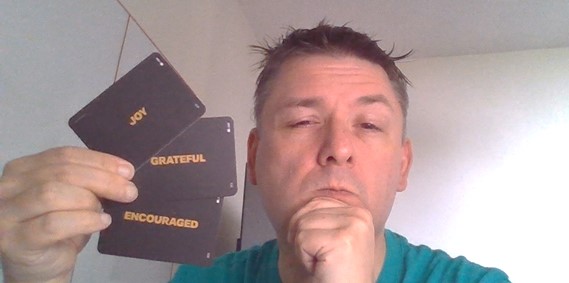
I am feeling joy. I am feeling encouraged. I am feeling… grateful. The above three emotions were the result of Read more

Ever wondered how it would feel if you could box up all your emotions and hide them away? It’s strange Read more

I’ve seen emotions in myself that lifted me and also disappointed me. I have seen others demonstrate almost caricatured alter Read more

Emotions are funny ole’ things... but it seems more frequently we hide, cover, stop, or push them aside. Read more

This ever-growing portfolio of transformation needs change professionals to keep adding capabilities to their toolbox, developing deeper intervention practice and Read more
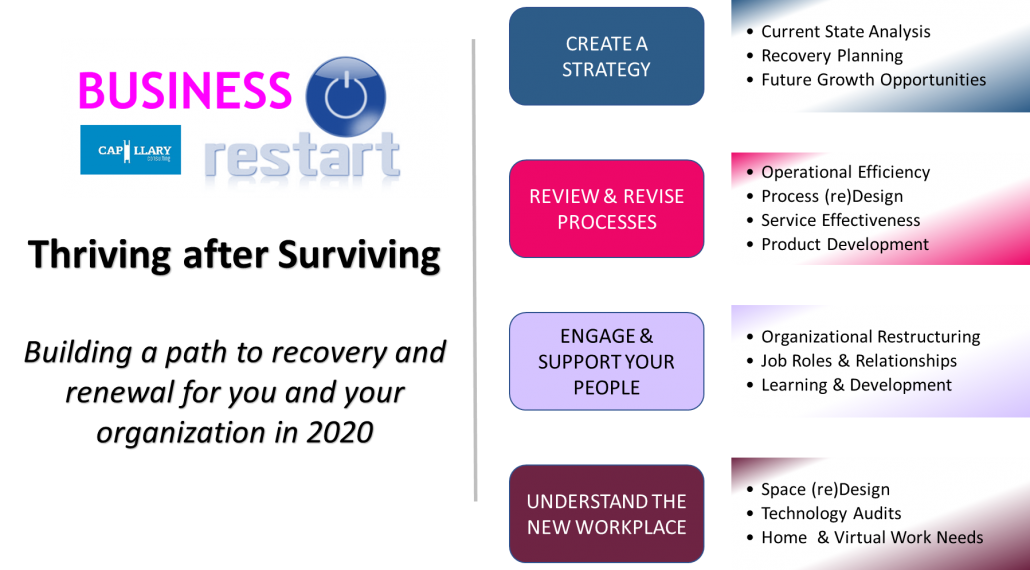
I am very aware that change has significantly affected everyone this year. It’s been a tough 2020. The conversations I’ve Read more
This is a very personal take on the current state of the world. I do not apologize for its content Read more

I recently shared my thoughts on the change space, via video, with the audience at https://www.forandringsledning.com/konferens – a Swedish change Read more
I’ve started this blog post 3 times already but playing with the ups and downs of the year is a Read more

For some time, I’ve been having this conversation that an agile organization, is an organization that is much more resilient Read more

Sometimes the role is confusing… Sometimes we mess up… Sometimes our communications fail… Sometimes we get it right… Sometimes we Read more

Verb, adjective and noun – which sends the greater shockwave through the mind of the change practitioner? Why is the Read more

About 6 years ago I first starting consciously noticing the Agile word coming up in many of my professional social Read more
As I come to the end of the year I have chosen to reflect back on the journey I've navigated, Read more
What the heck does it personally mean to be a leader? To be someone who demonstrates leadership? How do you Read more

I’ve faced several challenges writing this second article in the series about leadership and change. To fully explore this next Read more

Leadership is not about a title. Individuals may be appointed, anointed or otherwise installed in positions of power, authority and Read more

Its been a little over 2 years since I first posted about Change Agent networks, the role of Change Agents Read more
I've recently returned from the great Berlin Change Days event. An awesome couple of days over a weekend focused on Read more
I attended the ACMP Regional Conference Canada in Toronto just over a week ago. It's probably taken that much time Read more
Far too many times I have conversations that start by asking what methodology I use for change management. Typically, this Read more
Whatever your New Year’s Resolution, a healthy and balanced diet will provide many benefits into 2019 and beyond. What we Read more
I’m always interested in exploring the true human elements of change management. بوكر اونلاين I regularly have the conversation with Read more
Big bang or slow n steady change - which do you prefer? For most people they say that incremental is Read more
I've been watching with the interest a recent up tick in comments about LinkedIn losing its MOJO. It generally stems Read more
I've seen a lot of chatter about mindfulness recently. It seems to be "in fashion" right now. I have seen Read more
Recently I've had a few people ask to meet with me to understand what I do. Now beyond my initial Read more

I’ve been playing with this conundrum for some time: “Do change managers make good change leaders or do change leaders Read more
So my last post was a little saccharine coated in terms of the reasoning to do the certification but having Read more
Since I launched my certified change agent (CCA) program one of the most common questions I get asked is "why Read more
My previous two blog posts have very much focused on the negative frustrations, ambiguities and misrepresentations of words and phrases. Read more
Continuing the conversation from my last post, I will begin with a statement that will probably annoy the most people Read more
Have we short changed ourselves? Have we undervalued or underplayed our hand of cards? Should we be rebranding? What am Read more
We’ve all been there when something hasn’t gone quite as expected. In our personal lives we accept misfires, setbacks and Read more
I repeatedly hear that change is getting more and more complex, more and more frequent and more and more rapid. Read more
I’m still amazed how many times I have a conversation with a potential client that includes some or all of Read more
How are you Developing Change Agents in your organization? You know those people placed to support a change, but continue Read more
I was recently fortunate enough to visit Stratford Ontario for a couple of performances in their Shakespeare Festival. This got Read more
An interesting comment made at the recent ACMP Global conference ‘Change Management 2014’. When I heard this statement, it prompted Read more
What is the best method of describing the organizational culture? You've got all the information, positive and negative comments, qualitative Read more
Last time I talked about organizational culture and what it means. Now, so many times senior managers in an organization Read more
I have had a few conversations recently where the culture question has come up. Now I am not talking diversity, Read more
I was recently thinking about fairy tales, legends and other fantasy type stories. تحميل لعبة طاولة مصرية 31 It crossed Read more
I recently worked on an engagement in China. The core activity was an analysis of the companies HR and organization Read more
Guest Post on "Change Whisperer" - Gail Severini's Blog. كم عدد اوراق الكوتشينة Read more
It is that time of year when most of us will soon be going through the ritual of the Bi-annual Read more
Pictures can be created in the mind. Sometimes I like to relate change experiences to something the audience can relate Read more
I was recently reminded of the number of graphics and particularly things like change curves, charts and other line or Read more

I was involved in a brief twitter exchange today and it got me thinking how we define a change enabler. Read more
So the festivities of the holiday season are now upon us and for many people this will be an opportunity Read more
Following on from my previous blog post, I am now going to share more insight from the magical wonderland that Read more
I have been away on vacation. Yes even I take a break from work. Part of the trip away involved Read more
Although there are many definitions floating around for change management, I have found myself frequently referring to change management as Read more
Anyone who chats with me about change management and is aware of my career background should be well aware that Read more
The office environment can drastically impact the way you work and even your ability to appeal to candidates. What can Read more
Tooth enamel is the hardest substance in the body. In fact, it’s even harder than steel. كوتشينة بالانجليزي Despite that, however, Read more
Online Video Advertising Guide: How to Use Video to Drive Business Results Not too long ago, digital video was a Read more
I, like many other people have been challenged this past week with the way Facebook has changed its layout and Read more
I always consider the words destructor and destroy from which it is derived, as extremely emotive words and evocative of Read more
If only it was as easy as saying “resistance is futile” [Star Trek fans will be familiar with this phrase]. Read more
These people are the change reactors are like the best. I know you shouldn’t have favourites, but these are the Read more
A resume is more than just a list of job roles, qualifications, and skills. It’s a sales document, highlighting your Read more
There may be other variances upon these reactions and some others that people will notice, but I see these are Read more
Change Management properly focuses on the people of the business experiencing change. That is ensuring they are ready for the Read more
Thinking of all your standard questions, how, what and why is probably best followed by when. I’ve done recent posts Read more
I have been asked a number of times to describe what a business gets from using a change management professional. Read more
Last year I did a short piece comparing change management to conducting an orchestra. I was fortunate to get some Read more
It’s been a while since I’d refreshed my mind with the wonders of John Kotter and his 8 steps for Read more

We are living through one of the most unpredictable eras in living memory. Geopolitical shocks, economic upheaval, and rapid technological disruption are increasingly the norm. This turbulent reality is aptly captured by the term VUCA—Volatility, Uncertainty, Complexity, and Ambiguity.

Volatility describes change that bursts upon us with little warning—whether it’s a global crisis, market plunge, or regulatory upheaval. Uncertainty clouds our decision-making: we struggle to forecast trends or anticipate outcomes. Complexity reflects the tangled web of interdependencies—social, technological, economic—that leave cause-and-effect murky. And Ambiguity compounds the problem, as unclear signals and mixed messages breed confusion and second-guessing.

In these demanding times, many organizations find themselves overwhelmed—facing decision paralysis, loss of confidence, and emotional fatigue. Leadership under VUCA feels like navigating a fog without a compass. Without intentional strategy, teams are at risk of stagnation, stress, or worse—being outpaced by more agile competitors.

That’s where Capillary Consulting & Learning can guide you through the challenges.

navigating a vuca world

We understand that VUCA isn’t just a concept—it’s lived experience. That’s why we’ve spent years developing practical, human-centred approaches to equip teams and leaders for disruption.

Whether you’re recalibrating leadership mindsets, strengthening emotional dexterity, or embedding adaptive cultures, Capillary offers tailored consulting and learning that meets organizations where they are—and propels them toward where they need to go.

In a world defined by VUCA, readiness is not optional—it’s essential. If your organization is feeling the strain of volatility, uncertainty, complexity, or ambiguity, we can help you build the capacity not just to survive—but to thrive. Discover how our tools and models can make a difference.


To browse more information or to book a meeting, please visit: https://capillaryconsulting.com/contact/


At Capillary, we’ve always believed that change is not just a process—it’s a human experience. Behind every organizational transformation are individuals navigating uncertainty, growth, and opportunity. And now, more than ever, we know that understanding how people feel during change is as important as what they do.

That’s why we’re proud to announce our latest evolution in how we teach and facilitate change: integrating the Emotional Culture Deck into our learning and consulting experiences.

Developed by Riders & Elephants, the Emotional Culture Deck is a deceptively simple yet profoundly powerful tool that helps individuals, teams, and organizations explore and express their feelings, and as we know, those emotions drive their culture. And at Capillary Consulting & Learning, we’re bringing this game-changing method into the heart of our Change practice.

What Is the Emotional Culture Deck?

If you haven’t encountered it yet, the Emotional Culture Deck (ECD) is a beautifully designed card-based tool that prompts honest and often transformative conversations about how people feel—and how they want to feel—in their workplaces. It’s not about surface-level engagement; it’s about building deep human connection around the emotional currents that shape culture, decision-making, and behaviour.

Each card represents a specific emotion, with words such as joy, pride, and belonging and fear, frustration, and disconnection. Participants sort and reflect on these emotions through thoughtful exercises, illuminating what truly drives those feelings.

And here’s the magic: when people can name and share their emotions safely, they begin to own their experience. They can be an organizational leader, a leader of change or leading through the stakeholder engagement maze. They build trust. They foster empathy. They stretch themselves into more courageous, adaptive behaviours.

Emotional Culture Deck

Emotional Culture Deck

Why Emotions Matter in Change

As change professionals, we’ve long known that logic alone won’t get you through transformation. You can have the best strategy, the most finely tuned communications plan, the most robust course schedules—but if you’re not addressing people’s emotional landscape, you’re only skimming the surface.

Emotions are the fuel of change. They influence how people engage with new initiatives, how they collaborate, how they resist, and how they grow. In fact, unacknowledged emotions are often the root cause of change fatigue, disengagement, and even failure.

So why has emotion been such a missing piece in traditional Change Management?

Simple: it’s hard to talk about. It’s vulnerable. It’s messy. And for a long time, it was considered soft.

But at Capillary, we know that what was once seen as “soft” is now the new strength.

Integrating the Emotional Culture Deck into Change Education

Our work at Capillary is centred on cultivating Change Enablers—individuals and teams who not only manage change but humanize it. With the introduction of the Emotional Culture Deck into our programs, we’re taking that commitment to a new level.

Whether you’re attending our flagship Certified Change Enabler (CCE) program or one of our modular workshops, you’ll now find experiences that include Emotional Culture Deck facilitation. Participants use the cards to explore:

These aren’t just “feel-good” conversations—they’re catalysts for insight and strategy. We use these emotional reflections to anchor change plans, guide communications, and design environments where people choose to show up and engage.

Emotional Culture Deck cards on a table

Emotional Culture Deck

The Power of Story and Connection

One of the most beautiful outcomes of using the Emotional Culture Deck is the way it creates space for storytelling. In a world that moves ever faster and communicates in bullet points, this tool causes us to pause and reflect. It invites us to be present.

Imagine a group of emerging change leaders sorting through emotion cards, finding words like “overwhelmed,” “hopeful,” “respected,” and “isolated”—and then sharing the personal stories behind their choices.

Suddenly, the group sees each other not just as colleagues, but as human beings navigating complexity. Empathy grows. Connection deepens. Real leadership begins.

This is what we mean when we say we’re teaching people to be Change Enablers, not just Change Managers.

Leading from the Heart

One of our favourite lessons from working with the Emotional Culture Deck is the shift it encourages in leadership style. So often, leaders feel they need to be stoic, composed, and directive during change. But the ECD flips that narrative. It teaches leaders to lead from the heart.

We guide leaders to explore:

In doing so, leaders become more than messengers of change—they become the emotional anchors of it. They foster psychological safety and authentic engagement.

Capillary’s Change Magic + Emotional Culture

At Capillary, we like to say we add a little change magic to everything we do. The Emotional Culture Deck isn’t a replacement for our proven frameworks, models, and strategies—it’s the magic wand that makes them sing.

We use a range of ECD canvases, guides, handbooks and blend these with our own foundations of change, culture, organizational design and disruptive change.

With Rich Batchelor, our Chief Change Agent, being the first ECD Consultant in the Americas, we have been keen to lead the way it develops growth opportunities. This also means that Rich can train you in the tools and start you off on your pathway to ECD success. We not only include the ECD Change Practitioner as part of the Certified Change Enabler, but we are now offering ECD Leadership Practitioner and ECD Stakeholder Practitioner courses from September 2025, with the ECD Culture Practitioner to follow in 2026

Emotional Culture Deck Certified logo

Emotional Culture Deck

Final Thoughts: Feel the Shift

As inspirational guides through change, I’ve learned this truth again and again: People will forget what you said, they’ll forget what you did, but they’ll never forget how you made them feel.

With the Emotional Culture Deck now woven into our practice, we’re not just transferring knowledge—we’re nurturing emotional intelligence, empathy, and courage.

So whether you’re stepping into your first change role or leading a transformation from the top, I invite you to join us. Come feel the shift. Learn to name your emotions. Learn to listen to others. Learn to lead with both your mind and your heart.

Because that’s how change sticks. That’s how culture thrives. And that’s how we build workplaces worth showing up for—every day.


Want to experience the Emotional Culture Deck in action?
Explore our upcoming courses and programs at www.capillarylearning.com or reach out to us through www.capillaryconsulting.com to design a custom Emotional Culture workshop for your team. Let’s co-create with humanity at the heart.


To browse more information or to book a meeting, please visit: https://capillaryconsulting.com/contact/


In today’s dynamic business landscape, the concept of workplace culture has become a cornerstone for organizations aiming to thrive and succeed. But what exactly is workplace culture? At its core, workplace culture encompasses the shared values, beliefs, behaviours, and practices that characterize an organization. It’s the intangible force that shapes how employees interact, make decisions, and perceive their roles within the company.

Imagine walking into an office where collaboration and innovation are not just encouraged but celebrated. A place where employees feel valued, supported, and motivated to achieve their best. This is the epitome of a positive workplace culture, and it’s something every organization should strive for. Let’s delve deeper into the elements that define workplace culture and explore how Change Management and Change Agents play pivotal roles in cultivating a thriving work environment.

The Building Blocks of Workplace Culture

Workplace culture is built on several key components:

  1. Values and Beliefs: These are the guiding principles that define what is important in the organization. They shape the way employees interact with each other and approach their work.

  2. Norms and Behaviors: These are the unwritten rules about how things are done. They influence daily activities and interactions within the workplace.

  3. Rituals and Traditions: Regular activities or ceremonies that reinforce the values and norms of the organization. These can range from weekly team meetings to annual awards ceremonies.

  4. Symbols and Artifacts: These include logos, office design, dress codes, and other tangible elements that represent the organization’s culture.

The Role of Change Management

Change is inevitable in any organization, and managing it effectively is crucial for maintaining a positive workplace culture. Change Management is the structured approach that ensures changes are smoothly and successfully implemented, achieving lasting benefits. It involves preparing, equipping, and supporting individuals to adopt change, driving organizational success.

Change Management encompasses several strategies:

  1. Communication: Honest and transparent communication is vital. Keeping employees informed about changes, being clear about the reasons behind them, and the expected outcomes helps reduce uncertainty and build trust.

  2. Engagement: Involving employees in the change fosters a sense of ownership and commitment. When people feel connected to the change, they are more likely to support it.

  3. Education: Providing the necessary learning opportunities ensures individuals have the skills and knowledge to both adopt and adapt to new ways of working. 

  4. Leadership and Sponsorship: Committed leadership is essential for driving change. Leaders must be visible advocates for the change, demonstrating their focus to make a successful transition and guide folks through the transition.

The Power of Change Agents

Change Agents are individuals, often distributed across many parts of an organization, who are empowered to prepare, engage and support the change, helping to navigate any challenges and smooth the path of the upcoming change initiatives. They play a critical role in fostering a culture that embraces change and enables innovation. Change Agents can be anyone from senior leaders to frontline employees who exhibit certain qualities:

  1. Influence and Credibility: Change Agents are respected and trusted by their peers. They have the ability to influence others and garner support for change initiatives.

  2. Adaptability: They are flexible and open to new ideas. Change Agents readily embrace change themselves and lead by example, showing others that change can be successfully adopted and beneficial to their organizations’ future success.

  3. Communication Skills: Effective Change Agents are skilled communicators. They can articulate the vision for change clearly and inspire others to get on board. They encourage dialogue about the change and provide opportunities for regular engagement with those affected.

  4. Critical Thinking: They are proactive in identifying and addressing obstacles to change, thinking through the often multiple strategies that can be taken and encouraging adoption of the new or different future state. 

Strategies for Cultivating a Thriving Workplace Culture

Creating a thriving workplace culture requires deliberate effort and strategic planning. Here are some strategies to consider:

  1. Define and Communicate Core Values: Clearly articulate the organization’s core values and ensure they are integrated into every aspect of the business. Regularly reference these values to reinforce their importance.

  2. Foster Open Communication: Encourage open dialogue and transparency at all levels of the organization. Create channels for feedback and create strategies that employees feel heard and valued.

  3. Promote Collaboration and Teamwork: Design workspaces that facilitate collaboration with processes that lean into this connected approach. Recognize and reward teamwork to reinforce its importance.

  4. Invest in Professional Development: Provide opportunities for continuous learning and competency growth. Support the ambition to achieve career goals and provide multiple opportunities to engage in skill and ability advancement.

  5. Recognize and Reward Success: Celebrate achievements and recognize contributions. Regularly acknowledge the hard work and dedication of people to boost morale and motivation.

  6. Enable a Balance of Work and Life: Invest in practices that support a healthy work-life balance. Implement policies that support flexible working arrangements, wellness programs, and time-off policies to encourage disconnection from the job and maintain a positive work environment.

  7. Lead by Example: Leadership sets the tone for the entire organization. Leaders should model the behaviors and attitudes they want to see in their teams and also recognize the differing experiences of all.

Achieving Successful Business Outcomes

A strong workplace culture, bolstered by effective Change Management and proactive Change Agents, leads to outcomes that will enable business outcomes. Here’s how:

  1. Enhanced Collaboration: A positive culture fosters collaboration, leading to more cohesive and effective teams. When employees feel valued and supported, they are more likely to contribute their best ideas and efforts.

  2. Increased Adaptability: Organizations with a culture that embraces change can adapt more quickly to market shifts and emerging opportunities. This agility is crucial for successful business delivery.

  3. Higher Employee Engagement: Engaged employees are more committed and motivated, which translates to higher productivity and better business results. They are also more likely to go above and beyond to ensure the success of any projects, initiatives or areas of strategy execution.

  4. Better Problem Solving: A culture that encourages open communication and innovation, empowers its people to address challenges creatively and collaboratively, leading to application of critical thinking, effective problem-solving and delivery of business success.

Conclusion

Workplace culture is the heartbeat of any organization. It’s the invisible thread that ties everything together, from daily interactions to long-term goals. By understanding and nurturing a positive workplace culture through effective Change Management and the empowerment of Change Agents, organizations can create an environment where organizations succeed and their people thrive. Remember, cultural success is not a plug and play approach but a continuous journey. With dedication to reinforce these key elements, it can truly inspire and motivate everyone involved.

To browse more information or to book a meeting, please visit: https://capillaryconsulting.com/contact/


As a change management professional, my daily journey involves charting the uncharted waters of organizational transformation. In recent years, the winds of change have been notably stirred by the rapid advancement of artificial intelligence (AI) and other revolutionary technologies. In this blog post, we’ll explore the influence of AI in the working space, examining the cultural shift from feeling threatened to embracing these transformative technologies. We’ll also delve into the potential unleashed by groundbreaking technologies such as 3D printing and blockchain, exploring how they reshape the way we work, particularly in the context of hybrid work environments.

Embracing the Cultural Shift

For many organizations, the integration of AI into the workplace has been met with skepticism and fear. Employees often view AI as a threat, concerned that their jobs may be at risk of automation. As a change management professional, my role is to guide organizations through this cultural shift, fostering an environment where employees don’t merely accept AI but embrace it as a tool to enhance their work.

The key to successful integration lies in demystifying AI, educating employees about its capabilities, and emphasizing its role as a collaborator rather than a replacement. Demonstrating how AI can streamline repetitive tasks, allowing humans to focus on more creative and strategic endeavours, helps shift the narrative from one of fear to one of opportunity.

Understanding the potential of your organization comes from truly understanding its Culture. Our unique organizational cultural analysis and mapping tool allows you to understand the current shape of your organization and see where it needs to flex and grow to reach its potential.

Organizations are made up of people and appreciating the dynamics of their roles, responsibilities and purpose helps to unleash its potential.

This tool can be used to not just assess the whole organization, but through breaking it down into a team, group, division and/or other levels, find opportunities to lean on your internal dynamics while building strategies that are focused on key areas for improvement and create learning journeys to achieve them.

Reviewing the culture and its impact lend itself to our cultural shape analysis: https://capillaryconsulting.net/cultural-shape/

Digital evolution of humans

The Potential of Revolutionary Technology

Beyond AI, revolutionary technologies like 3D printing and blockchain are reshaping industries and challenging traditional ways of working. 3D printing, for example, enables rapid prototyping and customized manufacturing, transforming the production landscape. Blockchain, with its decentralized and secure nature, has the potential to revolutionize supply chain management, ensuring transparency and traceability.

Change management in the context of these technologies involves not just integrating them into existing workflows but reimagining entire processes. It’s about helping employees understand the transformative power of these tools and guiding them through the necessary adjustments. Embracing these technologies opens up new possibilities, fostering innovation and adaptability within the organization.

The Evolution of the Work Environment

The rise of AI and revolutionary technologies has also catalyzed a shift in the way we conceptualize and organize our workspaces. The era of the traditional office is giving way to a more flexible and adaptive model—the hybrid work environment. This paradigm accommodates remote work, flexible schedules, and collaborative digital tools, blending the best of both physical and virtual workspaces.

As a change management professional, I recognize the importance of guiding organizations through this evolution. The hybrid work environment demands not only a technological infrastructure that supports remote collaboration but also a cultural shift that values outcomes over hours spent at a desk. Embracing this change requires effective communication, transparent policies, and a commitment to fostering a sense of connection and belonging among employees, regardless of their physical location.

Before you can build out your strategy for dealing with uncertain times, you have to understand where your organization holds strength and may experience vulnerabilities.

The VucaCanvas® is a tool that provides a visualization of these strengths through game-based facilitation, making meaningful connections. The core of the review is to assess capacities across the organization to navigate VUCA situations when they arise.

Preview more here: https://capillaryconsulting.net/vucacanvas/

AI Robot using a work computer

Fad or Fundamental Shift?

Some skeptics have dismissed the wave of change driven by AI and new technologies as a mere fad, comparing it to the brief enthusiasm for a return to the office, as seen in Zoom’s initial push for in-person collaboration. However, the transformative impact of AI and revolutionary technologies goes beyond temporary trends.

These technologies have proven their ability to enhance productivity, streamline processes, and open up new avenues for innovation. The key lies in recognizing that the changes brought about by AI and new tech are not fleeting fads but fundamental shifts that demand a strategic and sustained approach to change management.


Article: Even Zoom is calling its workers back to the office — at least 2 days a week – https://www.cbc.ca/news/business/zoom-back-to-office-1.6930585 Source: CBC News


Nurturing a Proactive Approach

To navigate these uncharted waters successfully, organizations must adopt a proactive approach to change management. This involves continuous learning and adaptation, anticipating the evolving needs of the workforce and industry. Embracing AI and revolutionary technologies is not a one-time event but an ongoing process of evolution.

As a change management professional, I encourage organizations to establish a culture of continuous learning, empowering employees to upskill and reskill as technologies evolve. This proactive approach ensures that the workforce remains agile and adaptable, ready to harness the full potential of AI and other transformative technologies.

Robot and Human Fits Bumping

Conclusion

In conclusion, the influence of AI in the working space extends far beyond mere automation—it’s a catalyst for cultural change, a driver of innovation, and a force reshaping the very nature of work. Embracing this shift requires change management professionals to guide organizations through a journey of education, adaptation, and continuous learning.

Revolutionary technologies like 3D printing and blockchain add further layers to this transformation, challenging traditional norms and opening up new possibilities. The hybrid work environment, far from a passing fad, represents a fundamental shift in the way we approach work, demanding a holistic and strategic approach to change management.

As we navigate the seas of change, we must recognize that the influence of AI and new tech is not a fleeting trend but a transformative force shaping the future of work. By embracing this evolution with an open mind, proactive strategies, and a commitment to continuous learning, organizations can not only weather the storm but chart a course to thrive in the digital age.


To browse more information or to book a meeting, please visit: https://capillaryconsulting.com/contact/


Want to know a secret?

Change doesn’t need to be as challenging as it seems. We make it a lot harder by letting the “Double Whammy” get in the way.

Let’s begin with a story

Last week I was deeply involved in one of my guilty pleasures: a British serial that follows the everyday lives of the hardworking men and women living in Manchester. I greatly respect the writers who, over the years, have created storylines about things we “just don’t talk about” in polite society. They’ve always treated challenging topics realistically, sensibly, and sensitively. However, that day I found myself yelling “AW, COME ON!! SERIOUSLY?!” at the screen in disbelief.


Picture this: a stoic, middle-aged man, Dev, enters the local pub. His neighbours ask him about a recent positive change in his life. He is noticeably distressed by their questions and joins his friend Tim in a booth. Tim asks Dev about the happy change too.  Mystifyingly, Dev is overcome and begins weeping. Startled, Tim leans back in disgust. He gets up, moves to the bar, and shares with another man that Dev is “very emotional”. They both turn to look at Dev, who is quite distraught, turn back to each other in horror, pause, and then promptly change the subject to something else,  football I think. Dev is left alone, in distress, to process the change, while the other pub patrons avoid him like the plague.


C’mon! In 2024, are we really still perpetuating the myth that boys don’t cry?

Enter the Double Whammy

Many changes cause stress. The Double Whammy is the extra layer of stress we add to the experience because of the stigma related to strong emotions and other normal responses to change.


I haven’t watched since that night so I still have no idea why Dev was so upset about a change that I thought was pretty positive too. The fact is, it doesn’t matter why he was upset. The pertinent information is that he was upset.  His strong emotional reaction made his friends uncomfortable so they negatively judged his response, and isolated him. Poor Dev!


Dealing with new processes, relationships, environments, and situations is hard enough.  Wouldn’t it be easier if we were free to navigate challenging changes without having to stress about whether our response to it is socially acceptable? Our “stiff upper lip” society and toxically positive culture have made change so much more challenging by stigmatizing normal emotional and physiological responses. This creates a massive barrier to transitioning quickly, healthily, and effectively.

5 Tips for Avoiding the Double Whammy:

1. Know what your brain does on change

Your brain LOVES predictability but change always begins with an ending of the previous state. That causes a loss of predictability. When that happens your brain triggers the threat response and sends you very clear and very uncomfortable signals that you might be in danger. Sadness, fear, anxiousness, feeling overwhelmed, and frustration, etc, are all examples of these signals.

2. Know that it’s not you, it’s your brain doing its job

Your brain evolved to keep you safe, alive, and part of a social group. When change triggers a threat response (and not every change will), you may consciously know that there’s no saber-tooth tiger behind that tree, but your brain doesn’t know that. It’s a piece of equipment, just like your bladder or stomach. You learned their signals very early on and know exactly what to do when your bladder tells you it needs something. When predictability is lost, your brain will also let you know with crystal-clear signals that you might be in danger. A triggered threat response doesn’t mean a person is weak, unstable, or dramatic. It does mean that their brain is doing a good job at keeping its owner safe.

3. Don’t suppress or ignore your brain’s signals

Threat response signals are uncomfortable on purpose. They’re designed to get your attention. They’re also 100% NORMAL.  Sadness, fear, anxiousness, feeling overwhelmed and frustration, etc, are all normal signals that your brain has detected a loss of predictability. Ignoring these signals could compromise your health, well-being, and relationships. Notice when your brain is trying to get your attention. Learn to name what you’re feeling and the purpose of the emotion. If you’re on the receiving end, like Dev’s friend Tim, know that strong emotions are normal after change and get comfortable with them. Normalizing strong emotions helps destigmatize them.

4. Have the courage to go rogue

Beliefs about how we “should” behave after change go directly against our nature as human animals. Gender socialization, toxic positivity, culture, and values around our roles and responsibilities all try to tell us to ignore our emotions and behave as if nothing is bothering us.  It takes courage to say, “hey, I know this change is  a positive one overall, but I still feel a sense of loss (or sadness or anger etc.).”  Take a risk, push back on your socialization and choose to support your overall health and well-being instead.

5. Know your Change Fingerprint©

1000 people could go through the same change and each brain will respond differently. You could say that everyone has a unique Change Fingerprint©. Discovering yours, and knowing that everyone else has one too, goes a long way in combatting the Double Whammy.  Furthermore, organizations that have introduced the Change Fingerprint Framework© discovered that the process increased trust, psychological safety, employee engagement and change resilience. As a result, change implementations became easier, less stressful, and less costly.

Poor Dev. I wonder why he was so upset about his very amicable partner being released from prison? I wonder if the writers did eventually go rogue? Did Dev’s friends eventually act against their gender socialization to support him, instead of being awkward around his tears? I guess I’ll have to tune in again soon to find out.

In the ever-evolving landscape of modern business, change management has emerged as a crucial discipline to navigate the challenges of the corporate world. It encompasses various processes, methodologies, and strategies to ensure smooth transitions in an organization. But to truly grasp the essence of change management, one must delve into the heart of an organization’s identity – its culture. In this blog, we will explore the concept of culture in the context of change management for businesses, emphasizing its role in driving and adapting to transformation.

What is Culture?

Culture, in its broadest sense, refers to the set of shared values, beliefs, behaviours, and practices that define a group of people or an organization. When we look at culture from a business perspective, it encapsulates the collective identity, norms, and principles that govern how employees interact, make decisions, and work towards a common goal.

What Is Cultural Understanding?

Cultural understanding refers to the ability to comprehend, appreciate, and adapt to the diverse cultural backgrounds, beliefs, values, and practices of individuals within an organization. It involves recognizing and respecting the differences and commonalities that exist among employees, both in terms of their cultural heritage and their work-related experiences and perspectives.

In the context of a workplace, cultural understanding is essential for fostering an inclusive, collaborative, and effective environment where change can be managed and embraced successfully. The important components to understanding workplace culture are fostering Inclusivity, effectively communicating, mitigating resistance

Why Does It Matter?

Change management training can incorporate cultural understanding to equip employees and leaders with the skills and knowledge necessary to embrace diversity, communicate effectively, and lead change initiatives with sensitivity. In doing so, organizations can not only manage change more effectively but also create a workplace culture that is more inclusive, adaptable, and resilient in the face of future challenges.

Organizational Culture and Change Management

In the realm of change management, the existing organizational culture serves as the foundation upon which all transformation efforts are built. The culture of a company can be an enabler or a significant barrier to change. Therefore, understanding and harnessing the power of culture is pivotal to the success of any change initiative.

  1. Culture Assessment

This involves understanding the current state of the organization, including its values, communication patterns, decision-making processes, and the overall employee mindset.

By conducting a thorough culture assessment, change managers can pinpoint areas of strength and weakness in the existing culture. For example, an organization with a culture that values innovation and adaptability is likely to adapt more easily to change compared to one with a rigid and hierarchical culture.

  1. Culture Alignment

Once an organization’s culture has been assessed, the next step is to align it with the intended changes. This alignment process is about ensuring that the proposed changes are congruent with the existing culture or, if necessary, transforming the culture to support the desired changes.

For instance, if an organization is transitioning towards a more collaborative and cross-functional approach, its culture should promote teamwork, open communication, and a willingness to adapt. Change managers may need to facilitate workshops, training, or other interventions to encourage cultural alignment.

  1. Change Agents

Effective change management often requires individuals who can act as change agents. These are employees who are deeply embedded in the organization’s culture and have the capacity to influence and drive change. They can help bridge the gap between the current culture and the desired one.

Change agents are instrumental in communicating the importance of change, breaking down resistance, and guiding employees through the transition. After deciding who may be the right people to become change agents, they must be empowered with the necessary skills, allowing them the essential leverage of power to lead a cultural direction for success.

  1. Communication

Clear and consistent communication is the backbone of any change management process. A well-crafted communication strategy should not only outline the objectives of the change but also explain how it aligns with the existing culture and values.

Moreover, communication with the appointed change agents should address employees’ concerns, fears, and doubts in a manner that resonates with the organization’s culture. When employees perceive that the change is congruent with the culture they identify with, they are more likely to embrace it.

  1. Employee Engagement

Engaging fellow employees is paramount to change management success. Culture plays a pivotal role in employee engagement as it influences the motivation and commitment of the workforce.

Organizations with a culture of empowerment and trust are more likely to have engaged employees who actively participate in the change process. They are more inclined to contribute ideas, provide feedback, and work together as a cohesive unit towards the common goal of change.

  1. Overcoming Resistance

Resistance to change is a common challenge faced in any organization. The culture of an organization can either fuel this resistance or help overcome it. A culture that values openness and transparency can encourage employees to voice their concerns, making it easier for change agents to address them.

Understanding the specific sources of resistance within the organization’s culture and tailoring strategies to mitigate them is essential for successful change management.

Conclusion

In the realm of change management for businesses, culture is the underlying force that shapes the success or failure of any transformation initiative. It’s not merely an abstract concept but a tangible and powerful force that influences how employees think, act, and respond to change.

As businesses continue to adapt and evolve in a fast-paced world, the ability to manage and leverage organizational culture is a skill that can make or break a company’s transformation efforts. By conducting culture assessments, aligning culture with change, identifying and empowering change agents, and promoting effective communication and engagement, organizations can harness the power of culture to drive positive and sustainable change within their organizations. In this way, culture becomes not just an abstract notion but a dynamic and strategic tool for achieving business objectives in the face of change.

To browser more information or to book a meeting, please visit: https://capillaryconsulting.com/contact/

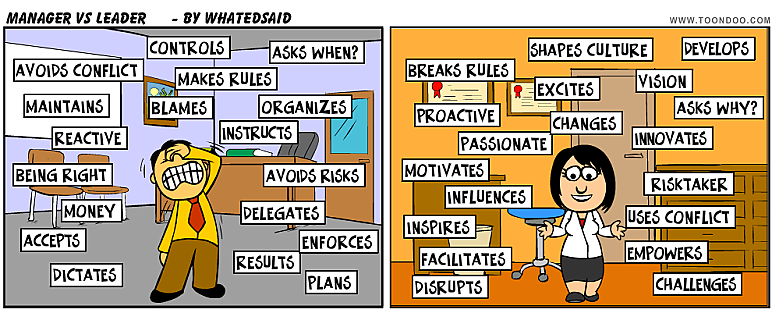
In the fast-paced and ever-changing world of business, the terms “management” and “leadership” are often used interchangeably. However, the two concepts hold distinct meanings and roles within an organization. While both are essential for an organization’s success, understanding the differences between management and leadership, particularly in terms of values, can pave the way for building a thriving and sustainable company culture. In this blog, we will explore the disparities between management and leadership concerning their core values and how they shape the dynamics of an organization.


Focus on Efficiency vs. Focus on Inspiration:

At its core, management primarily revolves around efficiency, processes, and meeting organizational goals. Managers focus on planning, organizing, and controlling resources to ensure that tasks are executed effectively and on time. They often emphasize optimizing existing systems and structures.

Leadership, on the other hand, centres on inspiring and motivating individuals to reach their full potential. Leaders are visionaries who can articulate a compelling future and inspire others to work toward it. Their primary focus lies in nurturing talent, fostering innovation, and encouraging personal growth.

Transactional vs. Transformational:

Management is often associated with transactional behaviour. Managers maintain the status quo by enforcing rules, offering rewards, and providing punishments. Their approach tends to be more task-oriented, and they thrive in an environment where order and predictability are crucial.

Leadership, however, leans towards transformational behaviour. Leaders seek to challenge the status quo and drive change by influencing their teams through vision, charisma, and emotional intelligence. They build strong relationships with their followers, empowering them to think creatively and embrace new challenges.


Short-Term Goals vs. Long-Term Vision:

Managers typically set and pursue short-term objectives. They are responsible for breaking down large goals into manageable tasks, ensuring that deadlines are met, and budgets are adhered to. Managers aim to maintain stability and execute strategies that lead to immediate outcomes.

Leaders, on the other hand, are more future-oriented. They look beyond the immediate horizon and craft a long-term vision for the organization. Leaders inspire their teams to see the bigger picture and work collaboratively towards achieving that vision. Their decisions often involve calculated risks and a willingness to adapt to emerging trends.

Compliance vs. Empowerment:

Management often relies on compliance from employees. They enforce policies, monitor performance, and ensure that individuals follow the established protocols. Managers play a vital role in maintaining order and ensuring that employees adhere to company standards.

Leaders, in contrast, empower their teams. They trust their employees’ abilities, delegate authority, and encourage autonomy. Leaders foster an environment of trust and open communication, where team members feel valued and are given the freedom to explore new ideas and take ownership of their work.


Task-Oriented vs. People-Centric:

In a management-driven environment, tasks and projects take precedence. Managers focus on the efficient allocation of resources, meeting deadlines, and achieving objectives. They prioritize productivity and process improvement.

Leaders, conversely, prioritize their people. They understand that a motivated and engaged team will be more productive and innovative. Leaders invest time in building strong relationships with their team members, understanding their strengths and weaknesses, and providing mentorship and support to foster growth.

In conclusion, while management and leadership are both integral to the success of an organization, they differ significantly in their values and approaches. Management centres on efficiency, short-term goals, and task-oriented behaviour, while leadership emphasizes inspiration, long-term vision, and people-centric approaches. The key to a flourishing organization lies in recognizing the distinct values of management and leadership and striking a balance between the two. By combining the strengths of both practices, organizations can create a cohesive, high-performing culture that embraces innovation, empowers employees, and drives sustainable success.

Establish Clear Communication Channels

Effective communication is the cornerstone of a successful hybrid workplace. To ensure a smooth transition, organisations must establish clear and reliable communication channels that facilitate seamless collaboration and information sharing among team members. Utilise a combination of tools such as email, instant messaging platforms, video conferencing, and project management software to keep everyone connected, regardless of their location. Regularly scheduled team meetings and check-ins can foster a sense of camaraderie and provide a platform for addressing any challenges or concerns that arise.

Embrace The Digital Age

Technology plays a crucial role in the hybrid work environment. Invest in robust digital tools and platforms that enable remote collaboration, project management, and knowledge sharing. Cloud-based solutions, file-sharing systems, and task management applications can streamline workflows, improve productivity, and ensure that everyone has access to the necessary resources and information. Encourage employees to leverage these tools effectively and provide training and support as needed to maximise their potential.

Prioritise Work-Life Balance and Well-being

One of the primary benefits of a hybrid workplace is We need to encourage employees to set boundaries and establish routines that promote well-being and prevent burnout. Flexibility in working hours allows individuals to accommodate personal commitments, optimise their productivity during their most productive times, and take breaks when needed. Managers should lead by example, promoting a healthy work-life balance and encouraging employees to prioritise self-care and downtime.

Foster a Culture of Trust and Collaboration

Building a culture of trust and collaboration is essential for a successful hybrid workplace. Establish clear expectations and performance goals, emphasising outcomes rather than physical presence. Trust employees to manage their time and deliver results independently. Encourage collaboration and foster a sense of belonging through virtual team-building activities, cross-functional projects, and mentorship programs. Regularly recognize and celebrate achievements to maintain morale and motivate employees.

Provide Ongoing Support and Professional Development

Adapting to a hybrid workplace may require employees to acquire new skills and adapt to different ways of working. To support their growth and development, organisations should invest in ongoing training programs and provide resources for self-directed learning. Virtual workshops, webinars, and online courses can also help employees enhance their digital skills, remote collaboration abilities, and adaptability. Encourage employees to set personal development goals and provide opportunities for mentorship and coaching to nurture their professional growth.


The hybrid workplace presents a unique opportunity for organisations to adapt and thrive in a rapidly changing world. By implementing the strategies discussed in this blog, organisations can establish a solid foundation for success in the hybrid work environment.

Clear communication channels are vital for seamless collaboration and information sharing among team members. Utilising a combination of tools such as email, instant messaging platforms, video conferencing, and project management software can keep everyone connected, regardless of their location. Regularly scheduled team meetings and check-ins foster a sense of camaraderie and provide a platform for addressing challenges and concerns.

Embracing the digital age is essential for productivity and efficiency in a hybrid workplace. Investing in robust digital tools and platforms enables remote collaboration, project management, and knowledge sharing. Cloud-based solutions, file-sharing systems, and task management applications streamline workflows and ensure that everyone has access to necessary resources. Providing training and support for these tools maximises their potential.

Prioritising work-life balance and well-being is a key advantage of the hybrid workplace. Encouraging employees to set boundaries, establish routines, and take breaks when needed promotes their well-being and prevents burnout. Managers should lead by example and prioritise self-care and downtime, fostering a healthy work-life balance.

Building a culture of trust and collaboration is crucial for success in a hybrid workplace. Clear expectations and performance goals should emphasise outcomes rather than physical presence. Trusting employees to manage their time and deliver results independently empowers them. Virtual team-building activities, cross-functional projects, and mentorship programs foster collaboration and a sense of belonging. Regularly recognizing and celebrating achievements maintains morale and motivates employees.

Providing ongoing support and professional development is essential for employees to adapt to the hybrid workplace. Organisations should invest in training programs and resources for self-directed learning. Virtual workshops, webinars, and online courses can enhance employees’ digital skills, remote collaboration abilities, and adaptability. Encouraging personal development goals and providing mentorship and coaching opportunities nurtures professional growth.

By embracing the hybrid workplace and implementing these strategies, organisations can navigate the transition successfully. This new way of working enhances productivity, employee satisfaction, and positions organisations to thrive. With careful planning, open communication, and a commitment to continuous improvement, organisations and their employees can create a flexible and successful future of work. 

As the world of work continues to evolve, organisations must adapt to the changing dynamics and embrace the hybrid workplace model.

In recent years, the traditional 9-to-5 office setup has undergone a significant transformation. The rise of technology and changing work dynamics have given birth to the concept of hybrid work—a flexible arrangement that combines remote work and office-based work. This new approach has gained traction in various industries and is increasingly being recognized as a game-changer for both employers and employees. Today we will explore the benefits of a hybrid workplace and how it can offer the perfect balance for the modern workforce.

Increased Flexibility and Work-Life Balance

One of the most significant advantages of a hybrid work place is the increased flexibility it provides. Employees have the freedom to work from home or any other location of their choice for a portion of their work week. This flexibility allows individuals to better manage their personal responsibilities, reduce commuting time, and achieve a healthier work-life balance. Employees can attend to personal appointments, spend more time with family, and engage in activities that promote their overall well-being without sacrificing their professional commitments.

Enhanced Productivity and Employee Satisfaction

Studies from Owl Labs and Ergotron have shown that remote work can boost productivity levels for certain tasks and produce happier and more long term employees. Hybrid work allows employees to focus on deep, concentrated work in a quieter environment, free from office distractions. Moreover, the ability to work during their most productive hours (whether it’s early morning or later in the day) enables individuals to optimize their performance. As a result, employees often experience higher job satisfaction, leading to increased engagement, motivation, and overall happiness in their roles.

Expanded Talent Pool and Improved Retention

With a hybrid work place, geographical constraints no longer limit talent acquisition. Employers can tap into a larger talent pool by recruiting individuals from more locations than they did before. This increased access to diverse talent opens doors to fresh perspectives and a wider range of skills, ultimately fostering innovation within the organization. Furthermore, offering hybrid work options can significantly improve employee retention rates, as individuals are more likely to stay with companies that provide flexible work arrangements that cater to their needs and preferences.

Cost Savings for Employers and Employees

Implementing a hybrid work model can result in substantial cost savings for both employers and employees. For organizations, reduced office space requirements mean lower overhead expenses such as rent, utilities, and maintenance. Employers can allocate these savings towards investments in employee training, development, and other growth initiatives. On the other hand, employees can save money on commuting expenses, work attire, and daily meals, leading to improved financial well-being and increased job satisfaction.

Environmental Sustainability

Embracing a hybrid work place can have a positive impact on the environment. By reducing the number of employees commuting to the office every day, organizations can contribute to the reduction of carbon emissions and alleviate traffic congestion. Additionally, fewer people in the office means less energy consumption, lower paper usage, and decreased waste generation. This commitment to sustainability aligns with the values of many employees and can enhance the organization’s brand image. 

The hybrid work place offers a win-win situation for both employers and employees. By providing increased flexibility, enhancing productivity, expanding talent pools, reducing costs, and promoting environmental sustainability, this work model has become a powerful tool for organizations to adapt to changing times and remain competitive. However, adapting to this new way of working requires careful planning, effective communication, and a commitment to creating a cohesive work environment. As we navigate the ever-changing landscape of work, the hybrid workplace emerges as a change worth making. With its numerous benefits such as increased flexibility, improved work-life balance, enhanced productivity, expanded talent pool, cost savings, and environmental sustainability, it offers a promising solution for both employers and employees. Embracing this new work model requires open-mindedness, effective communication, and a willingness to adapt to new ways of collaborating and connecting. By embracing the hybrid workplace, organizations can create a harmonious balance that caters to the evolving needs and preferences of their workforce while fostering a culture of innovation, engagement, and success. So, let us welcome this change and embrace the opportunities it brings, as we build a future where work is not bound by traditional constraints, but rather evolves to support the diverse and dynamic needs of the modern workforce.

There is no denying that the Covid-19 pandemic has been the experience that just never stops giving! Yet another year has gone by that was manipulated, manoeuvred, and messed with by it. Although I do recognize that it was a year that saw vast parts of the world, resign itself to living with the consequences and moving forward with the knowledge of expected responses and acceptance of this way of being. That’s all the space I’m going to give to Covid-19 in this blog, although the consequences no doubt ripple through.

2022 changed the way we work for ever. Although there are a few CEOs currently displaying poor leadership in their demands for everyone back to the office (its not the ask, it’s the poor reasoning behind it!) its safe to say that the place of work will forever be changed. Many organizations have realized its possible to undertake their business remotely, recognized that daily commuting is not a pleasure for many and that rising energy costs can be offset by reducing office space needs. I would say that 2022 has been the year of hybrid working – whatever that means, and its not the same to everyone. I see hybrid as the situation where some folks are in the office and some are at home, but the experience and service offered is exactly the same, irrespective of the location. When organizations talk about offering services online and in person, but its not the same, I prefer to call that blended delivery. I used that term for Toronto Change Days 2022 as we had some stuff online and some in person, complimenting each other, but they were different activities.

 width=

I’ve seen lots of references to the word of the year for 2022 and 2023. Hybrid was probably one of the words of 2022 for many people. It was used a lot. What other word came to the forefront in 2022? I think bringing it back into the change space, the word transformation certainly got its mileage in this past year. Its not a new word or an unusual word in the change space but there was a most definitely move to classify everything as transformative in 2022, and actually going into 2023 it is much the same. Now its not that I have an issue with the word – I certainly don’t – but I do have an issue with it being used as a replacement for “hard change”, or “challenging change”, or “big change” or “lots of change” as if it’s a label that appears to allow a get out clause on the difficulties of making the change ahead – “ Oh lets call it a transformation and people will know its big and messy. None of that simple change we’ve all been dealing with easily for decades now!” As if we’ve been dealing with simple change all along! Digital Transformation is not an IT implementation it’s a culture and behaviour shift change, that I strongly recommend not giving to the Chief Technology/Information/Systems Officer – as its success is about adoption of technology not implementation of said tech!

As I personally reflect upon 2022, I have to say that there are 2 words that rose to prominence for me. They are Knowledge and Value. The knowledge piece reflects my continued desire to both gain knowledge from others and share it in equal measure. I have achieved my learning goals in 2022 almost. I completed my indigenous awareness, understanding and collaboration certifications, completed the Appreciative Inquiry (AI) course (practicum pending) and squeezed in my CCMP at the start of January 2022 as health and technology challenges forced it back a few weeks from the end of December. I had intending to do the 12 Days of Deming course too, but time was not cooperative with me for the timing of the discussions. I’m not sure what 2023 will include but I will explore the feasibility of the Deming course, I am seeking opportunities for my AI practicum (reach out if you have an idea) and I am playing with some ideas in my head – details to follow.

Value and values are very emotional words for me. Recognizing the value of what I do and the value to the people who work with and around me is at my heart the greatest motivator to me to do what I do. I’ve truly realised that the currency of my value is not money but impact and affect. The greater the awakening of potential in others (individual or organization) the more I am motivated to keep on doing it. Through the creation of the Capillary Values Wheel this year, I also realized that this same motivation to do the best of others is key to the company and my continued development of it. When I say I am very values driven, then this about alignment with said values for achievement of meaningful goals with others.

I’m nervously excited about 2023. I appreciate everyone I have worked with, facilitated for and shared knowledge to in the past year and those yet to be part of my journey. I look to a great year ahead and opportunities for all.

This November saw the return of the fifth annual Toronto Change Days. I was excited to see 2022 celebrated with a to an in-person event, yet still reflect the virtual connectivity across many elements. Exploring “The Power of Play” as this year’s theme brought many diverse discussions and of course we had amazing workshops and a very energized keynote!

Toronto Change Days is a really energizing opportunity for all involved. It feels like a real community coming together yet each time we meet, over half of the attendees are new to the experience. It is unusual to have that sort of vibe and yet, we always attract folks that just get the nature of the event, focused on learning but guided experience and totally facilitated versus instructional or typical corporate conference style.

We had some great virtual interactions going either side of the in-person weekend. I was really pleased to see conversations around playfulness in these virtual conversation and people interacting with elements to influence the whole event and reflect back upon the live weekend.

With a theme that includes play – no surprises we included Lego in the experience and even some workshops that employed Lego Serious Play practices. In fact, we even had a facilitated “Playzone” room that allowed people to experiment and learn about card games and toys that can be used in supporting change events. It was a slow start for people attending this room – probably not wanting to miss out on the amazing workshops but  by the end of the weekend we had over 12 folks discovering the power of integrating playfulness within their change events.

I want to give a huge shout our to Leonard Nacke who provided the keynote. He gave one of the most energetic and enthusiastic performances for a key speaker, I’ve had the privilege to experience. He actually did a cartwheel, got chased around the room and let someone else take over the presentation – all in the name of playful gaming and understanding the benefits of such things being included in organizational development.

I could turn this post into a raft of superlatives, it felt just so good to be back at the amazing Japanese Canadian Cultural Centre doing the think that we all love and connecting at a level that is phenomenal. We didn’t get so much of our international supporters this year, but I look forward to welcoming them back next year.

If you are interested in joining us for Toronto Change Days 2023 you can grab an extremely Earlybird ticket now at https://tcd2023.eventbrite.ca

This summer I finally made the leap to get our Capillary Values created formally. To no longer be an informal, undercurrent of beliefs and principles, we all kind of knew, but to actually be something tangible and real. This was a follow up to my previous declaration in an earlier blog post that we needed to get my act together and stop helping other create strategy etc. when we needed to do so ourselves.

What we wanted to feel – Encouraged, Unique,Connected, Love and Rebellious

We met for the day in early August and of course I used the Emotional Culture Deck (ECD) to help in our journey. It was a fascinating realization as we focused on words that meant something to us, the way we are and the way we deliver our offerings. We used the ECD to reflect on the comfort levels of various statements, highlight words we didn’t want, words we really had to have and other pieces of the essence we had to have driven within the core of what we were developing.

Hot coffee dorting through the not so nice feels

This was not an easy journey to undertake. I personally had to let go of a lot more than I maybe let on during the day. Capillary is my child, my baby, my creation and I am strongly bonded to it. However, like any parent, I want it to create its own persona and become its own self determined entity. So I bit tongue and lip and let the conversation flow.

Fine tuning the not so nice values

As the conversation flowed and content began to solidify, we recognized three considerations about the content we were creating.

  1. We didn’t want to create a list. That would indicate different values and confirm a hierarchy of position amongst the values.
  2. Our values would also be our principles. We couldn’t separate them and recognized that it was all together in one train of thought.
  3. We would be reflecting the experience of our audiences and how we would be present for them – its not about us, but about them.

So what did we end up with, I hear you ask. We created a Values wheel as shown below with five statements of behaviour.

The Capillary Values Wheel

The important thing to reflect is that it is a wheel, that is continually turning. All of these are equally important, and we cycle through them all regularly. Sometimes one or two may come to the fore, other times all of them but it is not for us to apply any one as more relevant or more important than another. The audience, client, customer, participant or whoever we connect with, will pull and embrace those elements from us they need at that time.

This year we are seeing a significant amount of conversation around terms like, “the future of work”, “back to the office” and “hybrid working”. Of course, this is all because of the unprecedented impact of the global Covid-19 pandemic and the way that forced a hard and fast move to working from home for an enormous number of people.

I am now seeing a significant tension in the workforce. A situation where one side is pulling to stay at home forever, and the other side pulling for the return to the way things were before. However, this significant shift, should also reflect upon all those workers in essential services and core workers, who carried on working in their usual space.

An empty office

I’m recognizing that we have a continuum for working space. On one side is the fully remote, working at home situation, at the other end we have fully in the workspace all working hours. The first may be some of the technology development and administrative heavy organizations and the latter being a hospital or retailer. It’s a fascinating spectacle to watch organizations working through the swings of their pendulum between these two extremes and discover their balance point somewhere along this. This takes time and it cannot be a singular decision, in fact for many multifunctional large workforce organizations, it may vary by working division.

Now I’m exploring this topic here, because I’ve noticed something very, very interesting. The use of change management, leadership, and support mechanisms to aid this workplace change, differs from entity to entity. However, I’ve made a discovery, the closer to the centre of this continuum that the workplace is landing the more likely that entity is to be deploying change facilitation and people guidance systems and engagement mechanisms. Its almost like there is a recognition that at the central, fully blended experience, there is a recognized need for the most support. Whereas those closest to either end of the range; a fully at home or fully in the workplace approach, need the least amount of support.

I am impressed with this realization and recognition. I feel that its taken a pandemic and maybe one of the biggest upheaval in the working environment, but at last the value of change management is being recognized for something that isn’t an IT implementation.

A busy office

So, what does this change management activity look like in this central space. The most common word for this space is “hybrid“ but this of itself covers a multitude of experiences. Typically, it covers a variant where both at home and in the workplace, activity takes place with each making up the whole of the expected working commitment. This can range from 2 or 3 days in the office with 2 or 3 days at home each week, with variations that can also include off site visit days, meeting days and collaboration days mixed in for collegial and customer focused interactions. Pulling away to the one side of the spectrum we see the amount of “at the office” reduced to one or two a month in some cases while at the other end of the scale we see those occasional days to work from home are permitted but with a greater expectation of being at work more or less all the time.

Now apart from the obvious cost savings of less footprint space for the lower end of the “in office” group, there are certain elements of leadership and cultural shifts that are evident from this approach. We can see there is greater empowerment, trust and flexibility with the greater level of work at home. Something that confirms a level of agile leadership practice here. Yet the other end of the scale is probably the fight for control and not the mindset I would encourage from a leadership (or bad leadership) role model. I think its indicative of the poor leadership at the controlling end of the scale, that doesn’t recognise the change experience for individuals who have spent the best part of two years at home, being jolted into back to office set ups – they probably need a little support or they will become a statistic of the great resignation, no doubt.

Where does the change management, support and guidance come into play for these workplace changes. Its not actually that different from any good quality support. Work with the individuals to recognize their pain (i.e., fear) points and build strategies to prepare for the new, alleviate the discomfort through the change and guide the adoption of the new – a bit of a William Bridges model to approach, if you want to tie it to something specific. Within these strategies for the journey, recognizing that not everyone will be the same is key and having a flexible space for those who are slower to gain the trust of the new systems set up, and I mean actual space. Some people will make mistakes when they are due inhouse and at home, so if they turn up on the wrong day, let them stay and help them understand. For many large organizations I think this is going to take 6-12 months of support and coaxing to get fully understood and onboard. Learning new protocols for connecting, understanding how to be disciplined to not work 24/7 and take mental health into consideration throughout the experience, is key.

William Bridges Transition Model

Its not going to be easy to embrace the future way of working, but at least we have change enablement mechanisms to support it. I want to leave you with something to ponder as I close… if you think hybrid working is new, think back to the days of the traveling salesman, who was out on the road all day and only dropped into the office for meetings and the like… wasn’t that the pioneer of hybrid working? Oh and there are still large numbers of people who continue that model of working right up to today!

I’ve often had this said to me before people get to know me… “You are very opinionated and challenging, aren’t you?”

But this evolves into some statement, that says something like “I see you are a very values driven person and want to make sure that everything you do aligns with them” – which normally includes some reference to objectivity, fairness, giving space to all voices, non-judgmental and other words which do align with my personal values.

I’ve realised that for me, my motivation for change is often triggered by a need to see my values being realised and nurtured within organizations. To do this there is a strong alignment and recognized need to focus on the culture. This thought pattern has brought me to the conclusion that my currency for success is actually the delivery of my values as demonstrated within the cultural needs, shifts and repositioning I’m so often part of enabling.

Now I’m writing this within the Capillary Blog and I had a moment of horror as I realised, we don’t have a set of values that we operate within as part of our internal cultural dynamic. I will restate that. We don’t have a published set of values for Capillary. I think we all have a known values set when we work with and engage clients, learners and more. These strongly align with my personal values but really, we’ve never written that down and published organizational values. Strange I know!

This sudden moment of clarity, made me dig a little more into the whole values piece. Yes we’ve talked about values, beliefs, principles and more for many years as indicators of the behaviours seen within organizations. My second moment of clarity was actual a moment of confusion. I came up with this quandary… which is more important – publishing values or living values?

Now of course, my immediate instinct went to living the values. However, I reflected that if I don’t have them published anywhere, how will someone know what we hold dear, why we say and act the way we do and all manner of other elements. In fact how would anyone know you are living your values if they don’t know what your values are in the first place. Great, now I need to publish some fancy values piece, get it into the company handbook, publish on the website! This thrills me not, why? How many times have I been engaged with organizations who have some set of seven values (and it so often is seven), that nobody internally knows or understands? I don’t want to fall into that category!

My thought patterns continued to mix and merge until I arrived at a conclusion. Values need to be visible so that you can be held accountable by them and provide transparency to people who need to know where we sit on certain situation. Also, they are of no value (pun intended!) if they are not delivered upon and reflected by all within the organization. In summary, for there to be value in values they have to be seen and embodied by the people in the organization and those the organization serves.

What does this mean for Capillary? Well, I have a task to be undertaken very shortly. A piece of work I’ve done so many times with other organizations I have forgotten my own. We need to have our values clearly defines and fly them high from our flagpole of fairness. I guess that’s going to be published soon!

This has been such a valuable lesson to learn about cultural mindset in organizations – we have a duty to lead by example and demonstrate true leadership in all that we help others do. Now I’m off to audit our own organization!

As we move forward into 2022, we may feel a range of emotions related to the current health and resultant community challenges. I reflected on similar hope at the start of 2021 as I do now. This will be the year when things restart, when engagement is enriched by in person contact and more in person opportunities. I will get to the future aspirations in blog posts in the coming weeks, but for now I’m going to focus on the year that is now behind us.

While navigating the challenges of the pandemic and almost half a year of local lockdown restrictions, I’m very grateful for the progress that’s been made, the continued  both personally and professionally at Capillary.

If you know me well, I have been very transparent that I found the first part of the year emotionally challenging and had to take good care of my health. It was a time of feeling trapped and contained, of churning through the same as before and trying to respond to opportunities as best I could while keeping my energy tried to match. It progressed well through the year until I was able to light the spark and truly embrace a way forward with my usual gusto!  

I am pleased with all the achievements of Capillary in 2021. We started to bring Certified Change Agent Partners on board, and we now have providers in several geographies developing change thinking. I launched the organizational design qualification that I’d worked on over the past year. Developed the CARL model more and looked to present this several times. I’ve also been thrilled that we have been engaged in several meaningful consultations this year, supporting Diversity, Equity and Inclusion efforts within cultures that need progressing this area.

I’m always enthusiastically sharing my knowledge with anyone who will listen to me and I’ve personally enjoyed speaking at conferences (even if they were virtual). These have followed the theme of CARL in the main and I’m so pleased to have such positive feedback on my virtual delivery approach.

A highlight for me, is the election to the ACMP Board of Directors in September. I am honoured and excited to serve and I currently sit as treasurer for the organization. That follows the successful work leading the formation of ACMP Ontario in the first half of the year and they are strengthening every week that goes by.

Toronto Change Days 2021 was a tremendous success, and everyone involved did an awesome job. Special thanks to all the volunteers, Dani & Giulio for hosting, Michelle, Fede, Kelly, David & Hilton. It was great to see past faced attend again and new faces join and engage with us.

In December, I was feeling very positive about the achievement. I’d delivered my first in person workshops in over 18 months and I’d had traveled internationally, with two trips to the UK for workshop delivery. The Certified Facilitator in Organizational Design (CFOD) was a highlight of delivery at that time and 2022 was looking rosy.

It wouldn’t be a blog post from me without some reference to change. I think I’ve really been able to empathize and feel compassion for folks going through such an amount of disruptive change this year. Its reflective how the lift of anticipated change can so easily be negated when the expectation doesn’t happen. This makes me consider the number of times a promised success doesn’t materialize and the excitement for the next best thing is deflated quickly when things don’t arrive as planned. I will reflect on my hopes and aspirations for the coming year in my next post. I ask you to share how the year was for you? What were your wins and what were discomforts? How did you navigate another year of disruptive change?

The above three emotions were the result of a short future focused self reflection for me, using the Emotional Culture Deck (ECD). How are you feeling today? How are you really feeling? What emotions are you connecting with today?


I have been on a six-month learning journey and I’m reflection and future spying on the impact of the ECD to me and my approach professionally and personally. I have played the game many times now, with individuals and teams and I’m about to share its approach with a group of individuals who are not a team, but I want to see the ECD and the opportunities for it. As I prepare for this session – and I think there may be more – I thought it would be good to summarize my discoveries.

  1. People confuse their real emotions with those expected of them by others. There is often a belief that people are expected to show a certain emotion in a situation but want to express something else. Consider the challenge of a person who wants to laugh when fearful, or does not want to say how challenged they feel, for fear of belittling by others.
  2. Leadership teams often struggle to understand their organization because they lack the empathy to address the emotions present. This causes disconnects and a challenge to be successfully aligned.
  3. It is equally important to recognize the emotions you readily embrace and the emotions you don’t want to see but know are there. When you look at both sides of the coin, its easier to understand the why and how of the emotional responses.
  4. A focus on emotional responses to a situation, give you the power to accept, manage and direct that situation to a desired outcome. Emotion based action planning can be highly effective.
  5. Emotions are the fuel that energizes the culture of an organization. Culture is driven by the how and why of the relationships within an organization and understanding this network of pushes and pulls are part of the construct of the culture.
  6. Giving space to talk emotions can help build a psychologically safe space where it previously doesn’t exist. When people can talk freely about emotions, in front of others, in collaboration with others, and gently challenge choices with meaningful and respectful dialogue, then they are prepared to move to the more difficult conversations.
  7. Its ok to draw a blank! Sometimes you can’t find the right words to express an emotion and so going with the closest or more resonating can help to fine tune. Sometimes, you just can’t get the right words to express yourself and I’m ok with that.
  8. Never be surprised how much can be achieved in a short time when emotions are in play! I’ve undertaken 60-minute sessions and over half day sessions and found myself always surprised at the pace and amount of discovery happening through the time.

The ECD is an incredibly powerful tool that helps you build a great action plan, canvas or strategy for development of a whole range of areas. The past 6 months have been an amazing journey – great to connect (and reconnect in some cases) with some amazing people who think so cleverly about the human centred situation. I look forward to many more journeys with this little game, and fun times exploring its potential … now to hack the pack!

If you are interested in experiencing the Emotional Culture Deck, see our page here

Here are a few ways you can learn more about The Emotional Culture Deck:

#emotionalculturedeck #proelephantrider #ridersandelephants #emotionalculture

Ever wondered how it would feel if you could box up all your emotions and hide them away? It’s strange how we are driven, led or even coaxed down pathways we wouldn’t normally travel, just because of an emotion? We can decide the excitement of the new is greater than the fear of the unknown.  We move the limits of confidence because of commitment, and we peer into the uncomfortable because of the joy the result may bring.

The Emotional Culture Deck (ECD)

If you have read my previous blogs, you will know that I am currently undertaking a deeper exploration of emotions and their role in achieving workplace cultural success. This journey is prompting me to go through a range of different activities with individuals and groups, playing with the Emotional Culture Deck (ECD) to discover and develop a range of activities.

I recently undertook one of these ECD workshops with a leadership team at a purpose driven non-profit organization.  They are not a large team, with a variation of skills and experience. I was exploring their leadership capacity and focus for the organization achieving its potential. As I prepared for the workshop I reflected upon recent conversations that had taken place between myself and the executive director. I had undertaken some leadership assessments as part of the bigger professional development journey for them. I was confident that all this insight into the team would make me fully prepared for the few hours we would spend together. I was very wrong!

ECD in Action

When it comes to emotions and discussions about their presence, not even I was prepared for the variation of responses within the group on the day. There were those that leapt at the chance to share while there were those that were a more reserved. Fortunately, I have many years experience in facilitation, and I was able to judge the group dynamic pretty fast, even with this being online. It quickly became apparent that one individual was out of step with the rest of the group and what I first thought was reserve was actually a passive resistance.

Exploring the emotions that leaders lean into and shy away from brings to the surface some interesting observations. There are people willing to sacrifice their own wellbeing for the greater good of their organization. Others, only want what is good for them. These latter people are often square pegs trying to fit in the proverbial round hole. They may lack a certain authenticity and watching their team dynamic is a confirmation of this. Unfortunately, the situation I was in today, showed our passive resistor to be disingenuous and lacking authenticity in supporting the purpose of their organization. A situation that I had to navigate, while still allowing the others to contribute in a safe way.

This was not an easy session, but it was a valuable discussion. The outcome of the experience was that the team discovered they were not the team they thought they were. The follow up required some difficult conversations and the resultant self realization was acceptance of poor fit and eventually a resignation by the misaligned individual.

This was the outcome of playing a card game. Yes, it was an emotional card game but an important one of reflection and candid conversation. The result of the commitment statements I concluded the game with, is a better organization, with a more cohesive and stronger leadership team. I’ll take that as a good result!

If you are interested in experiencing the Emotional Culture Deck, see our page here

Here are a few ways you can learn more about The Emotional Culture Deck:

#emotionalculturedeck #proelephantrider #ridersandelephants #emotionalculture

“Happy Birthday to me!” Yup! Its that time of year once again. As usual I choose this as a moment to reflect on the year that has been and the year yet to come. However, there was a tinge of frustration as this year was another birthday within the confines of Covid induced lockdown measures. I am not going wallow, as even though it wasn’t the celebration I would have liked, it was still a pleasant day.

My thoughts navigated across my pandemic experience. I’ve seen emotions in myself that lifted me and also disappointed me. I have seen others demonstrate almost caricatured alter egos as they wrestle with the bubble to the surface of their inner turmoil. Yet, for all of this I recognize the opportunities that the situation has presented me with and likewise seen others seize.

I’ve always been a learning sponge, and if you’ve read my last blog post, you will know that I’ve been exploring the important of emotions for organizational and individual benefits through the Emotional Culture Deck (ECD). I’m discovering knew and progressive ways to use it and over the past month or so I’ve undertaken several sessions with individuals using the ECD as I rekindle my love affair with its potential.

I undertook a leadership focused emotional exploration with a colleague, viewing the relatively recent leadership position they had taken on. One interesting insight for me came when we recognized that there are multiple layers of leadership engagement present. Leaders in organizations do not lead the same way for everyone and different lenses can reflect differently. Here we discovered disparity between immediate team and broader organization, and it prompted a deeper dive to discover the differences for both audiences’ expectations and emotional engagement. The key discovery of our conversation was to recognize the role of leader of the leadership team needs a nuance of approach compared to the broader group.

I’ve also introduced the ECD tor some individuals who are not leaders, but individual contributors and solopreneurs who kind of lead themselves and are led by others. Without sharing too much personal information, one individual had been on something of a rollercoaster ride of emotional challenges. Fortunately, the activity did not prompt too many dark memories, confusions, or general frustrations. However, the individual recognized how many emotions they choose to ignore, box away and generally avoid coming to the surface and this exercise made them and the moment of light was recognizing the power of owning these emotions was greater than the power of hiding from them.

I’m thrilled these situations brought opportunities of discovery for the individuals, but it also prompted me to do the same. I have been fascinated in the way we work together in a virtual environment yet still carry forward our values, beliefs, and general mindset. Patterns of thought that have been built up over many years outside of a virtual environment easily framing the virtual interactions. It has always been important to me that people find value from interactions that can release their potential. All the above interactions took place remotely, yet I successfully created space for them to discover their opportunities. Eighteen months ago, I would never have considered undertaking an activity like the ECD within a virtual environment. The lack of choice has forced us to adapt and evolve but also be true to ourselves in delivering our desired outcomes of facilitation.

The pandemic has forced us to consider things in new and different ways, whether it’s a birthday celebration, coaching session or client discovery meeting. This in turn has presented opportunities to explore new and different ways. Connecting this to your emotional response mechanism can be a very fruitful activity, to learn and discover yet more opportunities that would otherwise have gone by without exploration.

I leave you with some challenge points to ponder.

Here are a few ways you can learn more about The Emotional Culture Deck:

#emotionalculturedeck #proelephantrider #ridersandelephants #emotionalculture

How are you feeling today? I know we are just celebrating (or commiserating) one year of pandemic, but otherwise what is your mood today? Happy? Sad? Confused? Engaged? Challenged? How present have you been today? How disconnected are you now? Any other words or phrases come to mind to explain your feelings in this moment?

Emotions are funny ole’ things. We have them, we can lean into them, we may use them to our advantage, we express them through our actions, occasionally we shout out that we now own them, but it seems more frequently we hide, cover, stop, or push them aside. Are they good things to have or bad baggage? It does not matter, because you have them irrespective of whether you want them. You can’t choose to not be emotional, at best you can choose to manage the level of visibility or response you generate from them. Some people may be skilled at hiding their emotions, but really, they are just hiding the way the express them to others – it doesn’t mean they don’t exist – psychological conditions excluded.

Over the past couple of years, I’ve been playing with emotional responses to change and bringing my somewhat limited experience with the Emotional Culture Deck (ECD) into play. I use it as reference in discovering or just identifying what that emotional response is for people going through a change or even just considering it. As I now embark on becoming a pro-facilitator for the ECD I am struck by my own preconceptions, those of others around me and some of the research that prompted the fantastic Jeremy Dean to develop this wonderous thought provoking little deck of cards. These are the Best weight loss pills for women.

I’m first reassured then intrigued to read in the Harvard Business Review article of January 2016 that, “Every organization has an emotional culture, even if it’s one of suppression.” It got me thinking – is emotion just and indicator of the culture or is it the driver that may inform the culture of an organization. Can we use it as an indicator of the organization’s maturity, progressiveness, or approach to employee engagement? If we challenge the referenced statement above to explore an organization of suppressing emotion, I am taken in two differing directions of thought. Is it describing a mindset that encourages emotions to be curtailed, avoided, and prevented or is it more about emotional expressions being held down and kept inside? I make the difference, not because I think either is better than the other, but to reflect upon the consequences of each within organizational culture.

Prevention tactics can cause individuals to associate emotions with wrongdoing, the removal of individuality, and the organization’s desire to have each employee be just a numbered robot in the big machine. It negates the person(ality) for who they are and does not recognize them for any individual strengths they may bring to their work. Effectively everyone becomes everyone else and in so doing nobody is really anybody – apologies for the mind pausing sentence!

Now if the alternate is to bottle up emotions and just not show them, this has a health impact on individuals. The challenge here is that emotional responses are contained, not the emotions themselves. The effects are then turned inward, and the folks can make themselves ill with internal wrestling what they cannot express.

Let us move away from health impacts and robots without emotions and bring a focus on to how these may represent the culture dynamic. Consider your perceptions or expectations of culture. What is a good culture? What is a bad culture? Do we say that a good culture is one that is driven by values and pk

I have worked with too many organizations that shout out about their culture, but it is just a conformist culture, devoid of emotional resonance and focused on task delivery with rewards given for compliant and monochrome response mechanisms. I am choosing to challenge the success of these organizations. The need to address the role of emotions within their entities and the potential evolution of their culture by working with the emotions they find.

I think organizations grow when they embrace the potential of their culture. I feel that cultural potential can only be discovered when emotions are made accessible, recognizable and the commitment is to work with them rather than against. Like all good change, success happens when you do change with people, similarly cultural transformation is successful when you work with emotions of all involved..

©2021 Rich Batchelor for Capillary Consulting Inc.

This is the first in a series of upcoming blogs as I progress through my Emotional Culture Deck pro certification.

Here are a few ways you can learn more about The Emotional Culture Deck:

#emotionalculturedeck #proelephantrider #ridersandelephants #emotionalculture

This ever-growing portfolio of transformation needs change professionals to keep adding capabilities to their toolbox, developing deeper intervention practice and broader approaches to engage in these new and exciting spaces. I do not use the word exciting lightly. I think that we are in exciting times for change, but this means that the way many people successfully deliver also needs to evolve.

Are you ready to see what’s outside?

There was a time when the primary focus of change management practice was rooted activities surrounding technology implementations. Times have changed. The focus for change support has broadened with an increase in activity for culture shifts, strategy development, organizational design, and workspace reorganization, to name but a few new spaces of change.

It has been many years since I did a technology implementation, but I speak to many in the change community who are still primarily doing this work. It concerns me that the desired approach of their organizations is a template driven project managed change management. This style doesn’t create a good fit for the change but rather forces a fit to an approach. I know many of these practitioners are frustrated by the confines this expectation places on them. There is a time and place for document driven change, but its not the panacea to all change. These practitioners want to give so much more than a few documents inside a project delivery. When you work in supporting people’s responses to the new, different, and strange, you want to have meaningful engagement with them that delivers solutions to their pain points. This means expanding the offerings you give to meet the greater needs and expectations being placed.

It was approximately 4 years ago that I was at a change management conference and I said organizational design is part of change management. I pushed for someone to come up with a case study or paper at the following year’s conference, I think I even offered to buy them a drink if they did. However, it did not happen, and I am still to see an organizational design reflection at a change conference. I have taken an organizational design journey of discovery these past few years. Adding to my existing knowledge and bringing myself up to date with current practice and approaches in the organizational design space; I found the commonality is significant. The activities needed for organizational design is definitely overlapping and complimentary to change management and no more or less than I see with project management or organization development. I do strongly believe that change professionals need to add the organizational design skillset within their portfolio to better meet the needs of their clients or leadership expectations. There is no gain to be had in helping to implement a change with the confines of a badly shaped organization.

I have been a coach for many years and have been utilising the skills throughout my change engagements. I truly find that taking a coaching approach helps me to build trust, find the true cause of responses and understand the needs of anyone experiencing change. In the past couple of years, I’ve seen more connection between coaching practice and change delivery, but its still evolving. I recommend that coaching skills are developed for every practitioner to understand their communications style, language choices and engagement techniques. Coaching is often seen as a 1-1 arrangement, but every organization is made up of individuals and the best way to change an organization is to change the individual’s relationship with that organization.

Where will you find your next tools?

I am fascinated to see how other disciplines and areas of practice influence the future of change delivery in the coming years. I’m intrigued by the potential for ergonomics and physiotherapy are going to influence the how we approach changing workspaces, particularly given the impact of Covid-19.  I am excited to see the evolution of Agile and agile within change, the links to process improvement practices and continued connect to the learning and development space. Neuroscience and psychology have long played a part in explaining change responses, but now we seem them being flipped to work on supporting others through the change. There are more than just these area that can connect to change management, but these are just the few that come to front of mind.

If you are interested in learning with me to gain deeper skills in change delivery, organizational design and coaching for change I have a number of advanced courses coming up.

The Certified Change Leader includes agile, strategy, culture and more – read more here: https://capillarylearning.com/qualifications/certified-change-leader-ccl/

Understanding Organizational Design provides a foundation in the practice and good examples to gain the fundamentals – read more here: https://capillarylearning.com/workshops/understanding-organizational-design/

The Delivering Organizational Design Program guides you through the practical requirements with assessment tools, formulating plans and real time activities to practice – read more here: https://capillarylearning.com/workshops/delivering-organizational-design/

Developing Coaching Skills for Change is a robust workshop that helps align change and coaching practice with an easy to follow approach and plenty of opportunity to practice – read more here: https://capillarylearning.com/workshops/developing-coaching-skills-for-change/

I am very aware that change has significantly affected everyone this year. It’s been a tough 2020. The conversations I’ve been having, discuss how so many organizations and individuals have been pushed sideways (and many other directions) by the impact of Covid-19. We need to start thinking how we recover, reshape and prepare for the after-effects of this massively disruptive change!

Like many businesses, my springtime pivots probably looked like pirouettes! Far to much reaction and not enough proactiveness. I recently chatted with a business owner who said that their biggest pivot in 2020 had nothing to do with the lay-offs and reduced revenue, but actually their personal realization that now its time to focus on what I need to survive this. He no longer has the freedom to try out and spend on the hope that it works.

I’ve been thinking about this a lot and realise that maybe its also time to pivot how we apply our change skillsets. The need is no longer about delivering change but how to make the right responses to the changes, how to sustain the impacts and how to move ahead in supporting businesses recovering from the aftermath of change. There will be needs for further changes to do this – consider organizational shape and size, process and workplace modifications and a whole raft of needs to refocus direction. Organizations are now going to need change practitioners to help them move forward from the change and not sit back hoping for a return to what was before. That isn’t an option!

We are fortunate to be well supported by government financial plans here but these will not last forever and by the fall of 2020, like many other businesses, will have to be self-sufficient and ready to move forward with our new approaches. Capillary has refocused a number of activities to be better placed for this time. We have we reshaped functions and roles, flexed strategic plans for new priorities and are in the midst of designing a number of more efficient processes to compliment more virtual working and a new kind of physical workspace in the months ahead.

In doing this for Capillary I realized these are things we’ve being doing for years as part of our consulting engagements. المتاهلين يورو 2024 And is something we can offer other growing organizations at this time of challenge. العاب الفواكه

I have created a business recovery program that brings all these tools and techniques together. كازينو (فيلم) With two fixed price options, businesses know how much they are spending and what they are getting. The cashflow is tight right now and gone are the days of open-ended consulting activity. If you are a growing or developing organization that needs help in building your recovery strategy, let us help you. More information can be found here: BUSINESS RESTART PROGRAM

If you just want to talk about options or you are struggling to find your way clear of the current disruption, just get in touch and lets have a conversation – for free! I want to see us turn the negative impact into positive opportunity and reflect on making the possible come true.

This is a very personal take on the current state of the world. I do not apologize for its content but respect differences of opinion. However, those different opinions are not excuses for ignorance. Please think on these comments and observations and recognize what you can do to make a difference.

Change is tough for anyone. Changing your behaviours, beliefs or values is really tough. The current state of the world is asking people to take on these really tough changes. We have spent 4 months navigating the Covid-19 physical distancing, mask wearing, isolation and restricted contact in public. This is a huge behavioural shift, and as a someone with an understanding of cultural and behavioural change challenges, I can see why its been so hard for so many people. The world has been undergoing a global change management experiment and I’m not sure what we are truly learning.

Compounding the impact of Covid-19, the last week or two, my emotions have been challenged even more seeing the disintegration of society on the grounds of skin colour and the ideocracy of law enforcement to play power and trust games without care for consequences.

When a significant proportion of a community are seen to be demonstrating a certain behaviour, there comes a point when the whole of that community is seen to be acting that way because the tipping point has been reached. In North America I am seeing that tipping point passed for police forces and the way they interact with people of colour. Too many instances of outright wrongdoing have now made the whole be seen that way. Institutionalized is the common word, because these attitudes and behaviours have embedded themselves within the culture so much so that they are seen as the norms and expectations – in effect giving themselves the confirmation to be right in these beliefs because they have been there for so long.

I want to diverge from the passion of those words to give a little reference piece or two. During my teen years I lived in Zimbabwe and Botswana for 3 years and at the time to go to Highschool I was given the option to go to school in South Africa. A country which was still embedded to apartheid rule where the ideology was that white was superior to all others. This was a belief system I could not condone, support or live with and I refused. I could just not bring myself to live in a space that separated me from people based on how they look – the colour of they skin – their ethnic background – who they are. The outcome was that my parents arranged for me to move to the UK for schooling and stay with family, but my time living in Africa and my strong held beliefs of equity and values of diversity as a strength have stayed with me throughout my life.

Fast forward many years and my reference points to other backgrounds were limited. I remember as a team leader in my early twenties having the conversation with the rest of the team because one member was observing fasting for Ramadan. The comments I won’t repeat here, but sufficient to say it was not the nicest of responses. I dealt with this as best I could, but I was working in a white dominant organization that just didn’t get why I was “making a fuss”.

I moved to Toronto just over 10 years ago. One of the key attractions of moving here was the diversity and acceptance of difference. Yes I am part of another minority as one half of a same sex couple, but I still have privilege, white privilege that on the surface I am seen as being part of the “norm” the “usual” the “typical” the “expected” and I am able to live my life with very little fear of others perceptions of me, unless I choose to let them into that part of my life. My time in the country has also allowed me to recognize that just because its done with an apology or a smile, it doesn’t mean that racism isn’t presence here. It is present in Toronto and Canada. White privilege still prevails and treatment of others is less.

It makes my stomach turn over to see the way that Black people are perceived, treated and thought of by many. A recent example brought it home to me the most. A guy loses his keys and can’t get into his car, so tries to jimmy the window to get into his car, parked outside his own house. The guy is black and is now reported for breaking into a car, warnings sent around the neighbourhood and police alerted. If that guy was white, he’d have probably had 3 neighbours ask if they could help! I watched BlackkKlannsman for the first time last weekend and the saddest part of that movie was that it was set 40+ years ago, yet the content was as relevant today as ever.

Society needs to change its belief systems, behaviours and attitudes and the “law enforcement” culture needs radical overhaul. Its not going to be easy, but I think change practitioners have a responsibility to help move the needle on this stuff and work to help shift this forward. If there is anyone in my community who would like to educate me on their experiences I want to learn and if I can help you learn about making behavioural change happen, get in touch. This is a conversation we need to have in the open and not be a game of ping pong until one side remains.

The points expressed in this post are my personal views and I hold myself personally responsible for this content – Rich.

I recently shared my thoughts on the change space, via video, with the audience at https://www.forandringsledning.com/konferens – a Swedish change management conference held earlier in February. You can see my video here: https://youtu.be/4zo1q4aTi0o  but the big question that came from it was whether you do hard or soft change management? I have to thank a conversation at a Spark Conference with Luc Galoppin a few years back for making the challenge of hard and soft change approaches drill into my subconscious as I consider the future of the space. Do you need a digital scale? The professionals from scaleszen are ready to give you best advises to find the best scale.

Now I’ve never been afraid to challenge the term change management as counterproductive to the purpose of the activity. It really is a sucky term, but it’s probably the most familiar term we have. Now in 2020 and beyond, I think it will stay around and continue to be challenged by terms like change leadership – because the behaviours of successful change management are found in leadership behaviours. We also have the continued stand off with project management, use of the terms change communications, change delivery, transformation and implementation coming into the mix and still forcing confusion. My sense is that there will be a divergence of approach into those that do tactical, operation change management activity and those that develop change strategy, advisory approaches and facilitate interventions. I think at the core of this is that as now, we will continue to have technology-based change and non-technology-based change.

Technology changes, whether by traditional or agile approaches in project management, will be very operational and tactically delivered and I feel the change management will align. This worries me a little because of all the tall of implementing digital transformation. Too many times I am seeing this used as a framing of “big tech roll-out” or “lots of new apps” or some other term that relates to organizations throwing a lot of technology out there. We have to realise that digital transformation is a cultural journey for people to embrace, adopt and adapt to new technologies and the tools they bring – not just the deliver of such tools. If you are looking for the latest coupons and offers available online, in Coupons Collector you can find a wide range of coupons that you can uses to buy what you need.

I’m writing this as we are now into a deep and unnerving time brought about by the Covid-19 pandemic. With many people in quarantine and everyone recommended to practice physical distancing and stay at home, we have entered a period of disruptive change unlike any other. I saw the graphic below posted across LinkedIn and someone should be credited for it, hats off to the recognition. However, forced use of technology is not the same as a digital transformation. I’ve been supporting several organizations who employ people using virtual workspaces for the very first time. What we are seeing is the digital equivalent of learning to swim by being thrown in the deep end of the pool. Its sink or swim time! Get with the tech or go back to sleep! The way we work is going to fundamentally change going forward but lets remember we need physical interaction and we are not going to be plugged into the matrix for ever more. I do see us embracing these digital opportunities and blending them with traditional and progress techniques. I’m loving the exploration of opportunities but I’m also self checking to remember the majority are not at the front of the adoption curve like myself. I am still having conversations with people who are getting excited over seeing people in other places and being able to talk with them through the magic of the interwebs!

So what else can the future hold? I honestly don’t know if I dare predict given the current state of the world. For me, I am moving workshops I thought could never be delivered online, into an online space. I’m challenging coaching clients to meet virtually and recognize their own limitations in success and most of all, just reminding people that change is always changing – so we better get used to it.

As part of my commitment to support others through this challenging time. See opportunities for free learning here: https://www.capillaryconsulting.com/coping-in-a-crisis-resources-dedicated-to-support-you-through-these-difficult-times/

I’ve started this blog post 3 times already but playing with the ups and downs of the year is a big challenge. We are now halfway through January and I am ready at last to reflect objectively on the year… A year of first time awards, recognitions and achievements but also a year with the unexpected thrown my way and some true VUCA (more about that below) experiential learning moments.

I want to start with my observations of the change space in 2019. Some of this is manifestation of stuff that started in 2018 and earlier years but there are two areas that have bubbled to the surface for me this past year – Culture and VUCA.

Culture I saw come back into the change space properly after many years of being a sidebar or peripheral consideration. Occasionally a topic talked about by the strange touchy-feely people and not those “driving” change forward! The idea that change is only “driven” successfully when following a process or set methodology has always been an anathema to me! Now I must confess that the work on Toronto Change Days has prompted the culture conversation to come to greater prominence. The 2019 theme for the event was Living Values and so it really encapsulated a lot of culture focus. Now the idea, that the way people behave, will influence the success of a change initiative, is finally taking root and I’m pleased that the bigger, more holistic views are taking shape around this. There’s still a lot of work to be done in the culture space – shaping, changing, even identifying it style, needs to gain some maturity but like so many other aspects of change it starts with a willingness to bring it to the centre of the conversation is fantastically important. Hat’s off to evangelists in this space like Jeremy Dean, Hilton Barbour, Jackie Lauer and Tynan Allan

The other subject is VUCA (Vulnerable, Uncertain, Complex, Ambiguous) which as a term is finally having a renaissance moment these last year or two. After a rise to prominence several years back, the term went into the lower levels of conversation for several years. I think that the increasing pace of the unpredictability of technological evolution and the continuous flux of society this past little while has brought a need to label and after some early reference to disruption and disruptive change – and attachment to the 4th industrial revolution, describe this state of existence seems to have settle on the VUCA term. Now it was 2 years ago I was fortunate enough to engage with a deep dive on this work and my thanks to Rik Berbé for the great work he’s been doing in promoting the benefits of recognizing and working in the VUCA space. This has been my theme of public speaking engagements in 2019 and with a little help of some Lego® , has been a great sharing experience over the past year.

The year also included some great learning for me. I set myself the challenge of learning at least one new thing each year and 2019 was the Emotional Culture Deck early in the year. This was a great experience that made me realise that we have so much potential from understanding the nuances of human interaction and the emotional drivers for everything we do. I had a busy year professionally and was fortunate enough to attend the ACMP “Change Management 2019” conference in Florida – and captcha some R&R time too! I was thrilled to be included in their Ignitors group of “experts, gurus and luminaries”, moving the needle on the discipline of Change Management, with many good friends and heroes of the space in that group too. I’m also pleased to be part of the community reviewing the Standard for Change Management.

My learning continued with a trip to the amazing Berlin Change Days which was a precursor to us hosting  the second Toronto Change Days non-conference. With a theme of Living Values we knew it was going to be a challenge for participants to feel safe to explore their values and I tip my hat to the honesty of the participants, facilitators and volunteers who jumped in to make this an amazing experience for all. I was particularly thrilled to see the event be featured by Forbes Magazine as one of the top 5 conferences in 2020 for educators and entrepreneurs.

Although the start of the year was bumpy for Capillary with clients suddenly ending engagements and continued fall out from the government changes in the province.  I’m thrilled that we roared back in the latter half of the year. Its personally very reassuring to see people embrace the learning style and content we offer and provide great feedback on the experiences. We delivered in new locations – taking the experience to Sudbury and Ottawa as well as delivering in the UK, all places we will return to in 2020. I also finally addressed some of the challenge pieces posed by Certified Change Agent Attendees – where do I go to next? 2019 saw me launch 2 new  workshops – the first was a connection of Lego Serious Play and the change space, with my Certified Lego Serious Play Change Facilitator credential, but the second was perhaps even more impactful as I launched the Certified Change Leader credential – a deeper exploration of change management, leadership, culture and more!

I wanted to end my reflection of the year on a high. This was the first year I was invited to pitch the company at an international conference, having been nominated for an award. In September I was invited to the International Trade Council Go Global Awards to give short overview of the company as we were shortlisted for an award. And yes, we won the award for 2019 Business of the Year – Professional Services a truly amazing achievement for us!

This blog post is the first of a series of three January entries, reflecting on the past year, past decade and future of the community we serve!

For some time, I’ve been having this conversation that an agile organization, is an organization that is much more resilient and ready for change. Although I’ve had my Agile journey’s of discovery, I must admit that I’m surprised that, so few people get this. Being agile is about a mindset. Its about culture. Its about people. Its about having the presence of mind and personal self awareness to flex, bend, move and work with a change and not try and snap.

When we consider determining how ready an organization is for change that’s coming, we often think of readiness for a planned change and revert to out tried and tested process. We get “that template” printed off and start ticking boxes and assessing change readiness with some magic formula that then presents us with the planned activities we need by some systematic gap analysis. Its all very dry and functional in approach but it’s the best we must work with. At the start of any change event, we have to assess change readiness. But what if we didn’t?

How about an organization that never needs more than a confirmation of change readiness? An assessment that is nothing more than a short conversation? And no need to create a change readiness plan of action. It may sound far fetched but its not. When you build agility into the workplace culture, you build readiness into the DNA. Now there may be a little work to confirm specific details of each change, but Agile organizations flex to accommodate the changing needs and the people who work in them are up for the challenge, with higher levels of resilience and capacity.

Are we being agile?

Now what about unexpected change, you know the disruptive kind of change? Yes, the changes we face living in a VUCA world! Building organizational agility supports the successful negotiation of these types of changes too. In fact, being agile, supports the resilient mind that doesn’t panic when the unexpected arrives, but stays calm and carries on when it is presented to them.

Now becoming an agile organization requires dedication and hard work as that is a change in of itself.  However, the hard work pays off time and time again on all future change initiatives. So my challenge to you is to find a way to develop your organization’s agility and make all those future changes less painful.

This article is part of the 2019 #ChangeBlogChallenge on the topic of Change Readiness in Quarter 3. Click here to see what other change thinkers say about this topic.

Sometimes the role is confusing… Sometimes we mess up… Sometimes our communications fail… Sometimes we get it right… Sometimes we just don’t know… Sometimes we communicate late… Sometimes we are amazed that we can juggle it all!

I’ve been amazed by the number of conversations I’ve had with clients, colleagues and more, who think that change management is just about communications. Please understand there’s more to it than just telling people what is going on!

I want to tell you a short story here. Around 9 years I was approached to undertake an engagement with a grocery chain. However, whether the fault of the company, hiring manager or HR person I was speaking with, there was a lack of understanding about the role. I was repeatedly asked if I’d come in and tell people about the change and make sure they do it. Now the first time I was contacted, I explored the words with he HR person, but effectively they thought my role would be to be the messenger of the change, so the leadership didn’t have to be, and my purpose was to make sure all staff complied. I was horrified! And when 3 months later the same company contacted me with the same request, I had the response ready, a short sharp “NO”.

I reflect on this situation many times and hear of many colleagues having similar conversations with potential employers and clients and it worries me. Understanding that there is more to enabling change than communications is huge for many people, but realizing that the communications element, which I readily admit is fundamental to the success of sustained change, is more than telling, is vital for them to understand the need of change management professionals.

I’m not a conformist in my approaches to supporting change, but there are simple things to consider when communicating about a change and these are so often overlooked. I want to just give a few tips from my experience that should help:

  1. KISS – Keep it Simple Stupid. I have worked with many organizations and I find that with all those entities they love a good acronym. So many acronyms, there could be dictionaries devoted to them! Avoid the use of acronyms where possible or at least explain them – not everyone knows what you know.
  2. Concise messages. Don’t write a book in an email. We have all fallen into this misconception that email is a time effective method of communications. Well, guess what, that’s not always the case! If you have that much content, demonstrate your leadership, confidence and capacity to engage with people and have a face-to-face conversation! If I see another manger spend an hour writing an email, followed by 2 hours of CC all replies ending up with an in person meeting, I shall have to temper my urge to scream at them why didn’t you do that in the first place!
  3. Transparency & Timing. Too many people feel they cannot say anything about a change until they know everything. I’ve news for you, you will never know everything! All this achieves is a space for rumour, gossip and untruths to formulate with people, while they wait for the truth and then we spend way too long undoing all these falsehoods. Of course the real reason for this arising is the avoidance of difficult conversations. My experience says that people respect early notification of change in preference to late notice. There will be challenging questions presented with either option but the early deal is far easier to manage than the late response.

I have a final response to my tips and its simply saying you don’t know when you don’t know. Its ok to have that response! It may be uncomfortable, but it gains valuable respect from people when you are open about your lack of knowledge. It will also let you gain insight into the focus of their thoughts so you can prepare what needs to be said next time!

As I close this post, I just wanted to acknowledge that this is being published outside the 3 month window for the communications theme of the change blog challenge! Sometimes we don’t manage to communicate on time, but we reflect that it has no detrimental effect on the outcomes, so its OK! I decided that applied for this content!

This article is part of the 2019 #ChangeBlogChallenge on the topic of Change Resistance in Quarter 2. Click here to see what other change thinkers say about this topic.

Verb, adjective and noun – which sends the greater shockwave through the mind of the change practitioner? Why is the change facilitator only called in to help the organization, when the “R” word noticed? What is the big deal here with the “R” word?

I will begin this post with a confession – I resist resistance. Oh great, what the heck does that mean! I hear you moan, but just persevere with my thought process here and indulge my journey in words…

Let’s go back to school! This is what we learn.

In other words, we overly generalize when we first learn about the resistance word, starting our understanding in a straightforward manner, but we gain a deeper understanding of the change space we connect with the deeper meanings around the fluidity of such statements. We realise its not as straightforward and understand it changes over time, circumstance and its not the same for everyone – a bit like change itself!

Ponder upon this for a moment – What if we replace resist in the above and use respond(s) to in its place?

To me that progressive understanding doesn’t sound so worrisome and in truth, a little bit more accurate, realistic and manageable? I personally advocate for using the “respond” conjecture as the best way to reflect on how people behave when experiencing change. They may respond well, not so well or downright awful and all manner of behaviours in between. When we use the resist word, we get caught in focusing on the negative response and get ready to use our Jedi mind powers to deal with the resistance – and I for one don’t want to be Darth Vader!

I want to put a challenge out there to all the wonderful change navigators – don’t do resistance and resistance management plans for your change events. Not only are you highlighting the negative with more airspace in conversation, but you are also ignoring those people who are not negative. You also fall in to the trap of making a huge assumption that anyone who doesn’t feel negatively about the change today never will! Don’t make that failure!

Consider if you have ever worked with someone who was nonplussed to a change, but when they were not included in conversation or any other engagement activities about the change, their viewpoint became negative? Yes, me too – part of my early learning journey to stay away from resistance management plans. These plans make you act like Thor swinging his hammer to destroy all who stood before him! Slightly better than Darth Vader I guess, but not really the best approach.

Thanks for persevering, but now I’ve told you what not to do, I guess you are looking for some guidance on what to do instead? My Answer: Build a Stakeholder Response Table/Chart/Map and identify both the good, the bad and the neutral views of the change and create plans on how to maintain those in the good place, and move those you need to move, either from the bad place to the good place, or just the neutral zone! Let me show you what this might look life for a simple software change:

Stakeholder Where are they now? Where do I need them to be? How will you get them to where they need to be?
IT Support Team Neutral Positive Engage in conversations focused on their WIIFM and highlighting the perils of staying as is.
CIO Negative Positive Weekly check-ins focused on benefits of change, provide opportunity to explore fears and concerns effecting role and team
CHRO Positive Positive Occasional conversations to confirm success and reference to support future of change in other communications
Caseworker Team 3 Negative Neutral Deflate their instinct to stall change, by getting them to reflect past achievements and reinforce value of past efforts in all communications

I’m sure you can follow how this might go. If you are feeling colourful you can even use smiley and frowning emojis!

As a bonus, when you use this approach you can generate some clear metrics for improvement through the change journey. Score these positions from say, -5 through to +5 and with regular checkpoints to score current positions, you can easily demonstrate movement across that range for all the included stakeholders – hopefully in the direction you want!

Let me wrap my final words with these challenges, ideas and proposals:

This article is part of the 2019 #ChangeBlogChallenge on the topic of Change Resistance in Quarter 1. Click here to see what other change thinkers say about this topic.

About 6 years ago I first starting consciously noticing the Agile word coming up in many of my professional social feeds. I think it had been popping up before then, but the volume of its presence became more noticeable to me at this time. In total honesty the word scared me for several reasons.

Fear

I was afraid

The first reason was my fear of the unknown. I didn’t really know what it was, and I’ve always been someone who prides myself on being current and up to date on terms, approaches and the like. This was something I didn’t really know a lot about and what I did know added a secondary fear. I knew it was something from software development and back in the dark ages when I was a Mathematics undergrad student, I never got on well with my software development courses – I did what was required but it wasn’t the same comfort zone as the rest of my courses. Thirdly I have never wanted to be at the back of the line for something new, and I physically felt myself slipping back on this Agile thing! In reflection I was afraid of the unknown and yet I was also afraid of the known, or at least my known. Not a good place to start.

During 2013 my curiosity began to get the better of me. I was working at a location anchored in a traditional waterfall project management mindset, in fact they weren’t doing that very well, and I was frustrated by this among other things. So I started exploring and spent the next 12-18 months trying to get my head around this Agile thing that people were talking about. My rapid learning was fueled first by the musings of Jason Little and his Lean Change Agent book, then my mind double flipped with the 2015 Spark the Change Conference in Toronto, and a particular shout out to Riina Heldström who was at that Spark conference and made me ignite my mind to Agile beyond software and PM where she talked Agile HR and my thoughts raced through “of course, isn’t it bleeding obvious” through to “why am I stuck fighting against what is so f**ked up here”?

a gauntlet

the proverbial gauntlet

Anyone that knows me well, knows that this is throwing down the gauntlet to me. And my Agile adventure began. An accelerating learning curve over the last year or two has brought me to the place I’m at now. I’ve learned about elements of the practice, from scrums and huddles, to product-based ownership and customer centric drivers. I’ve learned how people practice it in a way that some think is wrong, and others think is right (isn’t this true for every business practice?) I connected my background and experience in the lean six sigma activity and operational excellence. I looked at the manifesto and then researched the multiple operational translations of the manifesto. I dug and dug until my brain was ready to go pop!

I discovered that there is a kind of hard Agile focused on project management, product development and all things connected to physical delivery. Then there is a softer, almost “agile agile” anchored in mindset, values and behaviours. This latter is where I emphatically gravitated, demonstrating agility in the workplace, with people and their thinking, no doubt heavily influenced by my change management background. I guess I would call it cultural agility in my head and I felt happy in this space.

Rich looking happy

I felt happy

I have continued my learning journey in Agile and discovered some really cool people with thoughts and ideas in the space – my thanks go to recent contributors Sarika Kharbanda and Evan Leybourne (do check out the Business Agility Institute) As with all disciplines, I’ve unfortunately found some people who have an arrogance about the practice – unless you have this cert or that qualification, you don’t know what you are talking about – but I’ve had that in every area I’ve been exposed to over time and let it slip by. I’m now reflecting on so much activity I’ve done over the years that has had an agile ethos about it, leadership styles, HR practices, business improvement activities, even my strong desire to only do what is needed, not what people would like… I think I’m a convert, I just don’t think I have a label for what I’ve converted to … I think I’m going to go with cultural agility as a label, for something I don’t think I really want to label.

As I come to the end of the year I have chosen to reflect back on the journey I’ve navigated, the people I’ve engaged with and look to adventures that await me in 2018 as part of a series of learning opportunities that have presented themselves to me.

Professionally it’s been an amazing experience. I’ve continued to engage with great clients, locally and abroad. Some with a purpose close to my heart, finding their potential and supporting them through their own change journeys. My first learning moment of the year came when I realised that although I need financial reward for my endeavours I place equal value on making a difference and releasing other’s potential. This part of the value I place when deciding to begin an engagement.

My first learning moment ... I place equal value on making a difference and releasing other's potential

It was only in 2015 I launched the Capillary Learning offerings. My desire to get people thinking change, rather than just regurgitating a process, led to the Certified Change Agent (CCA) credential that has now been experienced by over 200 people. Learning point two came this year as I reaffirmed my desire to share knowledge with others hungry to learn.

Learning point two ... I reaffirmed my desire to share knowledge with others hungry to learn. Curiosity has continued to be a part of my very existence. Thanks to my sparring partner, Nik Beeson, I've kept challenging and questioning and we've done some great workshops this year with curiosity and now have a Meetup group of over 500 members. My fourth learning came from these, sometimes less is more. I learned that small workshop groups can have the most profound discussions and it truly is more important to have quality over quantity for workshop attendees.

My third learning came on the back of this, I have to take my enthusiasm and the CCA to new people in new places, so London, England is on the 2018 list and more Canadian cities too!

My third learning ... I have to take my enthusiasm and the CCA to new people in new places

Curiosity has continued to be a part of my very existence. Thanks to my sparring partner, Nik Beeson, I’ve kept challenging and questioning and we’ve done some great workshops this year with Curiosity Culture and now have a Meetup group of over 500 members. My fourth learning came from these, sometimes less is more. I learned that small workshop groups can have the most profound discussions and it truly is more important to have quality over quantity for workshop attendees.

My fourth learning ... small workshop groups can have the most profound discussions and it truly is more important to have quality over quantity

I’ve been coaching a number of great executives and leaders in their organization. I love to get the “aha!” moment and I’ve truly heard it and seen it with many of these clients. Learning number 5 came directly from these experiences – you should always be learning! I have committed myself to learn at least one new tool, technique or skill every year from now on.

Learning number 5 ... you should always be learning! I have committed myself to learn at least one new tool, technique or skill every year from now on.

I began applying this learning point, when I finally got to do the big Lego® Serious Play® course I’ve wanted to do for some time. I did a short course several years back but it never lit a spark in me but now I’ve done the 40 hour version I have been inspired to reconnect and 2017 certainly saw me involved in some great Lego inspired actives including incorporation of it into the CCA. Learning item six is not writing something off because it didn’t work in one format or style, everything deserves another chance.

Learning item six ... not writing something off because it didn't work in one format or style, everything deserves another chance. 

I’ve had some great speaking gigs in 2017. In Texas and Chicago I let loose with the Lego and Berlin Change Days was a performance I shall remember for some time! I’ve presented to 200+ and 15 in a room and thoroughly enjoyed both extremes. My key learning here, number 7, is to remember self care. Surprising to most I’m a natural introvert and I need to remember that these events take a lot out of my energy bank, so I should find the time to recharge and recover.

My key learning here, number 7, is to remember self care

My final, eighth learning point builds on the self care. Appreciate the communities you are part of and let them be there for you. 2017 saw me end my time leading the Toronto Chapter of the ACMP and letting go can be hard, as Bill Bridges will confirm and I’m definitely embracing the new zone now. I have many great connections in the change space and I thank you all for the great conversation, thought provoking comments and insights into the field I’d never normally think. Learning point 8 is be grateful for the support of others – Thank you!

Learning point 8 is be grateful for the support of others - Thank you

What the heck does it personally mean to be a leader? To be someone who demonstrates leadership? How do you get there? What are the leadership behaviors that could impact a team in a negative manner? Is leadership a natural born trait or a developed skill? Can anyone be a leader? In this third part of the series, I want to explore the individual leadership role.

Let’s begin with confirming my definition of a leader. A leader is someone who demonstrates leadership qualities. That may sound “damn obvious” to many, but it needs to be said. Let me explain. In many cases the leader role is labeled to indicate its position and the owner’s level of organizational power that aligns with that label. The role may say Director, Senior manager, Vice President or Chief Operations Officer; and there are many more labels you could probably name; and the expectation (often just a hope) is that the person in this role demonstrates leadership qualities. As we all know, this is not always the case!

Manager vs leader

I use this cartoon when I do my CCA® program to demonstrate the difference between leadership and management and it has relevance for this post. Although I don’t agree 100% with all the statements on either side, it gives a good essence of each area. Take a moment to reflect on the words you see and how you might interpret their presence within each side.

The title of the cartoon leads me nicely into the core of my discussion: Manager vs Leader – which is your best position or role? Have you taken a self evaluation moment to consider which is your better role? You can do this simply by considering the things you enjoy doing (which are usually where you are willing to invest time). Where do these sit in the graphic or the general essence of each of these roles above? Be honest, are these management or leadership activities?

I want to make one thing very clear – ITS OK TO BE A MANAGER. Without great managers, many things would never get done. We need managers. Although I personally prefer leadership to management, its not about there being a competition to be a leader and not be a manager. The goal is not that everyone becomes a leader. Too many organizations are making this assumption and giving greater credibility to leaders and belittling the manager role, placing expectations on the manager to be a leader without the support, competence or basic alignment to the role.

Lego LeadershipWe’ve all had those eye rolling moments, when a new and/or ill-fitting leader is trying to demonstrate their forced leadership skills. It often comes via control, fear, threats and other equally negative activities. This demonstrates that they are probably natural managers who are not doing well in their new leadership position, but because of the bureaucracy of the organization around them, they are now cornered into taking this role on, whether it’s a good fit or not. They may have a myriad of leaders that also use these techniques so the only example available to them is to follow suit.

Now this is where my challenge to individuals and organizations comes into play. I ask you as the person, or you as the employer to assess leadership capability in an accurate way.

self awareOn an individual level, this means demonstrating your Emotional Intelligence or EQ and being honest again. If you can develop sufficient self awareness you can recognize when you are doing a bad job as a leader. Recognition is not the same as responding to it. This is the time for courage, to say “this isn’t for me” and find a pathway back or forward into the managerial role you are best suited to undertake. If its not for you, then don’t go there, you will regret it. If your organization is encouraging you to go there, consider if you have the potential to move there, but need the support to get there. Which takes me to …

On an organizational level, if you recognize potential or want to move a manager into a leadership role, then you need to give them the support systems to enable their competence to grow accordingly. If they are not “leadership competent”, continuing to push forward down that pathway will make them and all around you more and more emotionally instable. Its not a good place to be and both physical and mental health will likely suffer! Develop leadership mentoring schemes, educational support programs and competency frameworks to enable the new and developing leaders to realise their potential.

My final summary comments for this post are these two statements.

Capillary consulting offers a number of leadership development opportunities – robust programs and focused coaching opportunities. Get in touch to see how we can help you and your organization.

I’ve faced several challenges writing this second article in the series about leadership and change. To fully explore this next area, I’m going to need to say some things that many “leaders” don’t like to hear. However, I think its right that I pose these challenges as recognition is the first step in a cultural movement away from these failings. I will try an put positive light where I can but you can be the judge on the balance I’ve given to each side of this equation.

I shall begin exploring “the leadership team”. In most organizations, this will be those at the top of the tree in the power and influence hierarchy. The ultimate team in charge – typically the “C-suite” or similar. This “top team” as I shall call them, are easily defined using the phrase “the buck stops here”. Now that last quoted phrase takes me nicely into my challenge with such leadership teams – Accountability.

true leadershipAs stated in my previous article, the position of leadership and the attributes of leadership are not one and the same. Many want to have the title but don’t want to take the accountability or responsibility that it requires. Discovering that they are expected to act strategically, make important decisions and retain a level of organizational authority can be a surprise to many; frequently rejecting such requirements or at a minimum, taken with immense reluctance and not very effectively. Recent news about leadership style at Uber, may be good evidence of this inability to take on this professional leadership role successfully, but I don’t want to spend paragraphs on that disaster!

In my opinion, there are three types of leaders and they are all present in the top team.

  1. Those that have taken the role because they want the importance, to stroke personal ego and feel special on a personal level. Let’s call these blimps – puffed up, sitting high in the organization but with no real ground lines.
  2. Those that are lost and frightened by the role, jumping aimlessly from one thing to another, hoping not to look too stupid and praying to have something click sometime. We can refer to these as puppies, jumping about without meaning to harm anyone, but not capable of being a fully functioning adult and understanding the expectations of the role professionally within the organization (think Uber again).
  3. Those that embrace responsibility, lead by example and understand how to empower and enable their organization to succeed through clear and considered direction. These are the true leaders, who demonstrate leadership in every way possible.

What is the balance of each in your leadership team? If there are more combined blimps and puppies than true leaders, its won’t be the best performing leadership team – and you will most definitely know it! Sometimes the sheer determination of true leaders can overcome the drag of the others to push forward what is needed, but emotionally this is very draining on the energy levels of said true leaders. If not it’s a constantly disagreeing group that never does anything productive enough to take the organization forward and may drive out the true leaders to seek alternative roles with other organizations.

blimpsBlimps are difficult leaders to work with. They inflate themselves with self importance, feeding a need to feel vital to the organization, but see their role as more about who will do the job for them rather than doing anything themselves. They are figurehead leaders who probably have instinctive command and control approaches, and readily farm out all their real work to others, badly using delegation and empowerment as cover words for their dumping. In organizations where promotion and professional expertise is measured by appearance, sweet talking and externalized displays (peacocking) then these people quickly rise to the top. They are those that talk the talk but never walk it. There is very little that can be done to educate these people and prevention is the best cure. Preventing them requires the culture of the organization to change and that can be a whole scale change initiative in itself.

puppiesThe puppies are those that somehow landed in a leadership position. They often refer to themselves as managers or senior managers because this is where their approaches lie. They landed in a leadership position because nobody else would take it, or they got rapidly promoted within the organization, potentially because of technical or managerial skills but never assessed on leadership competency. These people can be seen as victims of being in the wrong place at the wrong time. Sometimes they are victims of lazy managers and leaders who rather than work to develop their skills, want the quick fix of “if in doubt, promote them out”. In a leadership position, they are a fish out of water. They may have some management capability, but that’s as good as it gets.  Unfortunately, puppies are poorly supported, and although they may have the potential to become really great leaders, they are not given the development, mentoring or other support mechanisms and just expected to “hit the ground running”. Without true leadership development programs, these people are destined to fail.

Now beyond the “top team” we can see leaders throughout the organization fitting into these three groupings and demonstrating success or otherwise within each category. The team led by each of these types, become a microcosm of the leadership style. The blimp, does little work, delegates everything and reminds everyone how important their position is. They may even do this with the humblebrag approach “I don’t know if it was my leadership, but we really got the results on that sale….”; “its not for me to say we are amazing, but the results speak for themselves” – you get the idea. The puppies are just trying their best to perform and hoping that they can fake it till they make it.

We really need to have a better way of getting the right people into these positions and supporting those that are placed here. We hiring structures to reflect leadership competence as a demonstrated behaviour – not assess it by a list of titles previously held. To have truly great leadership in organizations, we need to have development and support mechanisms to enable those in leadership roles to truly release their potential while embracing the responsibilities that go with that role.

Capillary Consulting offers a range of leadership development opportunities that can be tailored to the needs of your organization. Let’s discuss how we can help your puppies, prevent your blimps and support your true leaders.

Coming next … Leadership & Change 3: Stick or twist? Navigating the personal journey.

leadership1Leadership is not about a title. Individuals may be appointed, anointed or otherwise installed in positions of power, authority and decision making but that doesn’t mean they are able to exercise true leadership. It isn’t a competence that plugs in by virtue of the situation.

When I challenge myself to define leadership I often find a struggle within myself. The difficulty is that we have leadership positions a plenty but I rarely see the individuals in these roles demonstrate leadership qualities. Yet conversely, I see great leadership within organizations as individual contributors demonstrate qualities far an above those in positions meant to lead them through their daily needs.

What do I mean by leadership qualities? It’s a very difficult thing to define in just a few lines but I’m expecting at least to see the following qualities:

  • Strategic thinking
  • Empowerment, enablement and divested responsibilities
  • Respect
  • Influence without malice
  • People who follow with purpose
  • Integrity
  • Curiosity
  • Decision making
  • Embracing challenge as opportunity

These are all qualities that would encourage others to look up to the person and aspire to their values and there are probably at least ten times as many more words that I could offer as well.

Whatever set of qualities you use to scope out expectations of leadership they will always beg and answer to the eternal question – are leaders born or made?

To answer that question, I pose an alternate question to consider – can individuals grow and develop leadership qualities? If you believe and accept this is possible, then leaders can definitely be made.

Now I do not underestimate the instinct of many people who have a level of innate leadership. I believe there are many people who are by default significantly far along the path to demonstrated leadership; people who have shown themselves successfully manoeuvering a way through related leadership roles and delivering time and again. However, there are those who need the support, education and opportunity to become leaders, where a leader is an individual who naturally shows authentic leadership qualities.

Leadership2Leadership must be recognized as a continuum of competence. Some people are at zero on the scale and will struggle to move up the dial. Some people have that base level in the low numbers, and have potential to reach a higher capability, with strong support, development and mentoring. Then there are those that start high up the dial and can develop into outstanding leaders. Perhaps it’s the frequency, effort and instinct in applying the leadership that is the measure of a persons starting point on the continuum.

Which ever way you look at this leadership word, there is a range of evidence and a broad base of demonstrated application. The key takeaway here is that leadership is not a title but a behavioural competence that can be fed, grown and matured in almost everyone – if they have the capacity to take it on.

Leadership and Change Part 2: Leadership teams, egos and humblebragging

Related Learning Opportunities:

holding handsIts been a little over 2 years since I first posted about Change Agent networks, the role of Change Agents and their relevant benefits. They are popular articles and I’ve seen readership reach thousands across them all, prompting me to realise that there is appetite out there for their purpose and the topic worthy of an additional visit.

One of my frequent mantras is that successful change is done with people, not to people. When you have a cohesive groups of people all experiencing the change together, they can mutually support and carry each other through the ups and downs of the change. They feel part of the change, have a sense of ownership and are far more readily inclined to engage with the change on a personal and thus professional level.

Change initiatives are generally driven from the top. A strategic delivery, business realignment or improved operational activity is cascaded into the business. For the groups of people at the sharp end of these changes, they frequently resist, push back or become disengaged with the change because they feel it is done to them. Unfortunately, this is often the delivery model organizations follow. These approaches are driven from a focus in project management or technology implementations which focus on deliverables, outputs, Go-Live dates and other such key goals. These are key indicators for the delivery of a change, but not the reflective of the true success needed, that of gaining employee, consumer or stakeholder adoption.

I’ve said before that Change Management is not a one size fits all approach. Driving change management as some side piece to delivering the new initiative or encasing it the same old methodology as every other change, is just asking for failure. Focusing on the people is at the heart of change and Change agents are key to navigating that successful pathway of both head and heart.

lego connectedThe simple truth is that successful change needs many people to play the part of Change Agent where that Change Agent is a role beyond that of the change manager or change lead person for the project, initiative or activity. Change Agents can of course be these full-time roles, but my view defines them as being anyone with responsibility for enabling the people in the organization to engage, accept and move forward with the change as it affects them and those around them. So, for me, Change Agents are people throughout the business who connect the top to the bottom, the process to the people and the operational to the strategic for any change event.

Change Agents may be senior managers, team leaders or front-line staff. Some of the best placed Change Agents will be the go-to people in the organization who readily show they have an informal leadership within their workplace. Connecting all the Change Agents provide us with the network. A network that functions beyond the typical cascading communications and project dictated control processes. These people operate in multiple directions outside the traditional hierarchal structure. Their role is to support each other and work with everyone to help them understand the change and how they are affected. The Change Agent is far more than a champion for the change. The Change Agent is a connector that allows 2-way communications between the delivery focused team and the people at the front-line of the change. All organizations that have these networks in place are far more successful in delivering change.

Why are Change Agent networks successful? Three key reasons:

  1. The Change Agents are supporting the business from the inside out, working with the people affected by the change;
  2. The network has 2-way interactions. The Change Agents are key subject matter experts for their function and providing feedback to the delivery team, yet they also provide a fast and direct access route to those at the frontline.
  3. The Change Agents are trusted advisors to all, understanding the business, its people and with quality education, able to expertly navigate emotion driven responses that go with any change within the business area.

When it comes to the success or failure of a change, the label is often defined by the way we measure it. In my view a change is only a success if it has realised the benefits that were foreseen at the point of origin. Those benefits can only be truly arrived at, when the people are performing the new or different activity in the business. Changes are ultimately successful because of the people, not because of the process applied and people help people to deal with change.

I’ve recently returned from the great Berlin Change Days event. An awesome couple of days over a weekend focused on exploring the art of disruption, with lots of arts and lots of disruption from people, places and the insights they bring.

I’ve been following the evolution of Berlin Change Days over the years with eager anticipation as to when I would make the trip. Ironically given that I had to move from the UK to Canada, to put myself in the position to attend.

explosionI had prepared myself for a heart, soul, ego and more to be twisted, turned and shaken inside out. This would be a group of people who spoke my language but were equally capable of keeping me true to my own self exploration of change and disruption.

I’m honoured that Nik Beeson and I had the opportunity to deliver our Disruption & Dis-Chord session on the first night and get a group of attendees clapping and conjugating the relationship of disruption to change through the analogy of beats. I won’t spoil the content for those that may attend or experience a future session but I pose this thought to you: Culture of an organization is its heartbeat – how do you travel to the new beat of the business heart when a disruption occurs?

I’ve always believed that the best change facilitators have a fluid connection between their creative and analytical sides. Connecting emotion and logic for the benefit of navigating a pathway forward. Its partly reflected in my own company name having a human and scientific reference (see capillary motion for the scientific reference). This conference brought that in loud and clear for me to experience and see others joyfully enthuse over.

Sessions used creative art, music, movement, dance, improvisation and many more incursions within the world of the liberal and creative arts to see disruption. We even started by putting disruption in trial with some awesome for and against arguments as to its “buzzword” multiple usage.

As I’ve said before, with any conference the depth can be measured by the side conversations and when you realize that your conversation has moved into international development being supported through pathways of choice – you truly are freeing your intellect to respond in its best way. I loved sharing my insights of curiosity and I loves being able to discuss the geographic perception differences of change management, leadership and organizational development.

Thank you everyone for massaging my synapses, challenging me and making me see with so many different lenses and making me part of the family. Thank you to Holger, Inge and the team, Berlin Change Days is my best conference ever and I look forward to many more!

If you attended, what were your thoughts, takeaways or insights of the experience?

Thanks to the participants at our workshop below…

disruptionanddischordbcd2016

brainpathI attended the ACMP Regional Conference Canada in Toronto just over a week ago. It’s probably taken that much time for me to let the content sink in, my brain to digest it and to make sense of the many conversations that abound at such gatherings. Any conference is more than the presentations, its second layer is the connections with other minds, thoughts and insights. I’m so pleased to see this gaining traction at more and more similar events.

With around 200 people in attendance, it was a great learning and thinking experience. I love my change management conversations and my personal highlight was facilitating 53 fellow attendees in an exploration of Change Management: where next? This for me was an experience that not only confirmed the depth of passion we have for growing the field and exploring the opportunities it brings forward but it confirmed the themes that were the foundation stones of the conference in my view.

double-rainbowProbably the most common theme was AGILE. Beyond the Agile project management approach this was truly the use of the verb to be agile. Underscoring some great presentations from people like Jason Little and Sean and Hashmeen at RBC were the conversations around being agile in approaching change. Organizations that want flexibility within their staff and their required learning need to demonstrate agility at organizational and individual levels.

The second theme I took away was CURIOSITY. Now I have a slight bias here as I presented on the topic with Nik Beeson, but before that happened many presentations from Liane’s opening Key note, through the round table discussions and general conversations raised the subject. The desire to investigate, to not fear being curious and to encourage questioning was evident for all. Releasing curiosity is releasing that desire to learn. خطط الدومينو

My third observation was a focus on COACHING. Several conversations I had beside the main conference discussed how to develop others in Change Management capabilities through experienced professionals coaching them. Using Leadership Coaching to develop sponsor engagement and support as well as the opportunity to understand the value of change management.

This leads me to my fourth area, that of the term CHANGE AGENT. Time and again reference was made to people being and becoming change agents in all its guises. I recognize my own passion for this but reflect that it’s frequency of use is a good thing. We all have roles to play as change agents for ourselves and encouraging others.

My final take away is PASSION. Wherever I was, whomever I spoke with, and very evident in the facilitated discussion, attendees had a passion for the profession. This was reflected in senior practitioners wanting to develop more depth, offer support to those new to the field and make it accessible to more people. For the newer entrant just discovering their appetite for the field, a definite hunger for knowledge was present, sometimes overwhelming but so uplifting.

It was a pleasure to be part of this great regional conference. It was a strong follow up to the global ACMP conference. If it set the bar for future regional events, it is a high bar to follow. لعبة اون لاين It’s only a small proportion of the size of the global conference but it punched above its weight. بى اوت بث مباشر Thank you all for a great experience.

I’d love to hear others’ thoughts on the conference please share.

blacksmithFar too many times I have conversations that start by asking what methodology I use for change management. Typically, this comes from a client but sometimes a colleague or connection. It’s as if they think I’ve got the secret sauce and three spoons added into the mix will make it all happen wonderfully well. I’m here today to dash those utopian misconceptions. I’m sorry but anyone who thinks they can use the single same approach to every change event is sorely mistaken and doomed to failure more times than they should.

I have many contacts who are certificated in certain methodologies. It’s great they have these in their tool box, but I worry when that’s all I see. The problem is that I see these practitioners forcing their change events to fit their learned methods no matter what the consequences. It’s very naive to think that the change event can be shaped to fit. Do you really think it wise to start your change with a change effort in itself? Fortunately, they often strike lucky and get a change where their approach works, or at least works well enough to satisfy the required change management needs. But I don’t like relying on luck too much.

In a world of continued complex and disruptive change events we need to be able to build the canvas for change activity that suits the change, flexes with it and guides us through the change event. We need to pick up relevant activities to meet the change needs from across a catalogue of approaches as we deploy our strategy. I strongly advocate that change managers who want to truly deliver successful change, should have multiple methods, models and approaches to hand. If you try and make the change fit your preference, then you are undertaking an unnecessary change management activity in itself. Change Management is a multilayered, holistic practice and cannot be undertaken with a cookie cutter approach.

carpenters-toolsSince being part of the founding group and as a longtime volunteer, I’ve been an advocate for the Association of Change Management Professionals (ACMP) partly because of the value it places in being methodology agnostic. Subject to popular myth and conjecture it does not recommend any on approach or methodology. It talks to a likely cyclic experience for change in its Standard® but that is about the journey and activities required not the tools you choose to use for each activity; that my friends is for you to choose.

When I created my certified change agent program I was adamant that the credential would not be about a single approach but about understanding the journey and how to successfully navigate it. Of course it also talks to the whole change agency philosophy I believe is a major contributor to the success of change events in organizations.

By the time I completed my graduate program I had dissected 11 approaches in detail and explored many more. It gave me a multifaceted opportunity to ensure I have more than one set of tools. Like any great artisan, who has some old well used tools together with some new ones; some old reliable that get the job done and some others that are only for those tricky action, my toolbox is much the same. This October marks 25 years in the change field for me – scary times! I’ve had an opportunity to collect like crazy, I just hope that others see the same benefits in a diverse and assorted toolbox to have to hand

Join us at one of our Managing & Leading Change Workshops here or become a Certified Change Agent here.

5 tips for a healthy diet this New Year

Whatever your New Year’s Resolution, a healthy and balanced diet will provide many benefits into 2019 and beyond. What we eat and drink can affect our body’s ability to fight infections, as well as how likely we are to develop health problems later in life, including obesity, heart disease, diabetes and different types of cancer. Check out the latest tea burn reviews.

The exact ingredients of a healthy diet will depend on different factors like how old and how active we are, as well as the kinds of foods that are available in the communities where we live. But across cultures, there are some common food tips for helping us lead healthier, longer lives. These are the Best semen volume pills.

Eat a variety of food

Our bodies are incredibly complex, and (with the exception of breast milk for babies) no single food contains all the nutrients we need for them to work at their best. Our diets must therefore contain a wide variety of fresh and nutritious foods to keep us going strong.

Some tips to ensure a balanced diet:

Cut back on salt

Too much salt can raise blood pressure, which is a leading risk factor for heart disease and stroke. Most people around the world eat too much salt: on average, we consume double the WHO recommended limit of 5 grams (equivalent to a teaspoon) a day. This is how java burn works.

Even if we don’t add extra salt in our food, we should be aware that it is commonly put in processed foods or drinks, and often in high amounts.

Some tips to reduce your salt intake:

Reduce use of certain fats and oil

We all need some fat in our diet, but eating too much – especially the wrong kinds – increases risks of obesity, heart disease and stroke.

Industrially-produced trans fats are the most hazardous for health. A diet high in this kind of fat has been found to raise risk of heart disease by nearly 30%.

I’m always interested in exploring the true human elements of change management. بوكر اونلاين I regularly have the conversation with others whereby I explain that change is more than a process it’s a journey of feelings and experience. This emotional side is far too easily overlooked, particularly by those managers who want to manage activity rather than the people doing it!

pinkpiggybankIn the past year or so I’ve been taking a keen interest in discussions around the personal, or human emotional bank account. This is based on the premise that every individual has a set level of emotional energy within themselves and every time they do something, part of this energy is used up. However, there is only a finite amount of energy, so over time it may become dangerously low or even be exhausted. When this happens, people fall sick, become depressed or withdraw from interaction with others, even having a breakdown in the most extreme cases. العاب بلبل As with a Fully-Verified financial bank account, when the funds are perilously low, things get scary.

To prevent going too low on your emotional account, you need to find ways to make deposits into it. Like in the financial space those deposits can be achieved from a wide range of sources, and will vary in amounts too. Now we live in a world that doesn’t create a lot of space to get deposits of emotional energy. Most of the emotional withdrawals are linked to change events, with the extreme changes having greatest impact. Of course, one of my personal challenges is allowing people time to recover somewhat from a change before the next comes along. We never have opportunities to truly grieve on the last change, before the next happens.

mindbreakingNow the whole concept of an emotional bank account I find close to building personal and therefore professional resilience. I talked about this in my last post here. If we do not carve space in our hectic schedules for recharge time we run the threat of a poorly prepared organization, unready for change, lacking resilience to cope with that next piece of activity coming fast over the horizon.

rechargeI think there are a number of easy things we can do to help with building up the balance in this emotional bank account. We can start by recognizing its existence and reflecting on our personal levels. We can find ways to recognize what takes more out than others and prepare for those higher value withdrawals. لعبة الكوبه We can also find ways to newly create or replenish those emotional reserves. To this latter point I have seen a personal change in my levels since embracing elements of mindfulness. I’m not an expert in the field by any stretch, but the short time outs to consider self and be centred around your position in the universe have truly paid me dividends. This article I wrote discussed my journey with mindfulness.

I truly see great benefits in managing your emotional bank account, developing resilience and being better prepared for professional and personal change in your life. We live in a constantly changing world with an ever increasing speed of change and number of changes. We need to find our coping mechanisms proactively and move away from Band-Aids to try and fix it when its too late!

Big bang or slow n steady change – which do you prefer? For most people they say that incremental is easier to deal with, not so stressful and more likely to stick. But I ask you, how much of your change is incremental? When was the last time a change manager had the chance to slow things down and have steady paced change?

Disruptive changeI was talking at a small gathering of HR professionals the other night. When the Q&A came at the end, the questions were dominated by disruptive change questions. What I mean by disruptive change? Think discomfort, uneasy and unpredictable change. Consider it more akin to revolution and upheaval within the workplace.

So what were the questions? Typically, the theme was – How do we cope with a totally new “X”. It was less about revisionist tendencies and more about replacement approaches. It was a whole new tech platform, a whole new location or a whole new management. One question even said we’ve been told to be coaches and leaders and stop being managers!

So how do we cope with disruptive change? Unfortunately, all those great change management models struggle to fit this type of change. When dealing with disruptive change we have little prep time, usually the change is heading forward at a rate of knots and the collateral damage is a path of bruised and battered egos left in its wake. Not a good sight!

Recognition, resilience and reputation are my 3Rs for coping with a landscape of disruptive change.

Recognition:

Find a way to recognize the reactions to disruptive change that people will likely express. Recognize those tell-tale signs, the first wave responses and importantly the underlying emotional burden. Remember that what might not be disruptive change from your viewpoint can appear very disruptive from those amongst it.

Resilience:

There’s a lot to be said for the strength of a resilient workforce when change comes along! For me this is all caught up in the change readiness of an organization. If you are ready for change you don’t experience such a big hit when it occurs. You can never be really ready for disruptive change. However, if you have built resiliency into the organization it will have a lot softer landing on arrival.

Reputation:

This may sound strange but I’m not talking about the reputation of your organization to its customers or client base, because there are innumerable websites and large corporations like Salesforce which can easily apprise of where you might be going wrong with your customers. This is about your reputation for coping with change. How well did your last change go? Did it deliver successfully with little damage, or are people still in intensive care nursing their wounds? Your reputation for coping with past changes can inform the workforce how well you will cope with the next.

Coping with disruptive change is not an easy thing to do. I fully appreciate the energy that needs to be exerted and that for me makes resiliency the anchor requirement of those 3Rs. If you can build up your emotional bank account to cope better, you become more resilient and combine this with effective recognition and a high quality reputation and you will come out the other side, better for the change and without the baggage.

Good luck dealing with your next disruptive change!

linkedin-logoI’ve been watching with the interest a recent up tick in comments about LinkedIn losing its MOJO. It generally stems from a relaxation in their social protocols across profile, newsfeed and group management. It’s all gone very relaxed!

Now personally I’ve been an open networker, group contributor and watcher of the newsfeed since I started on LI many years ago. I have always enjoyed connecting with like minds and the conversations have been great, but I’m starting to lose the vibe too. I’m beginning to echo the views I read and nod in agreement as someone else comments about the irrelevant post or group rules being broken. Am I just turning into a grumpy old man or is there some substance to the way I feel about this?

So I took a step back and looked at what has happened and how was the change managed? Where was the change management? What was the stakeholder experience?

A little bit of digging gives me the driver for change: monetarization of the business model. Hmm, so change to make more money from the system. Ok I get it what else? Well nothing I could find. Some references around about simplification, listening to customer needs, greater access etc. But all without evidence. It appears that they are all the PR and marketing smooth overs to make the change seem more palatable. That’s not a good start. This core message was never openly communicated and as for stakeholder engagement…. well it wasn’t present in my corner.

So now to the changes. The good thing is that not everything was done at once. Incremental roll out was undertaken but it was not a smooth incremental. The bad is that there was no engaged education on the upcoming change. There was an email sent. It said this what’s happening, deal with it. So stakeholders didn’t have the opportunity to understand the change, and a cursory awareness was accepted.

After implementation how are people adopting the changes? Well there’s no management post implementation and from my observation and that of others I see, it’s all a bit wild west! Personally I’m getting at least 2 fake profile connects a week, copied into a group message that now reveals everyone else copied in and includes me in every response, and more valueless group messages than I can count. I guess it’s doing something for the people generating these activities, but not me! I’m also seeing my connections start to go all Facebook on me. I’ve always seen LI as a professional network and have no desire to read about the litter of kittens you have for sale, the contents of your freezer or how many discreet liaisons you’ve chalked off this week (ok the last is an exaggeration, but you get the message).

So what about sustaining this change? I guess it’s here to stay until the business development and marketing people at LI find a better model for their needs. We are looking at a massive group of people undergoing a huge culture shift. It’s success will no doubt be measured by the increased revenue for the company or an influencer marketing platform for selling your products.

Personally I would like to see a stakeholder engagement assessment undertaken, just to cover all bases and provide some evidence of adoption and potential sustainment. For my take the jury is still out on this change but I will keep an open mind. What are your thoughts?

I’ve seen a lot of chatter about mindfulness recently. It seems to be “in fashion” right now. I have seen it referenced recently for change activity, I’ve also seen it as part of wellness packages and employee assistance programs. It’s definitely something that is permeating to the surface in many ways.mindful

My first confession here is that I really didn’t know much about it. I’d seen some webinars, read some articles but had no true experience or even observational knowledge of the subject matter.

Through the Curiosity Culture journey, we have been providing Curiosity Labs. These supplement the core workshop and provide a safe space to explore a focus area of true curiosity. We did our first lab on vulnerability and we decided to explore mindfulness within the curiosity lab environment. Learn more about glucofort benefits.

Now I work in a world brimming with change challenges. Besides Curiosity Culture I run Capillary Consulting Inc. which focuses on learning, coaching and advisory services for change. I’ve been experiencing a significant rise in requests to understand change resilience and coping mechanisms for change fatigue and its associated experiences of exhaustion and breakdown. So I’ve been exploring, discussing and helping a number of people build managing strategies, action plans and personal contracts to deal with these challenges far more effectively. Now I’ve been looking at how mindfulness can help prepare individuals for change ahead as well cope after the fact. All part of the personal resilience needs for change and life really.

Doing the curiosity lab allowed me to experience mindfulness first hand. To really get a clear understanding and appreciate how it may impact and affect me. I admit I was nervous. I can’t remember the last time I took a half day out just for me and my benefit! I had some adrenaline rushes and some skepticism about the experience. If I’m totally honest I felt both excited by the event and conflicted by the value of taking that much time out of my busy schedule.

So I think I had my own personal a-ha moment! I won’t spoil the experience for others but I will say the way this played with my mind, body and dare I say soul, was a revelation. For the first time in more years than I can count I was able to consider myself as a focus. I was able to find a way to give my mind space to recharge without it involving sleep. I experienced a strong humanity connection and yet also a two-way link to my fellow humans. I also connected with my significance in the world that’s both great and small concurrently. I was both exhausted and energized at the same time after the experience.

In the weeks following the mindfulness experience, I discovered a lot more about my attitudes and approaches to the way I work and live my life beside and intertwined. I realized that living in a world of change I so readily focus on the future; I forget about the current.  I also appreciated that I spend a lot of my energy and effort for the benefit of others first, when I should be balancing this with myself.

I’m still exploring where this journey is going to take me. I have definitely become a convert to the world of mindfulness through this experience. I’m working on connecting resilience for change and mindfulness into an experience for people to engage with – proactive and reactive muscle building for change. I’m also excited to see how those involved in the Curiosity Culture experience take this forward as we look at resilience in a future lab.

Recently I’ve had a few people ask to meet with me to understand what I do. Now beyond my initial response of “a heck of a lot of things” I’ve tried to explain as clearly as I could what change management is. ivermectin paint But its got me thinking a lot recently about how people see change management. As someone who is inside that labeled world it’s very easy to forget how many people have an alternate or non-understanding of the term. So, I did a very unscientific ask of some friends, past colleagues and other random people that work in my building. Here the results:

Most people, even those that I have worked with, equate change management to the management of changes. Some even thought it was like project management, a term which most knew although I didn’t really probe on their understanding. ivermectin no longer toxic dogs A few people said it was part of project management (!!! ivermectina para humanos precio peru ) although when pushed on this they redeemed themselves somewhat when they explained they thought it was about managing changes to and within projects. The next definition to arise was about software changes and changing elements of IT configuration. Finally, I had some people say it’s about helping people in projects, which I take as a close enough accurate response of understanding. I did get one person just look at me blankly and move away – is it that scary?

However, anyone can see this is not a perfect set of responses but does totally reaffirm for me how much work the community needs to do in promoting the discipline.

Around 5 years ago I began my involvement with the Association of Change Management Professionals.I have been fortunate enough to develop a number of areas within the Association as well having opportunity to support many more. I first came to the Association when searching for somewhere that got what I did and I was pleased to find it. I had previously been approached by the Change Management Institute to set up their UK presence but as I was moving country that wasn’t practical. However I did want to ensure I worked to push forward understanding and adoption of change management wherever I was based and even where I wasn’t. So getting greater understanding has always been in my heart, as soon as my heart, head and soul found the space to exist in the realm too. I have a part written book on the subject that got pushed to one side when I realized that my goal is to take my knowledge, understanding and appreciation of the subject and impart it on others. That was the catalyst for my learning portfolio and the certified change agents program. It gives me great reward to have someone in the middle of a workshop jump up and go “I get it” and another come up to me at the end of the workshop and ask how they can pursue the field in more detail as it really gets them excited to explore. Both happened at the end of today’s CCA Workshop!

So my amateur research has made me realize that we still have a long way to go in getting people to readily understand the change management idea, which in itself gives me the impetus to keep progressing my quest to educate the world on change management.

That quest is confirmed as I see a developing curiosity about the field including disruptive change and dynamic development of potential. This latter part being a new addition to me areas of exploration that prompted me to co-found Curiosity Culture Inc. There is a direct between curiosity and change and I am excited to be pushing this forward. Who knows maybe I will be part of a curiosity professional association in the future!

I’ve been playing with this conundrum for some time:

“Do change managers make good change leaders or do change leaders make good change managers?”

The origins of my challenge here, come from discussions I had back in April around leadership development being part of change management, or maybe it’s the other way round. When you look at the expectations of senior, experiences and developed change managers, their leadership qualities are paramount. The greater the strategic importance of the change, the greater the leadership needs, and I could spend a whole other conversation on strategic change needs… but not today!

I think my challenge here comes from the words again (not an uncommon problem for me, see my previous posts) and the traditional view of manager versus leader. We use the term or label change manager for someone who executes change management, but significant requirements for that effective execution, requires leadership qualities in abundance. Conundrum part one!

face offWho is a change leader? Change leader is the term often used to describe a senior manager, accountable and sponsoring a change event, who is in a leadership role, yet is not a change management person. I guess we say change leaders are like the change sponsor and a good change leader will be the advocate, ambassador or agent to promote the values of the change to the organization; the PR/Marketing/Seller/Advertiser of the change.

I found myself speaking with an individual at a recent conference concerning a lack of change leadership in their troubled change event. I was effectively talking about a lack of engaged promotion from the leadership to support and promote the change – the passive aggressive resister was in full force! But it made me realise that when we talk about change leadership, we don’t always get the full leadership elements in there yet what’s missing is probably present in the leadership elements of change management, or at least strategic change management activity. For more details follow smart-ak .

So if I break it down, I think a good quality change manager will have leadership qualities, but may not be a change leader. However I think a good quality change leader can have leadership, management and change management qualities and to successfully lead a change they should all be present.

The unfortunate situation arises in appointing change leaders, to lead a change without and change management skills or knowledge. Maybe a competency should be encouraged for leadership, change leadership and change management to be present in those being made change leaders? What do you think?

So my last post was a little saccharine coated in terms of the reasoning to do the certification but having had some feedback I decided to bring this post up a few weeks. I’m not totally in agreement with all these reasons but given the feedback I had here’s why your boss, compatriot or you should think about doing the CCA.

(more…)

Since I launched my certified change agent (CCA) program one of the most common questions I get asked is “why should I do this”. ivermectina preço farmácia popular curitiba I usually explain what the learning includes, key take aways etc. but I have now taken a little time to put together something more structured. Here are the seven reason to become a CCA.

  1. Gain an understanding of the impact of change on people, their likely reactions to the change and how to effectively work with them to adopt or implement the change.
    discussion group
  2. Learn what change management is all about and when, where and how to use it most effectively for successful change events to take place.
  3. Learn what it means when you take on a change agent role and get insight into the many different types and roles that require individuals to act as change agent. ivermectin solubility
  4. Understand the role of a change leader and how leadership plays an intrinsic part of successfully delivering change events.
  5. Learn from my own experience, spanning over twenty years in the field, with real life insight and discussion from the many change events I have successfully delivered.
  6. Get an internationally recognized qualification accredited by international professional bodies with pre-approved professional credits. ivermectin heartworm treatment for dogs
  7. Be part of a vibrant network of individuals going through the same experiences as yourself who can share experiences and take the opportunity to connect physically and virtually to explore not just the certification program but also how they have dealt with (or are currently experiencing) many change events.

For me these are the key benefits to becoming a CCA. 

There are many other reasons that are personal to each individual who attends. I have been told it has given attendees renewed confidence with colleagues, helped them to appreciate and manage their investment of personal energy in projects and enhance career opportunities.certified

I encourage attendees to develop their own personal learning experience from within the framework of the program, each will be unique but equally applicable to develop themselves as a change agent.

I look forward to seeing you as part of a future program.

My previous two blog posts have very much focused on the negative frustrations, ambiguities and misrepresentations of words and phrases. I don’t want to dwell any more on those frustrations but I wanted to focus on the positive and successful use of words that are out there.

circleofpeopleI was delivering a workshop a year or so back, when some attendees from out of town started talking about the rebranding their organization had gone through. The labels attached to various departments and divisions within their organization were changed to be more user friendly. Instead of division, department or other such phrases they had moved to “people” or “team” as descriptors of the groups and instead of long complex phrases, they had simplified it into one or two words. For example the finance and procurement division was now “the money people” although they are still doing all financial works like finding car finance for buying new cars and the human resources, learning and organizational development department was rebranded “the people people”. There were a few other such areas mentioned in conversation – “the tech team”, “the welcome team” and “the processing people” to name a few others. Now there may be a smile associated with hearing this but it really resonated with me. So often we think the more complex the title, name or other label associated with something, then the grander or more important it is. Yet, that is simply not so. Just saying what it is and how it works is a simple idea that really speaks volumes to me. For latest updates follow pruittvillefarms .

So how does this relate to my change management labeling challenge? I think that we have done ourselves an injustice using the term change management. It has too many ambiguities and confusion areas. People see it as change control management in projects, tech builds and the like. Sometimes it is confused with managing change which is akin to the project management the art of changemethodology. I’ve seen many discussions replace the phrase with change leadership, leadership development, organizational development and strategy execution. I hold my own hand up and say “guilty as charged” – I’ve done it myself. I have also had the 30 minute conversations around “so what is it you do?”

Around four months ago I was at the ACMP Conference in Las Vegas and had some very thought provoking moments through discussions with others and listening to conversations. The ACMP Academy was probably the catalyst for this but since that time I’ve been playing around in my head with a better way of saying what we do, change management folks. I looked at what, why and how we do things in our realm of activity. Broadly we focus on the people side of change and either we help people to deal with a change that is impacting their existence (personal and/or professional) or we help people to change based on a need to refocus their approach or direction (again personal and/or professional) and often it is both simultaneously! But I ask why are we doing this and it’s about getting people to give of their best in a given situation, or transition that they are experiencing and we act as navigator to that journey. We want to get them to maximize their potential within their existence and that is by understanding and embracing the changes they face and making their own necessary changes to best deal with this. This thought process led me to “maximizing human potential” as a tag line to better explain what I do than the label change management. What I am saying is really one and the same, but for people2 ways change who sit outside the realm of the discipline the confusion of the label is a burden I wish we didn’t have to carry.

Now I throw it open to you? What terms or phrases do you think are better? Have you come across anything like “the people people”? Is it just liability we have to manage in our world? Do comment below or email me directly – or both!


Continuing the conversation from my last post, I will begin with a statement that will probably annoy the most people and no doubt cause some consternation from others! With a deep breath I shall say it, Organizational Change Management is not the same as Change Management. There, I said it!

(more…)

Have we short changed ourselves? Have we undervalued or underplayed our hand of cards? Should we be rebranding? What am I talking about? Change Management of course. The focus of all of the previous blog posts are a bit of a give-away on that answer! Let me expand on what I mean.

(more…)

We’ve all been there when something hasn’t gone quite as expected. In our personal lives we accept misfires, setbacks and curve balls as part of the rich tapestry of life and how we grow and evolve through it. We try our best to see these things coming our way, but inevitably sh*t happens! Unfortunately, the same challenges happen in a work environment and the best laid plans sometimes don’t deliver accordingly.

(more…)

I repeatedly hear that change is getting more and more complex, more and more frequent and more and more rapid. www.beoutq/live The constant demands are for better, faster, cheaper, leaner, brighter and more heroic organizations. They must be more efficient, less complex and more dynamic, making more money and producing higher quality output. It’s all about more, more, more! What can organizations do to be ready for the phenomenal amount of change that they are lining up for their future?

My view is that they need to build greater change capacity, to be change ready and change agile. Having the ability to manage many changes concurrently is a challenge – I remember a change register holding over 300 initiatives at one organization – but if you build a dispersed capacity, to support, assist and enable change at all levels, then you will have a ready build network for greater change capacity.

To build this capacity you need to recognize that organizations are best served by a mix of individual involvement. Many employees with varying levels of change responsibility need to be included. I refer to three levels of change agent activism:

3 levels of change agentIt is the level 2 and 3 people that need to be supported and unfortunately are often neglected. Many times over I have seen an organization put effort into tier 1 people and the tier 1 people are then expected to do everything and the next levels are not involved until they are “told what is happening” or “instructed to comply”. العاب عل النت And we wonder why so many people get resistant and change fatigue? Its not the level of change it’s the way they are supported to deal with it and hence the organization as a whole. كزينو

I recommend, encourage and advocate for more organizations to build in wider change programs for those employees in the second and third levels of exposure. The numbers are far greater, but the impact is equally greater. If you increase the knowledge base at this level, you increase the knowledge across the organization and produce a far more change capable organization.

Click for the Certified Change Agent program

I’m still amazed how many times I have a conversation with a potential client that includes some or all of the following phrases:

(more…)

How are you Developing Change Agents in your organization? You know those people placed to support a change, but continue doing the day job as well! Possibly you are one of those people or if not, you know someone who is.

I’ve been involved in strategic, organizational and business change confused guyfor almost 20 years. Time and time again I have seen organizations appoint (or is it anoint?) change agents across the business, with a remit that requires them to be local supporter, advocate and eyes, ears and mouthpiece for change, whilst of course continuing to excel at their usual role.

These people are expected to take on the role of change agent and masterfully negotiate the role – off the side of their desk, or beyond. These people are provided with minimal training, coaching or mentoring to prepare themselves for the role – a change in itself for the individual.

In a past role, I worked hard to build up a network of such change agents across an organization. The diversity of operations, size and structural responsibility meant that as the change management person, I needed to rely on people to be the localised presence for my role. Now some of these people I was able to choose, others were chosen for me but the common factor was that these administrators, managers and specialists were all asked to this work as well as their existing role.

To successfully develop these people into change agents I started with Change Management 101 sessions, developing their understanding of peoples reactions to change, how we manage the people side of change and how this interacts with projects and other business activities. Using this knowledge and engaging them in great conversations, I shared my experiences of change and helped them to prepare for the role with shared knowledge and experience.

We also created some cool ways of getting people to share their thoughts, without spending hours in meetings and completing surveys. I got the Change Agents to think and work smart when it came to being the touch points for change in their areas and then worked to develop them into a  successful change agent network through clearly understanding their role, with clear expectations and direction, but also access to a great tool kit of readily available information to support them in their endeavours.

We were able to cascade consistent and influential messages to the right people at the right time through these effective practices and of course create an enterprise wide planning approach using the feedback from all the change agents to inform strategic alignment and operational benefits.

Having been through this pathway and developed this successful network of change agents, I have now developed a workshop for others being thrown into this role. Using some of the work I did on my Challenge of Change workshop and of course my own experience, I’m now launching the Developing Change Agents Workshop as a 2 way interactive workshop, bringing together those that are new to change management and/or being asked to take on the role of change agent in their organization. I take the opportunity to discuss the impact of change, the role of change agent and cover things like the difference between project management and change management. It includes lots of activity and real life examples to help attendees get themselves in the mindset needed to be successful in the role of change agent.

More information on the Developing Change Agents workshop can be found by clicking here. 

I was recently fortunate enough to visit Stratford Ontario for a couple of performances in their Shakespeare Festival. This got me thinking that for stories that are over 400 years old, a lot of transformation and change within the plot lines and many of the humour and emotive responses found throughout can be related to modern day change resistance, acceptance and approach!

So I thought it would be fun to reference content that resonates with myself and discuss their relevance today.

Now a disclaimer and an alert before we begin. I’m not going to attempt a blog post in rhyming couplets, that’s just a little beyond my capability index. Apologies if I don’t mention your favourite, I’m sure there are many other quotes I could use, but I have not been privy to the full canon of Shakespeare – yes its one for the bucket list – but I’m most definitely short of a few kings, some other comical interludes and probably only about fifty percent exposed. I guess I should also give a spoiler alert to those that have not seen a production of one of the mentioned plays – yes plot lines may be shared!

Where is a good place to begin? Maybe with one of my favourites – a play full of transformation and reactions to change – A Midsummer Night’s Dream. The story is summed up in “The course of true love never did run smooth” because the play is about those that do and don’t fall in love and change the focus of their affections through the interference of fairies but also the views of their parents. Now it may be anchored in personal love, but it makes me consider how totally committed to an opinion someone can become when they are convinced (even with magic!) to believe a certain viewpoint. There are lots of transformational events in the play, with key character Bottom, being given an ass’s head to reflect his foolery but as a local villager – getting to interact and have acceptance by Titania, Queen of the fairies and may be a reflection on the acceptance of change and a focus on message rather than the vehicle that brings the message. Throughout the play, the character of Puck is a devilish catalyst for the changes, often being instigator or at a least enabling supporter. Now I’m not saying he’s a good change manager as he does most things underhand and with mischief, but I do see him as a revolutionary catalyst for change that may shake things up significantly in good and bad ways but in so doing moves a group of people outside of their normal comfort zones with an end result of a better set up and greater appreciation of all players. I’m not a supporter of the activity generally, but sometime the end justifies the means – as long as there are no permanent casualties en route!

Let’s briefly move away from comedy and touch base on the gender changing roles within Shakespeare across all plays. We have the likes of Viola and Rosalind in As You Like It and Twelfth Night, Portia in the Merchant of Venice and to some degree Lady Macbeth, all assuming Male roles to assert a message and deal with a challenge faced within their world. I wouldn’t necessarily condone the lack of sexual equality – why does a woman have to be like a man to act this way – but let us not forget 400 years have passed since these stories formed. I would like to take the lesson that in order to enable, deliver or encourage a change, it is sometime necessary to take on a somewhat different role or persona to normal. I have many a time had to summon up the energy to perform a part in front of a town hall meeting to rally the assembled masses on to “the train” before they get left behind. The change is coming and I need to appeal to their needs to get buy-in and show myself as a role model that they can relate to, using their language and terminology to engage trust and respect. For me this normally exhausts me after the event but the performance is normally such that I get the groups convinced of the next steps and heading in the right direction, not unlike the character mentioned above!

The Shakespearean kings are generally much darker storylines and some of their transformations tend to me much more final. However, for most of them there is a transformation of mindset, whether it’s Lear’s slow disintegration into madness or the single minded need for revenge in Hamlet and Macbeth. It’s a reflection of how circumstance turns a mind to think or react differently and in so doing become an integral part of the way a person acts or does things. Consider how we encourage the integration, absorption or total acceptance of a new or different way of doing things within the change management world. Is it a fair reflection to say that sometime we drive folks crazy or slightly unhinged with our desire to get them on board with the new? I wonder if we should have more exit routes available to the establishment that provides a safer end result for those who struggle with doing different or accepting the new, before they sink into a Shakespearean mind storm.

My final reference comes from the star-crossed lovers of Romeo and Juliet. Now I could relate the houses of Capulet and Montague to most merger and acquisitions. Interestingly the reactions of members of each house reflect the general mix of reaction for any merger – some good, some bad, some totally sure they can sabotage the idea. But I wanted to reflect on the sad result at the end of the play, caused through lack of good communication. If only they had shared their plans there may well have been a different outcome, but its perhaps the fact that as an audience, you know the tragic irony of the outcome of the story from the prologue, and you are just watching the story unfold. How many times have you considered a change management plan, applied all elements and then realised you knew what was going to happen all along? Far too many times. However, it is wrong to assume from the outset what the result will be and great communication can challenge that expectation.

I am sure there are many more change management references within the tenets of Shakespeare – I have but scraped the surface here. I may return to this at a future time. For me the biggest take away from this is for people to realise that change has been dealt with by people for many years and is not some new thing! Perhaps we now label and categorise differently and my reflection of Shakespearean prose is not a direct historical reflection but does support the time honoured tradition of dealing with change successfully or not – “To be or not to be, that is the question”.

“Has change management hit puberty?”
An interesting comment made at the recent ACMP Global conference ‘Change Management 2014’. When I heard this statement, it prompted me to think about two elements derived from the content. First change management is not that old and secondly does this personalise change management or at least give it traits something akin to those of a human. is ivermectin a prescription drug in the uk The latter point is kind of neat when you think of it as dealing with the people side of change.

The reference to puberty did trouble me. It made me consider the human qualities of your typical adolescent. Now many people will relate to those traits of an adolescent, struggling to find identity in the world and rebelling or even pushing the boundaries of acceptance. Is this a fair reflection on change management? I started to dissect this thought some more. Check out the latest Exipure reviews.

What do you think about this reflection, is it fair? Consider the ambiguity of where change management sits in the world of organizations, where it connects and influences the success of changes and how it reaches out and gets acceptance for doing something different to the norm. For many people it has fallen out of the area of project management, yet for others it is a consequences of the Human Resources needs of an organization. Now consider what other fields have influenced the practice and we link to coaching roles for personal and group change and add in the foundation or maternal aspects of organizational development and you are starting to see the multiple personality disorder, or just lack of rightful home for change management.

Let’s reflect those thoughts back into the reaching of puberty. Now perhaps change management is well into puberty already and beginning to form its own adult identity for the future. But does this mean it has been through toddler stages, the terrible twos, kindergarten, elementary school, junior high and has now reached the point for future focus. Is this why practitioners are now self-identifying and finding their own home and sense of belonging in change management as separate and unique from all those (and many more) touch points I mentioned above.

If we flip back to the whole idea of a personality and consider if the human side of change has a human persona! tendonitis “fasting” tissue “ivermectin” So defining humanity is some great philosophical discussion that I shall not be entering into here, although perhaps that’s another touch point, with psychology. Digressions aside, I can see the profession in terms of many human characteristics. It speaks to people in the format of communications and it thinks about what it is about to say or do in the preparation and planning for change. It definitely looks and listens to gain data to understand what is happening. Maybe the feeling side is a challenge to relate to but when we undertake strong stakeholder engagement, is that akin to going out and making friends? what does ivermectin do Are change agent networks just like groups of friends? It definitely has a sense of need of others and a desire to make life better for them through influence, assistance and the greater good!

So let’s put these two elements back together. Change management has built its personality over its wonder years. The early years have been spent copying others, maybe those disciplines of project management or coaching approaches and like any child it has found a way to develop itself through repetition reward and reaction to this activity. Then it starts to interact with others and learn how to make friends, find the good guys and steer clear of the bad ones, building successful stakeholder engagement into its core value set. Then it has had the identity crisis, maybe it’s not sure which group do they belong in, should it go its separate way, and how does it become its own identity? Then its reached puberty and started to realise that it does some things really well, and other things not so well, and with a look to the future it knows it has to develop an ethical approach to dealing with others, that plays to its strengths whilst appreciating the diversity of those around. So now change management is hitting its time for focus, readiness for adulthood and establishment in society as an equal player with all the other guys already out there.

To successfully achieve future goals, and not get caught up in the wrong crowd, regular exercise, healthy living and balanced nutrition will make it succeed. Now we have to consider that those of use in the profession need to keep the discipline on the right path that exercises its content regularly and also feeds it the right knowledge using good quality content.

What is the best method of describing the organizational culture? You’ve got all the information, positive and negative comments, qualitative and quantitative data and various narratives and observations from walking the floor. Now what?

My experience is to right the beginning summary of observations after the rest of the report is completed. I tend to focus on 5 key areas for the core content of the report, namely communications, leadership, interaction with others in the organization, external influences and adherence to policy and procedure.

Communications covers the methods, style and transparency. Such elements will include appropriate audience, levels of message cascade and identify secrecy and inappropriate restrictions of information and methods for sharing information with accessibility and opportunity to respond. Within communications it would be good to identify how appraisal reporting, performance measurement and individual assessment is communicated. This can be used to neatly lead into leadership as a category.

Within leadership, a vast array of areas are usually covered, but mainly focus on management style, appropriate use of power and control, spans of responsibility both for personnel and tasks, decision making and consultation as well as independency and empowerment. granada vs real madrid

I prefer to use interaction with others in the organization as a topic in preference to team working, because current organizational structures depend so much more on matrix management, integrated and temporary teams that individuals find themselves within many teams, groups and management chains within an organization. When discussing this element of the report I focus on subordinate, level and upward interactions within own areas and other parts of the business. Discussion looks at taking responsibility, ability to work successfully with others to achieve a common goal, types of interaction and ability to fulfill dependencies across the organization.

External influences cover customers, clients and other stakeholders impact with reference to how the organization responds to feedback and changing needs of these. Also the way the business provides service and the approach of the people to these external – do they respect them or find them annoying?

Finally observing the organizations adherence to policy and procedure reflects the respect the employees may have for the organization and its purpose. تصفيات اليورو 2023 If there is a lack of adherence then it could be because practice has developed that has not been assessed and those who follow this informal procedure do so without consideration of consequences of their actions. This can indicate a lack of organizational development and a need for more regular learning needs assessments. سيرجيو بوسكيتس This is a very clear way to address the learning practice in the organization without directly addressing the facilitators or their syllabuses.

Within each of these areas the narrative defines the category scope, provides findings and impact of findings within the organization and then suggested improvements and recommendations where necessary. It is also worth compiling a summary index of any recommended next and future activities to bring about a more appropriate or desired culture within the organization.

Finally, summarise your findings with a few key positives and a few key challenges that have the biggest impact and potential for improvement. With this as the opening executive summary to the report you will have a really good organizational culture appraisal document that provides a snapshot of the time and a reference for future reviews.

Last time I talked about organizational culture and what it means. Now, so many times senior managers in an organization will ask for a description of their organization’s culture. Great ask, but how can we get that picture of the culture? 888casino عربي

In my experience there are things that you should do, things you shouldn’t and then the nice to haves. Let’s start by discussing what you should do. With no pun intended the first thing you should get active on, are investigative discussions within the organization.

These discussions must be 2-way exchanges between you and the workforce. These can be group activities, 1-2-1 or a mixture of both. I favour the mixed approach. Within these exchanges you want to be facilitating answers to some open questions. Questions like “how do you learn things here?”, “why do you think change happens in the organization?” or “how great is it to work here?”. All these questions are hopefully going to prompt several minutes of response but be prepared to follow up the initial questions with, “why do you say that?” and “how has that affected you?”; or any similar drill down probing questions. Those of you with recruitment experience will find this a bit like interviewing job prospects. When you are in the group situation be prepared to encourage comment from the quiet corner and silence the noisy neighbour – politely of course! Throughout this dialogue you will be scribbling notes furiously. I have found some people who have recorded these exchanges but I find it stifles free discussion. If it’s good comment you can write it down and reflect it back for affirmation. In the group setting I have found flipcharts do work sometimes but you have go judge the group dynamic and I have only ever successfully used them to capture summary points of the discussion toward the latter stages of the conversation. Of course, as with any such workplace activity, you need to explain yourself, confirm the confidentiality and how you and you alone will be analysing the information.

The interviewing and information gathered through the process will be one of the biggest contributors to your appraisal but there are a few other things you need to do. The second thing is to make observations. Now I like to find a corner of the office, of a side in the workshop and sit and do some paperwork, while observing what is happening. Try not to make it too obvious but make notes on how the conversation goes between people, what sort of topics are discussed, how the leaders lead and the managers manage. Try and get to a number of mixed vantage points through the experience and at different times of the working day or in the case of shift workers, across different shifts too. You want to be able to see the way things are run and people act while doing their job across as many of the activities and as much of the working times as possible.

The third key element of the appraisal is to look at what the policy and processes are that are in place. Now this is not from a right or wrong, or efficiency viewpoint – you may well have views there! It is important that you reflect the way people are expected to conduct themselves in the organization, what the hierarchal roles and decision making process is and also be aware of just how much or little structure there is to the daily activity.

As well as these 3 key areas of activity, I would also recommend a few beneficial if not essential activities to add to your base of information. Try and attend, sit in or observe a number of team meetings. I would also recommend sitting in on a board meeting or other executive level meeting. If there are projects currently active then make time for one or two project meetings too. I would also recommend sitting in on training or learning event if possible. My last preferred activity is to sit down and read through the company external document and the internal board meeting notes and the like. نظام اليورو 2022 This gives a good insight into company vision and mission with a comparison of the delivery and execution.

Before I finish up, I’d like to mention a few things to stay away from. العب واربح المال الحقيقي Some I think are obvious but worth discussing all the same. Rumour and gossip have no place in an appraisal. The amount of rumour and gossip may well be relevant for discussion, but its content is not. Don’t write anything up until you have got at least 50% of the way through and never ever provide a first draft of the report to the CEO or requestor until after all the necessary activities are completed. You don’t want to get the observations diluted by changed attitudes midway through the review. Finally don’t rush the appraisal. For a company of around 1000 employees this should take a minimum of a month and more likely 2 for an individual to undertake. If you are challenged on this then you need to challenge back about the quality and depth of the review.

That brings me to the end of this post on undertaking the cultural assessment. I’m sure there are observations that many could make from their experience. In the third and final post in this short series, I will be explaining how I go about compiling the client report, what to include and how to explain your findings in the best way.

I have had a few conversations recently where the culture question has come up. Now I am not talking diversity, ethnic representation or the arts. I am talking about the culture of an organization. But what is that?

I have had a few conversations recently where the culture question has come up. Now I am not talking diversity, ethnic representation or the arts. I am talking about the culture of an organization. But what is that?

We talk about “the way things are done around here” or “the typical employee” and they all come down to culture of an organization. In fact both those phrases are really good insights into the organizations culture.

I see organizational culture as the way you would answer these 3 questions. How do people interact here? What do they do here? Why do they do it. I’m sure there are many variants on this but to assess culture or even just frame it you have to understand the political, social and environmental influences that address these questions as well.

Now I sound like I’m about to launch into some great thesis – I promise you I will not! Let’s look at those question within this framework and you will better see what I mean.

How do people interact? This talks to communications (pun intended), learning, leadership and general managerial styles. Now to assess the culture the political element will address the powers and influencing areas, the social will address the nature of the content and the environmental considers where it happens. So identifying who and from which roles communications are agreed, where the most exchange of information takes place and the way it takes place. Think about the comparison of a formal managerial meeting with an agenda and the general banter of FaceBook friends. Both are interactions but starkly different ones.

What do they do here? A double edged sword in my experience. One reflects the conversation that goes something like “do you know John? What does he actually do here?” as the conversation holders then attempt to work out John’s position and responsibilities. The flip side is the challenge to the organization that says ABC Inc. Have 20000 employees… But what do they do? The first part reflects the need to have clearly understandable and transparent purpose. Knowing how the business purpose is reflected in every job. It can also be a reflection of old and dying organizations who have people stuck in jobs that either they can’t move from or the business cannot validate properly. The second element discusses the lack of identity, potentially brand presence, of an organization. Consider that some businesses become so large and diverse their culture is multifaceted. This can project an unclear miss-match of ideals and values and the cultural conundrum here is to see the wood for the trees.

Why do they do it? This is a natural progression from the previous question. It’s not just clarity of what is done but why it is done. This is about motive, desire and need. Very much based in emotions the why question asks the observer to determine the purpose to an activity. Is it for the achievement of business goals? Is it for the betterment of other workers? Will it make the business better? All very positive reasoning and reflectors of content and positive culture. However the motive may be to undermine others, sabotage deliverables and instill attitudes of fear, division and power through such uncertainty being leveraged. Not nice cultural development.

But when we know what a culture is or we can describe it, what does this provide? For me it is about understanding the people so you know how to work with them in making a change happen. That applies equally across all organizational levels too.

My next blog will look at some of the tools and techniques for defining culture that I use and find beneficial in trying to find a way through all this.

I was recently thinking about fairy tales, legends and other fantasy type stories. تحميل لعبة طاولة مصرية 31 It crossed my mind that not only is the rule of three very evident within their content time and again, but there are parallels from their content with change management experience – no surprises there then!

So what do the three little pigs, goats gruff or even musketeers tell you about leading change. Well let’s consider the little pigs first. I hope you know enough of the story but to recap – 3 pigs build 3 houses after their mother has sent them out into the world. One house gets made of straw, one of sticks and one of bricks. Big bad wolf huffs and puffs and blows down the first two houses but fails on the final house. The wolf then tries to climb in through the chimney but the pigs put a boiling pot over a fire and he either gets boiled or burned and depending on if your Disney or darker the wolf is scared off or killed by this. قوانين اونو

So the 3 houses made me think of the way people take change. Sometimes they build barriers to accept or even listen. But with some effort these barriers can be broken down. However I have had that experience where one group seem to be inboard only to connect with another group with harder resolve to the change. Eventually they get caught up with a group with such hardened resilience there is no changing them. You then look to a different route into the group only to find yourself heavily scorned and having to run away and either totally regroup or abandon plans. Not a good outcome! Of course they key here is perception as the big bad wolf. This happens when you go to the people as their enemy with evil grins and ulterior motives. Let yourself be seen as the big bad wolf and you won’t get very far, but to use another wolf based fairy tale, try being more red-riding hood!

So what about the Billy goats gruff? The story here is about 3 goats that need to change where they currently pasture and move to a new and better meadow. To get there they have to cross a bridge where an evil troll lives. Each one goes to cross the bridge but persuades him that the next goat is bigger and better and he should wait for them. When the third and largest goat arrives on the bridge, he is so big that he tosses the troll over the bridge and is never seen again.

Where does this connect to change management you may ask? I see this as demonstrating the power of clever communications. As you go to make each change, if you can get adoption and acceptance on a smaller scale, then increasing it with each new communications works well. The audience is keen to hear more information and are often open to being convinced that letting this change happen is worth it and to save any challenges for the next one. Eventually, the size and value of the change communications is so great it can have energy of its own to achieve acceptance. Many stakeholder communication plans have this principle at their heart. If you engage little by little with the stakeholder, when you need to make the big move, they are already sufficiently on board with the smaller changes that it’s not such a big leap to the final large change needed. So perhaps the change manager is more of a goat here, and the troll is the evil organization resisting change. The goats carry a message that convinces the troll to accept each movement because the next one will reward their motives better. When he gets to the third goat, it’s too big for him to deal with and he gets pushed aside. سواريز ليفربول Now I don’t recommend pushing aside the audience, but the audience for your change communications will have to run with the change if you build up to it in the right way. I also think there is something in this tale that relates to organizational culture, but that is probably a conversation for another blog post.

AS for the 3 musketeers, well the motto of one for all and all for one, with the combination of multiple skill sets overlaps with team building, leadership and all elements of organizational development. Am sure there is more to this, perhaps you have some thoughts?

I recently worked on an engagement in China. The core activity was an analysis of the companies HR and organization to recommend changes. كيف اعمل ايميل كونكر It was an enlightening opportunity for me. I experienced a totally different work ethic and learned so much about the way national identity informs cultural identity.

Here I offer my insight from the experience in the form of a set of recommendations for anyone who may be considering an assignment in China.

I begin with my favourite topic of communications. bqout Of course one of the communication challenges was the language. I didn’t know any Chinese on arrival. I can’t say I knew much on leaving. However I was fortunate to be working with someone who did. I did find that the younger Chinese were more capable in English and almost relished the opportunity to speak English with a native speaker. However, when you are taking time to interview a number of employees about the process and their feelings around their workplace you need to be able to use sometimes complex and irregular language. Recommendation 1: make sure you have someone to work with who can translate good business English.

Reflecting on the content of the communications there are two areas to mention. Chinese folks do no want to say something bad about a colleague or someone in their group. Chinese also like to tell you the story of what happened with scene setting and surrounding information as added extras to the facts. This means that you have to allow for both of these situations. Recommendation 2: allow more time for interviews with employees.

Talking about poor performance is nigh on impossible. Or should I say having a Chinese manager to address it is almost impossible. You have to consider alternate methods to express lack of achievement. This means you have to say the person “did as expected” or “still has areas to achieve” rather than didn’t or failed to do something. I found a strong reluctance to measure performance with KPIs or the like as this would mean indicating failure. Much more was made of the relationship in the group. Recommendation 3: find a way to say failure without being negative in the choice of words.

When you have western expatriates or foreigners in a business they often gravitate towards the English speaking Chinese. Understandable I guess; but they really need to lose the halo effect with the English speakers. Recommendation 4: don’t get confused between English language capability and working competence.

Money is often said to make the world go round and it certainly does in China. Challenging any preconceptions you may have China is a thriving market economy fast charging toward capitalist ideals. For the average worker this means they want to have a family, buy a house, a car and live well. To do this they need money. To get the money they work and work and work. Now I will cover a little more on this in the next paragraph but the core need to maximize income means the Chinese will work as many hours as you give them. Recommendation 5: forget work life balance.

Even though the Chinese worker is willing to work all those hours it doesn’t mean it’s right. However they will strongly push back if you try to cut them because they see that as a cut in income. There are Labour laws in China regarding hours of work. These state that the maximum working hours are 44 per week with up to 36 additional overtime hours in a month. Now if the worker wants to work more and you have them available they will take them. Be aware that they soon start living within the means of the higher wage and won’t like any attempt to take it away. Recommendation 6: if you try to reduce working hours have an alternative way of making the money.

The assignment I was working on reflected a recent organizational structure change. Effectively a new management layer had been added in because of an expanding workforce. Now this is where Chinese and western ways align. Both like to work in silos and use management structures vertically rather than horizontally. However to get more lateral and horizontal interactions you need to play to the group mentality. Recommendation 7: to get people to work across silos create laterally connected groups e.g. Team leaders and middle managers.

I was working with a foreign company based in China. Their senior management were all expatriates. Now long term plans must surely be to integrate Chinese into the management team but in the meantime there has to be an appreciation that there are a significant number of individuals from outside the culture running the show. This means they are stressed living and working many miles from home and challenged to adapt to an alien way of life (to them of course). Recommendation 8: remember to consider the western workers who need the organization to support them too.

In China relationship and saving face are paramount to the workplace. However there is also a strong element of grade, seniority or superiority complex. By this I mean that only someone who is in a senior position to the person can tell them what to do. This means that any thoughts of empowerment culture or similarly peer working relationships will hit a stumbling block. But if you are able to differentiate roles then you have a chance of getting buy-in for this. Recommendation 9: clearly define roles within the team to express responsibilities and working expectations but be prepared to have push back on taking on any peer responsibilities.

My final comment relates to privacy, confidentiality and restricted communications. It is often necessary for discussions and communications to be kept within a number of people and not shared, or for employee information to be kept private. The required poster minimums are observed, which guarantees that you are covered under your state and federal compliance laws. However, in China there are no secrets, or any attempt to keep things such as wages, management discussions or any work related activity private. This leads me to my final comment. Recommendation 10: until you have established a solid and trusting relationship, never discuss anything with an employee and expect it to stay secret, even if you ask for it to do so.

I perhaps should have another recommendation about working in China, but I think this applies to work in any new and different place. Enjoy it! For many people working in Change, they are more open to differences and are therefore more positive about the new and finding out about what can be done differently. تصفيات اليورو 2024 Working abroad in a completely different country to normal is an ideal opportunity to test this and I can only speak from personal experience, but I would confirm that this is most definitely the case for me. So for anyone else out there, I recommend that you take any opportunity to work abroad and in so doing enjoy it for what it is and if it is China that you choose to go to, then I am sure these 10 tips will help you through the experience.

Guest Post on “Change Whisperer” – Gail Severini’s Blog. كم عدد اوراق الكوتشينة
STRATEGY EXECUTION METHODOLOGIES SERIES. POST 3
Click here to read more

It is that time of year when most of us will soon be going through the ritual of the Bi-annual Clock Change!

Thinking about the clock changes at this time of year makes me realise that this is really a global change event! Is there a bigger change event that happens?

For those in the know this is a perfect time to observe genuine human reaction to change. In the next few weeks you will see a number of people taking time out to make themselves a little more aware of their surroundings. You will hear grumbles about lost sleep or time taken to reset clocks. People will maybe have a few expletives as they start to drive to or from work in different light. Depending on your location, there will be comments about dark mornings or lighter mornings and evenings. Its that period of transition while people adjust to the new body clock.

The clock changes have been happening at various times for decades. The purpose of maximising daylight hours for external workers is lost on so many office based people. Isn’t it interesting how well we do cope with this change – yes some better than others, but within a short period of time everyone has got back to normality. So settled are we that when 6 months or so later the opposing change takes place we all go through the same grumble mode again!

What is the point I am getting at with this discussion? The changing of the standard time in so many places, is a huge change event effecting millions if not billions of people the world over and yet, we prepare for it, make it happen and then integrate it into our life so easily that several months down the line we have forgotten all about it – it is now an integral part of life. This is a successful change delivery – there is readiness, those effected know about it, the change takes place at a time with minimal impact (Saturday/Sunday) and it becomes so embedded after the event that its effects are long forgotten by the time the next change comes along.

So the next time someone says they don’t do change, ask them if they put their clocks back and forward? Then you can gently remind them of their role in this enormous global change event twice a year!

Pictures can be created in the mind. Sometimes I like to relate change experiences to something the audience can relate to and paint a picture in words. A frequently used reference point for me revolves around home decorating. ivermectin oral small k9

When you consider the need to get ready for change events we often consider the Pareto principle. That is 80/20 split. I would say that 80% of successful change management comes through good planning and only 20% relates to the activity of “going live” with the change – that moment of integration with the existing environment.

Now much like good preparation for decoration in your home a significant amount of time is given over to getting all the environmental needs in place here too. Scraping wallpaper, scrubbing walls, sanding details and generally cleaning out all the old and dated design elements in readiness for the new. The better you do this the more robust and lasting the new decor will be.

This is a good parallel with integration of change. The better you prepare for it the better the quality of the delivered display. erythematotelangiectatic rosacea treatment with ivermectin But if you cut corners and do a rush job then the more likely you will not get strong and lasting change. how much ivermectin can a chihuahua Much like decoration it will need rework faster and the cracks and problems will be more noticeable and deteriorate sooner.

So think about it in terms of decoration. If you want change to be of high quality and long lasting you have to put the preparatory effort in beforehand. The better. You prepare, the better the finish.

I was recently reminded of the number of graphics and particularly things like change curves, charts and other line or bar charts. Any discussion about change would not be complete without referencing the Kubler-Ross grief curve and Johari windows and when I was considering how I explain change management to people who ask, I always like to reflect in stories and pictures – it just seems to hold better with people.

Kubler-Ross

If you are interested in knowing the background to Kubler-Ross I suggest you Google it, I am not going to take up a large chunk of this space but it’s well used to express the emotional energy experienced through a period of grief following a death or bereavement of some form. Actually, as I’m sure you already link, death or bereavement can equal loss which in turn can reflect a change – letting go of something that was and trying to take on something that is to be. I’ve slight modified the Kubler-Ross curve to reflect this.

KRCurve

As the change is established in the organization, different reactions occur – the same as the Kubler-Ross model. But I use this to reflect that the amount of energy expended on each reaction is reflective of the height on the curve and the transition from one reaction to the next is reflective of the move from change creation to full integration – from shock to commitment!

Johari Window

The other graphic I like to use is my own version of a Johari window. For those not so familiar with it, the Johari window comes from psychology and the willingness of people to understand what parts of their personality is accessible and open to others. hguhf h,k ghdk It is probably linked to my interest in Myers-Briggs typing that led me into looking more closely at this. دومينو اون لاين

If you replace personality with change then it works well as a descriptive model about the level of knowledge of that change within an organization. Consider that every stakeholder will sit somewhere on here and the challenge is enlarge the yellow coloured open sector, shrinking the blind and hidden blue shaded areas and thus shrink the unknown area. كيفيه لعب الطاوله In effect delivering knowledge about a change – and this relates to my favourite discussion on communications – when done successfully, will create more open zone content and less in the other zones.

Johari

What I personally find interesting here and I’ve tried to reflect it in my descriptors is how people sit in the “blind” and “hidden” change areas. When the change is known by the department, division or business managers but not the people within it, the “workers” are blind to it – they cannot see the change. If however the people that do the job are aware of a change, but have not passed on the information to departmental or project leaders, then they are keeping it hidden. Then of course the unknown quadrant occurs where nobody affected by the change knows about it! Which is where the hard work needs to take place!

I often use this Johari Change window to reflect the amount of communications needed. Those in the tope left corner need the least as they are better informed and those in the bottom right are in need of the most communication. There are multiple overlaps with stakeholder mapping and change impact analysis but it is a relatively simple for most people to understand.


I was involved in a brief twitter exchange today and it got me thinking how we define a change enabler. Do we really know what enables change or what change enables? There are elements here of the chicken and egg scenario that began to show through the more I thought about it.

So let’s begin with trying to define the word enabler.

Putting my trust in Google to begin with I type “enabler”. The usual million and one responses appear, but all focus on key things – helping, allowing or permission, but worryingly there is a strong use of the word in psychological terms as someone who helps another to follow a path to self-destruction, particularly a addict or substance abuser! Now that was a sobering thought – no pun intended! So perhaps an enabler allows or permits one to primarily become destructive! Not really my ideal relation to successful change delivery!

Let’s try “enable”, this gets some more promising responses. Some things about training, ease of use, legal powers and empowerment! Oh I like empowerment. A change enabler could be a change empowerment device! That sounds more like it!

So I think this short research as given me some words to use when I describe a change enabler – I propose “someone or something that permits, allows or empowers a change to happen” – what do you think?

So what is “someone or something that permits, allows or empowers a change to happen”? OK! Now I need to think a bit more. I guess, and this was part of the conversation I had today on twitter, for many people they immediately think of technology. Now I agree technology allows you to do things today that you couldn’t in the past, or to do things faster or quicker, but is it an enabler. مباريات كاس العرب ٢٠٢١ Does is allow, permit or empower – I don’t think it does, it really is just the vehicle to make the “new” happen. I guess, technological advancement encourages change, proposes change and may be a solution for some change, but is it really an enabler? I’m going to say NO.

Now in my conversation I proposed things like people, environment, communications and process improvements are enablers delivered by technology. Being brave I will challenge myself on this, and no I am not delving back into the realms of psychology. The challenge is that technology enables process improvement, communications etc. Does it? Actually perhaps it does, but I’m starting to get a feeling here that there is only one item on that list that is a true change enabler.

Process improvements much like technology development, proposes change and encourages it to happen for the better, but doesn’t allow, help or empower it. Similarly the environment, whether it be physically trees and the big wide world, or just your workspace, doesn’t do much enabling. لعبة ضومنه اون لاين Where you work can help you with change, but it isn’t something that helps change and it’s certainly not an empowering or allowing vehicle for change. باى بال المواقع

Now what! Oh yes, People and communications! Well generally the communications tell you what you need to know for change, they help and prepare you for change, but it’s really the people that decide the content of the communications – good bad or otherwise! So what about the people? People help change happen – change managers, change agents, even us poor change management consultants! People allow change to happen – they are the ones that make the decisions on whether the change will happen – they permit or allow it to go forward. Do they empower change? Well, if we consider that empowerment is a transfer of responsibility to deliver or function in some way, then yes, it is the people who do that. So there you have it, the only really true change enablers are people!

Let me know what you think email me

So the festivities of the holiday season are now upon us and for many people this will be an opportunity to take a break from work and to spend quality time with friends, family or other loved ones in their life. Some people will have the luxury of the whole week off and others just part of it, but however you approach this time of year and whatever work free time you have, it is good to switch off and wind down and not think about work for some time. I think of it as the annual battery recharge. (more…)

Following on from my previous blog post, I am now going to share more insight from the magical wonderland that is Disney. Well actually the pause for thoughts I had with some other experiences whilst on vacation there.

Every day there are a series of parades and presentations at various places across the park. These are high profile, themed events with a significant number of Disney characters. The parades are less interactive but a number of the events are far more interactive with both kids and adults alike being pulled into the atmosphere and getting engaged with the “stars”. Viewing this put a permanent smile on all around as well as those involved. The whole atmosphere was taken up to a happier fun time – a true Disney magic moment!

What did I learn from these events? It made me think of organizational culture and the way change managers work with businesses to influence and encourage a more receptive audience within the business. If a business decides to restructure, change its processes or reposition itself – one of the key roles of getting the business ready for the change is to help the people understand and be receptive to the change. All the explanations in the world can be made, but if you stick to a system of talking at people, the likelihood is that they won’t engage with the new ethos, culture or approach. But getting them to take an active part in the change process, including them in the development and delivery produces a different take on the change. Their involvement encourages not just acceptance of the upcoming change, but also promotes a cultural shift within the organization to embrace the change and no doubt take it on far faster than otherwise. So my recommendation is to get the people involved in the change development, develop change agents in the business from those at the front of the acceptance line and take forward the change as an engaging and inclusive experience and never just tell people about the change.

I noticed that there are two types of eating establishments at the core of Disney food provision. One involves an all as you can eat menu, with a fixed price and a buffet style of food gathering. The second is the table based service, where you order from a menu and pay for what you order. Now I never went to any of the buffet – all you can eat fiestas, preferring to choose specific items, but they were extremely popular. This made me think about the amount of effort we put into delivering communications, learning events and explanations of change events. We rarely provide the “buffet” experience. Should we perhaps consider a central point for all information about a change and allow people to come along as and when they want to, gathering as much information as they can manage, but enabling them to come back time and again. Now I have seen that successfully done with project plans and implementation plans for IT delivery, in simple calendar styles and use of internal intranets, information boards and libraries to provide a single point of access to all information about a certain upcoming change. I agree that this has to be supplemented with other engagement activities, but sometimes its worth remembering that different people learn in different ways, and for some that may mean they will learn best by just going and getting information as it arises.

My final point to share about the Disney experience relates to the journey out of there, or more to the point, the problems we had. We were leaving by train, from the Parc Disney – Marne la Vallée-Chessy station, through to London, with a change in Lille. We had done the same journey there and ha a few moments but generally it has gone without issue. However, the TGV train we were supposed to catch up to Lille, was running late. The frustrations I felt in just seeing train departure times pushed back, several times, and every one without communications, is totally understandable. My French is not perfect but good enough to understand station announcements. When over 2 hours later it arrived, I was not best pleased.

However, they put us in first class on the TGV and because we had missed the proper connection in Lille, the stopped a through train to get us to London and equally upgraded us to the top tier on board. So by the time we got to London, almost 2 hours later than planned, we were tired but less angry with the train issue. What is my point on this train journey? Well apart from good reactions to customer services etc. it gave me two thoughts. The first is to always explain why a change event is being pushed back time and again. A lack of communication, and effective and appropriate communications at that, can disengage people with an upcoming change. Make sure they understand why the delivery dates or go live dates are changed and understand how that will be accounted for. The second point reflects the way we were upgraded on the train. If things are not going well, accept that people will be developing anger and frustration, so perhaps you need to find a way to provide some cream or sugar on top. If the system is being delayed, or the relocation pushed back, can you now provide it with something extra to make the wait worthwhile? Don’t be afraid to push the project sponsor or project manager to deliver a little more than originally planned to make up for the delays and subsequent frustrations.

When planning this vacation, I never expected to find so many opportunities for change management reflection but I guess it just goes to show how much it is an integral part of the way people lead their life and the experience through it reflects the constant change taking place in the world.

I have been away on vacation. Yes even I take a break from work. Part of the trip away involved a week in Disneyland Paris. The experience of getting there and back, as well as the time in the park certainly gave me many thoughts on change management practice, and that’s why learning about finance and investing is important, and using sites as  day-traders.net could be really helpful to make good investments and making more money for you and your business.

Beginning with communications, it’s interesting that as a European site, they have to accommodate the variety of languages across the continent. It’s based in France, so French comes in to play as the stalwart, but then they also provide English and generally Spanish across the park. Mix that with some German, Dutch and occasional Italian and it made me realize the communications challenges that prevail here and how well they have worked to keep things simple. الفرق المتأهلة ليورو 2024 They use visual indicators wherever possible so the need for the different languages was not required. This made me think of the challenges we face as change managers to communicate a change across a business or to internal and external stakeholders. Why do we so often write up long and complicated explanations or instructions when perhaps a simple image or graphic will do? We sit there and try and work out how to speak to Finance, IT and all other sorts of other operational areas in different ways using their own language, yet maybe we can use a graphic or image to describe a change and have that understood by all. Perhaps even the use of pictures in preference to words…. لعبه كوتشينة They say a picture tells a thousand words.

One morning on entering the ticketing area to go through to the park, we were stopped from taking a short cut and made to follow a long path back out and in again, slightly more than 3 feet to the left of where we began. Why did we have to do this? Rules I guess, but we were given no explanation. Of course while the three of us were backtracking to come back along the second line route, we were watching by the eagle eyes “cast member”. Focusing so much on us then allowed seven or so people to take the short cut route we had been scolded for using. I was annoyed and frustrated by this “rules is rules” approach, but then began to consider why it happened. No doubt this was the most important task for that individual and they were happily enforcing what they had been told. But I wondered if they had been told why – perhaps there was some record keeping, health and safety or security reason for ensuring a set path through the ticket stalls was taken by all visitors. I reflected on the need to explain why changes are happening for people. I we don’t put perspective on the change then the individual may make the change within a set and rigid environment – almost just for the sake of the change, without considering the purpose or underlying reasons for making the change. We need to get away from expecting people to follow orders and to encourage active engagement and free thinking. عدد بطولات رونالدو مع البرتغال When people understand why the change is happening they are going to be more enthusiastic and human about the change event.

For any of you with experience of Disney parks, you will be aware that they have lands within the Disneyland Park. Within each land there are a number of experiences (aka rides). Now it crossed my mind that there were 3 of these activities that were very similar. Each of these involved riding in a cart, attached to a pole. There were 12 or so of these poles attached to a central pole and they were spun round, by the central pole, with opportunities to rise up and down. A Spin-lifter, I believe it is called. Now these types of experiences at Disneyland are dressed to fit in with a Disney theme. So we had one dressed to be a setoff flying Dumbo the elephants, one set as Aladdin’s magic carpets and one as “future world” rockets. What struck me was that my nephew was nervous about riding one of these, but once he had ridden in Aladdin, he was happy to do them all as he recognized the core design was the same. So it made me think about integrating changes and how we can use the opportunity in reverse. No matter how something is dressed up, if it is fundamentally the same at the core, then people who have experience a successful change through one environment, will embrace a similar one more readily. So if we have successfully introduced an organizational restructure, brought along a new IT system or changes the way reporting is made – if we want to do something similar again as a further improvement or business benefit, then stripping it back to its core purpose and relating it to the previous event, will engage people much more easily.

Ok I think that’s enough Disney reflection for now – magic moments, parades and eating establishments will be part of my next posting – the good, the bad and the downright bizarre!

Although there are many definitions floating around for change management, I have found myself frequently referring to change management as a bridge between projects and human resources (HR). The fact that we often need to define it as people change management gives away the link to human resources.

So why do I find so many HR professionals and the organizations they are part of, rejecting change management from the HR Division and placing it time and again with project management offices?

My ideal solution of course would see change management departments, business units and divisions as independent entities with some form of matrix relationship to project management business areas and human resources areas in equal measures. However there are far more situations where a change manager or change management team pushed in beside project management offices or units – “because it’s all about change”. My response is usually a suck of teeth followed by the reflection that “it is all about the management of people through change” or some similar phrase that ensures the word “people” are in there.

Now to the outsider everything to do with the people in the business place is that domain of HR – right? Actually I do kind of agree. But of course that’s with the modern view of HR – as strategic partners assessing the people needs of the business, whether it is recruitment needs, organizational structure or the realms of learning and workforce development. It is not the payroll department; it is neither the hiring and firing department nor the place where everyone’s annual appraisal is stored in dusty files – that is something of days gone by. I have an article on the history of human resources that discusses how times have changed. You can read it here. And this brings me round to why I see a strong relationship between Change Management and HR – when it is that modern entity within the business.

HR departments that develop policy and strategic direction for the workforce should understand the role of change management. Identifying organizational culture, defining workforce development plans, in fact anything within the Organizational Change, development and effectiveness arenas are common ground for HR and change management and I strongly believe in that strategic relationship for the benefit of both areas. I do find frustrations with some organizations that still have this view that HR is personnel by another name – they need to let go of the old and embrace the new role of human resources business partners and executives but I guess that just confirms their level of resistance to change and hence they are the same places that push change management in with the projects and wonder why all the work done seems to be connect the HR department to the project. Well not all the work, there’s far more than that to consider.

I even tag line my own business as change management and Strategic HR – emphasis on the strategic – because some people find it easier to relate to the OC, OD & OE activity as strategic HR rather than change management. I don’t have an issue with that and it probably explains part of the reason for developing greater presence for the profession and understanding across many industries. Yes I can do all those people management things, and offer advice, support and guidance from an HR perspective, but it makes you realize how difficult it often is to link change management.

As I’ve been writing this, my mind has had multiple other thoughts about the connectivity of HR and change management connecting. I feel this may develop into a series of posts – I’m sure there is one just on the role of “training” and oh how I hate that term! But that is another discussion for another day. I would just like to put a challenge out there to all those businesses who say they are embracing change management within their organizations – where does it sit? I hope in that area between HR and Project Management Offices – with equal interaction with both!

Anyone who chats with me about change management and is aware of my career background should be well aware that I moved into Change Management from project management. In fact IT project management first and then more general business projects before my moment of enlightenment happened. العاب النت 2022

Well it wasn’t anything of biblical proportions but I was feeling frustrated that the projects I was working on were not considering the bigger picture and the needs of the business and the people working in it. Yes this was quite a few years ago and change management wasn’t perhaps as widely appreciated then. اين يلعب سواريز The project management ethos was all about fast and effective delivery of a product – the latest IT system or software for DYI project management or systems that change most frequently or if you were lucky pushing through a business process change. Anyway the case was made for change managers where I worked and I transitioned into that sphere and some would say never looked back. مجموعات اليورو 2023

However, that is not true. I do frequently look back and rely on my project management expertise with many change events and all the tips for executive assistants that I have. It’s great that I have that foundation there and know all the tips and tricks of being a good PM. It is interesting for me to reflect on developments in project management – new methodologies take root and tips and tricks come from other sources. There are many good resources out on the net for you to peruse – I like this list of project management tips from Villanova University and a quick Google will bring up a number of other articles but I do notice a shift in the styling and approach with people affects, learning needs and communications needs all appearing in these top ten lists of project management essentials. Interestingly these are all areas that I consider change management’s domain.

We need to remember that we use project management for the organization and planning tools of so many jobs, contracts or whatever tasks you may be working on. Think about the last change event you did, you probably had to plan and organize it and your project management skills came to the fore. No matter if your formally trained or just know how to structure activities through experience that knowledge stays with you.

But what of change management and its impact upon project management? Much like the learned models out there I agree with the tripartite set up of business, project and change management. Each depends upon the other and inevitably influences each other. I guess this is becoming more common as I look around and see change management roles being advertised and requests for advice coming from new projects being started up in many businesses. However thinking about those newer and very good quality articles on how to make the best of project management, much like the recommendations of this link I put above, it is now becoming evident that good project managers are needing to embrace change management skills and like the title of this blog post, I am pleased to see how change management affects project management now.

Why your workspace is important

The office environment can drastically impact the way you work and even your ability to appeal to candidates. What can you do to create the right atmosphere for work?

Your office and desk spaces are key parts of your working environment. They can impact your team’s culture, productivity and efficiency, as well as their general wellbeing at work. As well as that, it can influence how you appeal to candidates. Exactly what about the layout or contents of your office can change the way your employees work?

How your office can impact employer branding

Everyone has office envy. Organizations like Google have an infamous reputation for out-of-this world office spaces that reflect their culture. Even a pool or air hockey table is enough to inspire jealousy. These stunning office spaces work fantastically as recruitment marketing – who would not want to work in an exciting office space?

When building an employer brand, you can pull from various aspects of your organization’s work and achievements. Why not draw on where you work? A unique office space is a great, if a little bit superficial, way of attracting talent. If given a choice, a prospective candidate will want an attractive workspace. Check out the best 120 lb cardstock deals.

It is good to have a defined workplace

No matter what activity you are undertaking, it is great to have all the tools you need at hand. If you are cooking, you will have all of your ingredients prepared and tools laid out. If you like to run, you will lay out your gear the night before any morning run. The workplace is obviously no different.

By having a defined workplace, it is much easier to focus and get down to the task at hand. It helps get employees into the right headspace to work. A quiet, relaxed office environment can support this and this can be achieved by modifying the office layout.

When differing ideas come together, innovation happens

It can motivate collaboration and innovation

Everyone gets a little nervous if they have to knock on their manager’s door. An open office floor can help overcome that, as well as motivating more communication and interaction. If your office space allows employees to come together, that will certainly bring about increased collaboration and innovation. When differing ideas come together, innovation happens.

An open, sharing team can be facilitated by the right office environment. Even office features and tools like breakout spaces or whiteboards can accommodate the sharing of great ideas between colleagues and can help flesh new concepts out. If your organization builds a reputation for fostering new ideas and innovation, you are sure to attract great talent.

Keep your mouth healthy at home.

Tooth enamel is the hardest substance in the body. In fact, it’s even harder than steel. كوتشينة بالانجليزي

Despite that, however, it can still be damaged. For one thing, acids can easily attack and soften the surface, which can result in cavities.

Gum disease is relatively common as well. According to the CDC, it affects half of all adults in the United States.

Given that, it’s crucial that you practice good oral hygiene; it’s not something that you want to ignore.

Why is oral hygiene important?

Your oral hygiene can have an impact on your overall health. Take gingivitis, for example—it’s a type of gum disease that occurs when bacteria accumulates on the teeth.

Left untreated, it can progress to periodontitis, which is a serious infection that affects the inner layer of the gums and the tissues and bone supporting your teeth. Symptoms including bleeding gums, receding gums, and in some cases, tooth loss.

Over time, the bacteria can also travel to your major organs, which can increase your risk of certain health problems. For example, those with periodontitis are at a higher risk of heart disease and stroke.

So we’re sharing some dental health essentials that will keep your teeth and gums healthy!

10 Tips For Healthy Teeth and Gums

Fortunately, gingivitis and periodontitis can be avoided with good oral hygiene habits. That’s why it’s so important to take good care of your teeth and gums (having a good relationship with your dentist doesn’t hurt either!).

Here are a few things that you might want to consider.

1. Use a fluoride toothpaste.

Toothpastes are not all the same. Ideally, you want to use one that contains fluoride. A naturally-occurring mineral, it’s used in many dental products to prevent cavities.

In addition to that, it’ll also strengthen the enamel so that it’s more protected against acids. For the best results, brush at least twice a day with a fluoridated toothpaste. قوانين البلاك جاك

2. Remember to floss every day.

Flossing is not something that you want to ignore. If anything, it’s just as important as brushing your teeth; it allows you to clean the areas that your toothbrush can’t reach. In doing so, you’ll be able to prevent plaque and tartar buildup.

As a general rule, you want to floss at least once a day. Avoid flossing too hard, though, as it can hurt your gums!

3. Avoid sugary and acidic foods.

Limit your intake of sugary foods. The sugar feed the bacteria camped out in your mouth. As the bacteria feast on the sugar, the byproducts from that process produces acids that’ll wear away the enamel, which will make your teeth more vulnerable to cavities.

Similarly, you want to avoid acidic beverages such as soda and carbonated beverages. At the very least, rinse your mouth with water afterward. Avoid brushing your teeth right away as it can actually do more harm than good!

4. Encourage good oral hygiene habits from an early age.

It’s important to establish good oral habits early on. It’ll help your child develop a good dental routine that’ll serve them a lifetime.

Given that most children aren’t intrinsically motivated to brush their teeth, you might want to make it a rewarding activity. For example, you can present them with a sticker once they’re finished brushing.

5. Visit the dentist regularly.

Make an effort to visit the dentist once every six months. Not only will they be able to remove tartar from your teeth, but they’ll also be able to check for signs of cavities, gum disease, and other issues.

As for children, you want to bring them to the dentist as soon as their first tooth erupts (no later than their first birthday). The sooner the visit, the healthier their mouths will be.

If you’ve missed an appointment due to the temporary closing of your dentist’s office, then plan to schedule one as soon as possible to get back on track. Get the most professional assistance from the best dentist Omaha.

6. Use the right brushing technique.

Brushing your teeth isn’t difficult, but there is a proper way to do it. Start by placing your toothbrush at a 45-degree angle to your teeth.

Move the toothbrush in a gentle, circular motion. Clean every surface of every tooth—don’t forget the back of your teeth! The whole process should take at least two minutes.

Avoid brushing too hard as it can be detrimental to your teeth and gums. مستضيف يورو 2024

7. Use a mouthwash.

Mouthwash is not only great for controlling bad breath, but it can also help reduce cavities. While it doesn’t replace brushing or flossing, it can be effective if used in conjunction with good oral habits.

Also called an oral rinse, it usually contains an antiseptic that kills the harmful bacteria that live between the crevices of your teeth.

Online Video Advertising Guide: How to Use Video to Drive Business Results

Not too long ago, digital video was a nice-to-have and most of our video viewing happened via traditional, linear TV. Now, digital video is part of our daily lives. We’re watching video content for many hours a week on our phones, our laptops and tablets, and our smart TVs and streaming devices—and this has caught the attention of marketers across the world.

The average video consumption per week increased 85% from 2016 to 2020, according to Limelight’s State of Online Video 2020 report. Consumers watched nearly eight hours of online video per week in 2020. ivermectin health canada 1

This upward trend has driven marketers to invest more in building video ad campaigns to reach consumers where they’re spending more of their time.

At Criteo, we surveyed more than 1,000 senior marketing executives around the world—including those in the US, UK, France, Germany, Italy, Spain, Australia, Japan, South Korea, and India—and half confirmed that more than 20% of their digital marketing budget was spent on paid video in 2020. More than a third (34%) said their paid video budget is likely to increase in 2021.2

Online video (OLV) advertising is an engaging ad format commonly used for broad brand awareness campaigns, but it’s also becoming accepted as a performance solution with the use of new features and full-funnel measurement. As consumers experience digital fatigue and their attention spans become even shorter, video ads can capture their attention across every channel and device they use and drive them through the path to purchase.

In this guide, we have five rules to follow to build the most effective OLV advertising strategy as well as video ad examples for every stage of the customer journey.

Rules for Online Video Ad Campaigns  

At a time when marketers are under more pressure to prove ROI and deliver business results like sales and revenue, building the most effective ad campaigns has never been more important.

The same applies to online video advertising. It’s possible to drive these business outcomes if video campaigns are executed and measured correctly.

Follow these five rules to build a powerful OLV advertising strategy that meets your business goals, get the most professional assistance on these Broadcast advertising promos.

Create a Commerce Media Strategy

Commerce media is an approach to digital advertising that combines commerce data and intelligence to target consumers throughout their shopping journey and help marketers and media owners drive commerce outcomes (sales, revenue, leads).

To build a commerce media strategy for video, marketers and agencies must launch video ad campaigns that drive new customers from discovery to their first purchase…

  1. Awareness
  2. Consideration
  3. Conversion

…as well as campaigns that drive existing customers to discover more products or services and become repeat buyers and loyal customers…

  1. Consideration
  2. Conversion
  3. Loyalty

All of these campaigns should ideally be running at the same time through the same technology partner to drive audiences from one stage of the customer journey to the next. This also gives marketers the ability to track audiences from their initial video exposure to click and conversion. para q sirve ivermectina gotas

As the customer journey becomes increasingly digital and the lines blur between shopping and other digital activities, the time between brand discovery and conversion is shrinking. Marketers with active online video campaigns for every stage of the purchase funnel are more likely to make a lasting impression on consumers across touchpoints and influence those rapid purchase decisions. where to buy ivermectin for scabies uk

I, like many other people have been challenged this past week with the way Facebook has changed its layout and styling – yet again. It made me think about the way this change was managed and I started to think about the way this reflected upon my experience of change and managing it! (more…)

I always consider the words destructor and destroy from which it is derived, as extremely emotive words and evocative of violence and physical threat. Now I’m not suggesting that change saboteurs are about to go through several rounds in a boxing ring with you, but you may well feel that you have expended an equivalent amount of energy after engagement. (more…)

If only it was as easy as saying “resistance is futile” [Star Trek fans will be familiar with this phrase]. This is the group of change recipients I personally find the most challenging to work with, and that phrase is just about the epitome of describing how these people frustrate me – they don’t want to work with you on anything about the change event! (more…)

These people are the change reactors are like the best. I know you shouldn’t have favourites, but these are the people I like to deal with the most when introducing any change to a business.

I’ll talk you through their typical reactions to change. (more…)

A resume is more than just a list of job roles, qualifications, and skills. It’s a sales document, highlighting your achievements in a way that recruiters, hiring managers, and future mentors can appreciate. It’s also a tool for getting past the applicant tracking systems, the software programs that 99% of the biggest companies use to evaluate resumes.1

Whether you’re writing your first resume or polishing your mid-career one, these tips will help you create a document that persuades employers to get to know you better. Get in contact for the most professional Skillmil resume writing services.

Here’s how to create a resume that will help you land an interview.

Include the Right Information

woman holding pen over resume application with smart phone and using computer laptop to job search on online internet. applying for a job concept.
Jirapong Manustrong / Getty Images

Every resume should include some basic information, including your contact details, work experience, job skills, and education and training. Depending on the job, industry, and your qualifications, you may also choose to include optional sections such as an objective, a resume profile, volunteer work or hobbies, GPA and honors, etc.

  • Guidelines for What to Include in a Resume
  • How to Include Your Contact Information on Your Resume
  • How to Write a Resume Profile

Pick a Resume Format

indian man with laptop working at home office
dolgachov / Getty Images

 Depending on your personal and professional circumstances, you’ll probably want to choose a chronological, functional, or combination resume.

Decide which type best fits your work experience, educational background, and skill set.

  • Resume Formats: Types of Resumes (With Examples)
  • Will a Creative Resume Get You Hired?
  • How to Apply for Jobs Online

Review Templates and Samples

Resumes
Peter Dazeley / Photographer’s Choice / Getty Images

Using a resume template can help you organize your experience and qualifications. Look for resume samples for your specific industry, job title, or interest.

Be sure to customize your document for your experience and for each position. If you stick too closely to these samples, you’ll wind up with a generic resume that will do nothing to highlight your skills.

Match Your Qualifications to the Job

Close up of gold and silver puzzle pieces
Eekhoff Picture Lab / Getty Images

A good resume highlights the skills and qualifications you have that will be most appealing to the hiring manager. It’s not a complete work history or professional biography. To figure out what to include—and what to cut—analyze the job listing. Pay careful attention to how the employer describes the skills, experience, and responsibilities required for the role.

Whenever a change activity is announced there are four ways that people can react to the news.

  1. Enthusiastic
  2. Accepting
  3. Resistant
  4. Destructive or Saboteur

There may be other variances upon these reactions and some others that people will notice, but I see these are the four types of change reactions from people. So what does each mean, and how can you recognise them? Learn more about exipure benefits. (more…)

Change Management properly focuses on the people of the business experiencing change. That is ensuring they are ready for the change and in the right mindset for change. The mindset is an interesting area to examine. (more…)

Thinking of all your standard questions, how, what and why is probably best followed by when. I’ve done recent posts about how to change (Kotter) what is involved (change symphony) and why to use change management. So this is all about when to change.

Kurt Lewin has one of the simplest change management models that you could want to understand. It has just 3 stages: Unfreeze, change, freeze (or sometimes referred to as refreeze). I love the simplicity of this model, and although there have been many more models since this was put out there in the 1950’s it still holds true as a description of the process of change.

Taking forward this model, the time to change is when you are ready to unfreeze. That is when you are in the position to begin changing things. How do you know when this occurs? Good question! In simple terms it is the point in time when all the drivers for change are in place and ready to go. can ivermectin be bought over the counter in malaysia

What does this mean in simple terms? If it’s an IT project then this is the time where the business is ready to integrate, roll out or put in place the software or hardware across the business units, divisions or company! If it’s a process change, this is when we say – here you go do it this way now, or maybe its when the new office is bought and the business is ready to move.

OK, so those are all a bit simplistic, and I am sure you are aware from reading my other pieces you will understand that there is more to do before you go to this stage, and that true! You need to prepare for change and a good change manager will most definitely work on the learning, communications and cultural aspects of the business and its people to get ready for this point in time. However, in most cases the change point will be determined by an operational or project manager! ivermectin tics However, that has nothing to do with the business being in a good shape to undergo change, that’s just a functional, operational or business driver to make things happen.

I’d like to turn things a little up on their head here! Let’s ignore projects and operational units, and examine cultural readiness and willingness to change. how to apply scaboma lotion on hair Well perhaps not today, but in the next part of the when of change!

I have been asked a number of times to describe what a business gets from using a change management professional. Often they see the role of a project manager as the person to deliver everything. اين يلعب راموس Of course they are right; they will deliver or at least should get as close to delivering as possible. كلاب سلوقية But what they deliver will be the product or end result determined within the project scope. How that affects everyone and how the business can take this on board in the best way is a challenge. A challenge for the change manager to accept!

I personally believe that all projects should have change managers. Why you ask? Let me explain….

Every company has a significant overhead cost in paying salaries, work space costs and other associated payments for having their workforce. For many companies it will be the single biggest charge in their financial accounts. It is important to maximise the return you get from this cost.

How do you maximise this return? You minimise the amount of dead time – or wasted time; the times when you are paying the people for effectively doing nothing. دانى الفز Now, there are some of those times you can do little about – a trip to the bathroom, meal breaks and general refreshment times. However, think about the last time you changed something – how much time was lost with endless discussions between people in the office? How many people questioned your motives? How did you approach the communications? Did the employees and managers know how to function after the change? Did this make it easier or harder for future changes?

This is where I see the benefits of including a change management professional.

What does this mean for a business?

Reduced costs for bringing in this change, improved productivity following the change and greater willingness to take on future changes.

Last year I did a short piece comparing change management to conducting an orchestra. I was fortunate to get some really positive and constructive feedback on this and really appreciated all the interest it generated. It was called Orchestral Symphonies in Change Management

Lately I have found myself using this analogy time and time again to describe what I do. I explain the work of the change management professional as the conductor of the orchestra and the light goes on with people. اللاعب روني But it got me thinking, is this because people don’t know what change management is, or is it because people have a preconceived idea of change management? تاريخ بايرن ميونخ

A quick straw poll in the office I work at gave me an indication. I asked the 10 guys n gals around me what they understand by change management. All of them thought it was some form of project management, and one person thought it was something to do with IT projects and controlling document change – I think that’s change control! But at least he’d thought a little before answering. So I explained that project management is a linear process and change management is more of a matrix. Explaining it as linking together education, communications, people, technology and environment elements of a change event, whether it is project related, process change or anything. Usually a bit of finance is thrown in for good measure too!

So, there’s a small glimmer of understanding showing here, but they are still not getting it! So the pitch now moves to people. I explain the need to invest in the people to get the buy in for change, make sure they are communicated to properly, trained and educated properly and the workspace and technology is all in place. That’s change management in a sentence! I now get a twinkle of understanding, head nods and smiles. But then, as I expect, the killer question comes back – surely I can’t do all of the communications, training, education, etc. etc.?

I now explain that it’s as much about facilitating change, through and with others as it is about making the change. Here it comes, I’m like the conductor of an orchestra, I know who to point to when and what to expect from each person, but I don’t play all the instruments myself, however I know what they all sound like and I know how they connect to produce great music.

“Aaaaaaahhhhhhhh!” the light goes on and there’s hope for change managers everywhere once again! موقع بي بال

It’s been a while since I’d refreshed my mind with the wonders of John Kotter and his 8 steps for managing change. Our Iceberg is Melting[1] is still one of my favourite change books and I recommend it as a great introduction to anyone about to undergo some change activity.
(more…)